
Orthosia incerta
Orthosia incerta
Description
How to identify
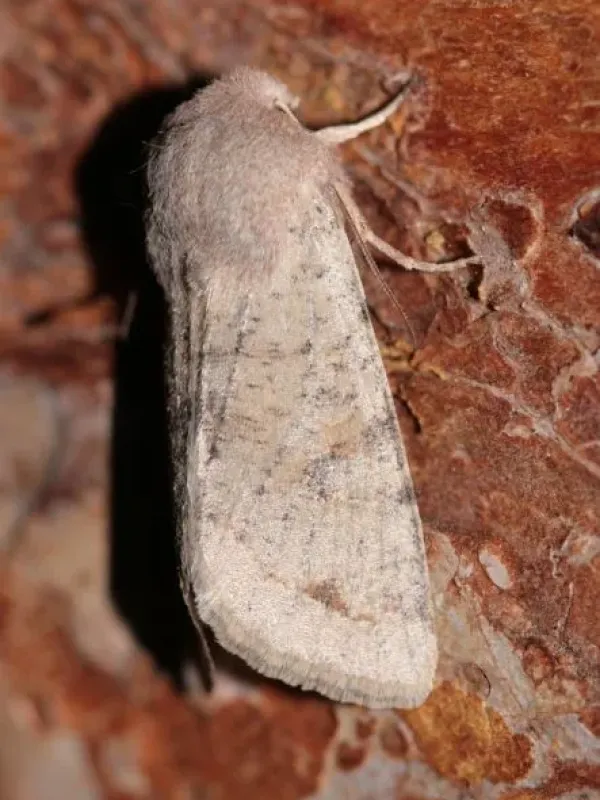
The adult clouded drab (Orthosia incerta) is a nocturnal moth with a wingspan of approximately 35–40 mm. Its forewings exhibit variable coloration, ranging from light grayish-brown to deep purple, often with distinct darker markings.
The larvae, or caterpillars, undergo several developmental stages. Initially, they may appear greenish, but as they mature, they typically darken to brownish or grayish shades, often marked with light-colored dots along their sides.
Pupation occurs in the soil, where the insect remains throughout the summer, autumn, and winter. They overwinter in sturdy earthen cocoons located several centimeters below the surface.
Adult moths emerge very early in the spring, often coinciding with the initial bud burst of many deciduous trees and shrubs, making them one of the first pests to emerge after winter.
Taxonomically, this species is classified within the order Lepidoptera and the family Noctuidae, a diverse group known for including many significant agricultural pests.
What it damages
The damage is caused exclusively by the larval stage. Orthosia incerta is a polyphagous pest, meaning it feeds on a wide range of host plants, including various fruit trees and woody ornamentals.
Key agricultural crops prone to infestation include apple, pear, plum, and cherry trees. The caterpillars are particularly fond of the developing buds and young leaves of these species.
During the early spring, the larvae feed on unopened buds, hollowing them out completely. This behavior destroys the potential flowers and foliage, leading to reduced yield and stunted tree growth.
Beyond fruit trees, the larvae are also commonly found feeding on various forest tree species such as oak, willow, and hazel, which serve as alternative reservoirs for the population.
In cases of high infestation density, the cumulative impact of larval feeding can lead to significant canopy thinning, compromising the overall health and vigor of the orchard.
When it appears
The flight period for adult moths is quite early, typically starting in March and extending through April, depending on local weather conditions and geographical latitude.
Larval activity is concentrated in the spring months, specifically from April through June. This is the period when they are most actively feeding and causing visible damage to host plants.
The species is univoltine, meaning it completes only one generation per year. After completing their feeding cycle, the larvae drop to the soil to pupate and remain in dormancy until the next spring.
Temperature patterns during early spring significantly influence the survival rate of the larvae. Unusually warm weather may accelerate their growth, while cold snaps can slow development.
Orchardists should employ monitoring tools like light or pheromone traps starting in late winter to track the emergence of adults and predict potential larval pressure.
Signs of infestation
The primary indicators of infestation include damaged or hollowed-out buds on branches. Often, frass (larval excrement) can be found near the damaged points, providing a clear sign of caterpillar presence.
As the larvae grow, they begin to skeletonize or create holes in the developing leaves. In advanced stages, they may consume large portions of the leaf tissue, leaving only the main veins.
- Presence of empty bud husks that fail to bloom.
- Young leaves that appear curled or webbed together by silk threads.
- Sudden loss of flower buds before full blossoming, often confused with weevil damage.
Visual detection is challenging due to the larvae's cryptic coloration. Shaking branches over a white sheet is a recommended method for assessing local population density.
Signs are most evident in the early morning or at night when the larvae are actively foraging on the surface of the buds and foliage.
Control measures
Chemical control involving systemic or contact insecticides is effective if applied during the period of bud swell and leaf burst, before the larvae reach maturity.
Cultural control practices, such as autumn soil cultivation in the orchard, are highly recommended. This disrupts the pupation sites in the ground and exposes larvae to predators and frost.
Biological control using Bacillus thuringiensis (Bt) based products is a reliable option for organic and integrated pest management, particularly effective on early-stage caterpillars.
Maintaining a clean orchard floor by removing weeds can help reduce the suitability of the environment for the moth's early development stages.
Regular monitoring and scouting are essential for the timely application of control measures, ensuring the protection of flower buds before irreversible damage occurs.
Taxonomy
- Latin name
- Orthosia incerta
- Order
- Lepidoptera (butterflies)
- Family
- Noctuidae
- EPPO code
- ORTOIN
Discussion
No discussions yet — be the first.