
Orthosia gracilis
Orthosia gracilis
Description
How to identify
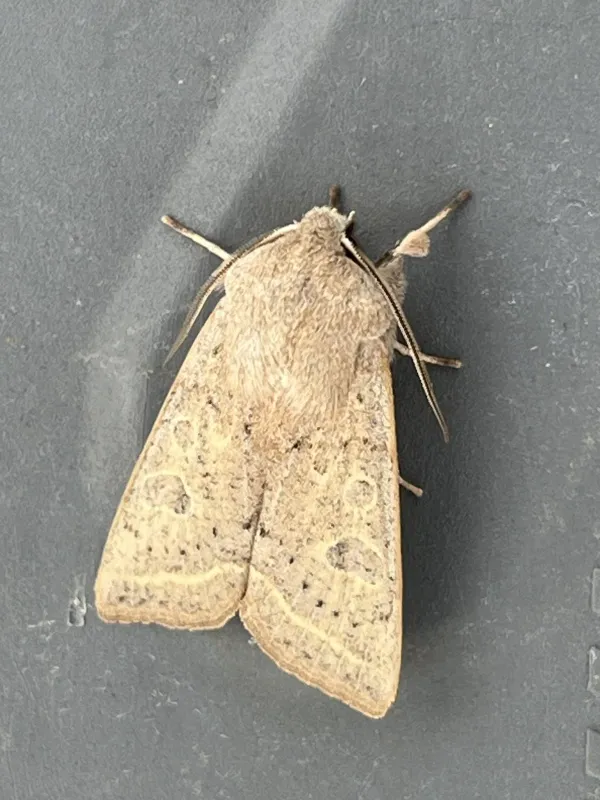
Orthosia gracilis, known as the powder-quaker, belongs to the order Lepidoptera and the family Noctuidae. The adult is a nocturnal moth with a wingspan of approximately 35–40 mm, exhibiting a variable color pattern ranging from grayish-brown to reddish-yellow with distinct transverse lines.
The larva of this species grows up to 40 mm in length. Its body is greenish, featuring prominent longitudinal white or yellowish stripes, which provides effective camouflage among the leaves of its host plants.
The life cycle consists of the egg, larval (caterpillar), pupal, and adult stages. The insect overwinters as a pupa, typically buried in the soil or leaf litter, remaining in diapause until the following spring.
Adult moths emerge in early spring, making them one of the first active nocturnal insects of the season. After mating, females lay eggs on the young leaves or buds of various host plants.
Larval development occurs throughout the spring months. Once full-grown, the caterpillars descend into the soil to pupate, marking the end of the insect's single annual generation.
What it damages
This species is a polyphagous pest, though it is more frequently associated with woodland, orchard, and shrub habitats. Damage is primarily caused by the feeding activities of the larvae.
Fruit crops are frequently targeted, including apple, pear, and plum trees. Additionally, the caterpillars are known to feed on various deciduous trees such as willows and birches.
During outbreaks, these caterpillars can pose a threat to young seedlings and saplings by consuming developing buds and fresh foliage immediately upon bud burst.
Apart from woody plants, the pest often inhabits herbaceous plants on forest edges and near field margins, which allows it to thrive in diverse ecological conditions.
While the overall level of damage is usually considered moderate, high densities of caterpillars can lead to significant defoliation, negatively impacting plant vitality and photosynthesis.
Signs of infestation
The earliest signs of infestation appear in early spring when larvae emerge from diapause and begin feeding on newly opened tree buds.
Leaves often display irregular holes or, in more severe cases, complete skeletonization where only the primary veins remain visible.
The presence of frass (caterpillar droppings) on leaves or directly under the tree canopy is a clear indicator of active feeding by the larvae during the night.
Caterpillars often use silk to tie leaves together, creating shelters where they hide during the day; these clusters of rolled leaves are strong indicators of their presence.
Observations during the night using a flashlight will often reveal the larvae actively feeding on the foliage, confirming an active infestation within the canopy.
Control measures
The primary cultural control method involves tilling or digging the soil under tree canopies in the autumn to disturb and destroy pupae residing in the ground.
Biological control using formulations based on Bacillus thuringiensis is highly effective against young larvae while remaining safe for beneficial insect populations.
In cases of high infestation, the application of registered systemic or contact-stomach insecticides may be necessary to protect the foliage of valuable crops.
- Removal of weeds and undergrowth to reduce alternative habitats.
- Encouraging natural predators such as insectivorous birds and parasitic wasps.
- Monitoring adult moth activity using light traps to time potential interventions.
Early-season treatments are critical, as targeting the young larval stages provides significantly better control and prevents the majority of foliage damage.
Taxonomy
- Latin name
- Orthosia gracilis
- Order
- Lepidoptera (butterflies)
- Family
- Noctuidae
- EPPO code
- ORTOGR
Discussion
No discussions yet — be the first.