
Orthosia
Orthosia
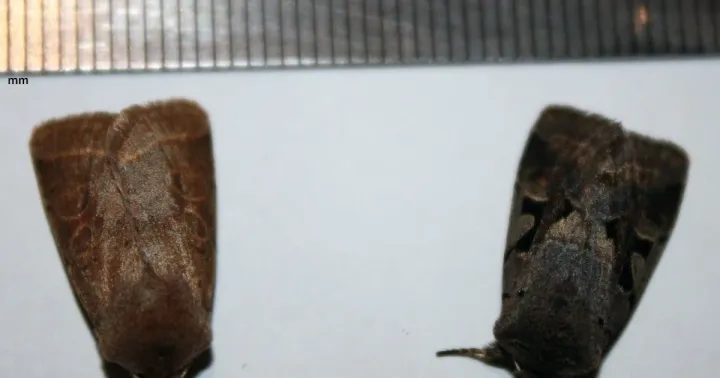
Description
How to identify
Orthosia belongs to the Noctuidae family, order Lepidoptera. Adult moths are medium-sized with brown or grayish wings, and they are typically nocturnal insects.
Orthosia caterpillars grow up to 35–40 mm in length and are often green or brownish in color with distinct pale longitudinal stripes on their backs and sides. The heads are usually brown, and the bodies are sparsely covered with small hairs.
The life cycle is closely tied to the early spring period. Pupae overwinter in the soil at a shallow depth, and adult moths emerge very early, often before the buds on trees have fully opened.
Females lay eggs in small groups or singly on buds, bark of young branches, or at the base of flower stems. A single female is capable of laying several hundred eggs.
Caterpillar development occurs throughout spring and early summer, after which they enter the soil to pupate, remaining there until the following season, making them classic univoltine pests.
What it damages
The damage is primarily caused by caterpillars that begin feeding early in the spring as soon as they hatch. They are polyphagous and known to attack a wide range of agricultural crops.
In orchards, they most commonly feed on the buds of apples, pears, cherries, and plums, consuming them from within until the flower or leaf germ is completely destroyed, often resulting in significant yield loss.
In addition to fruit trees, Orthosia can damage various broad-leaved trees such as oak, willow, and birch, making orchards located near forest edges particularly susceptible to infestations.
When populations are high, the caterpillars consume not only buds but also young leaves and fruitlets, leaving behind only skeletonized remnants of the vegetation.
Damaged buds often dry out, and the trees lose vitality, which negatively impacts their general health and winter hardiness in subsequent years.
Signs of infestation
The first sign of an Orthosia infestation is the appearance of damaged buds that fail to open or appear as hollow shells covered by scales.
If you inspect trees during the evening or at night, you may notice the caterpillars actively feeding on buds and foliage. During the day, they often hide in rolled leaves or bark crevices.
The presence of frass (small dark granules) on branches and under the tree is another indicator of a pest active in the tree canopy.
In cases of heavy infestation, the tree canopy may appear sparse due to the destruction of developing buds, which is noticeable early in the growing season.
Light traps can be used to monitor the arrival of adult moths in early spring, helping to assess the potential risk to the coming season's harvest.
Control measures
Agrotechnical practices are effective in controlling Orthosia, including deep tillage or cultivation of the soil around the base of trees in autumn or early spring to destroy overwintering pupae.
The application of contact and stomach-action insecticides during the bud-burst stage is essential to significantly reduce the caterpillar population before they inflict critical damage.
Biological control methods, such as encouraging insectivorous birds and maintaining populations of beneficial insects, can help naturally suppress moth populations throughout the season.
Applying sticky bands around tree trunks in early spring can prevent caterpillars from moving across the bark as they search for new feeding sites.
Regular phytosanitary monitoring of the orchard is crucial to identify infestation clusters early, allowing for localized treatments and minimizing the need for broad-spectrum chemical use.
Taxonomy
- Latin name
- Orthosia
- Order
- Lepidoptera (butterflies)
- Family
- Noctuidae
- EPPO code
- ORTOSP
Discussion
No discussions yet — be the first.