
Field plant bug
Orthops campestris
Description
How to identify
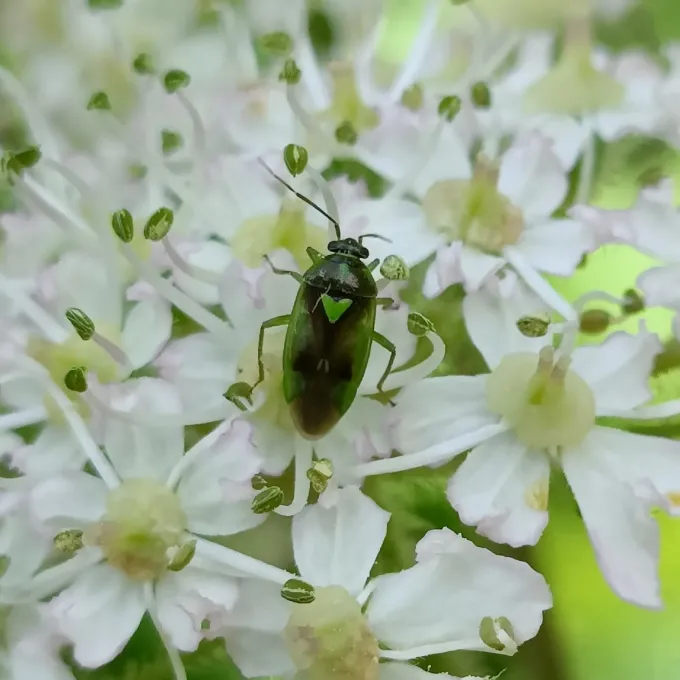
The field plant bug (Orthops campestris) is a species belonging to the Miridae family, commonly known as plant bugs. Adults are typically 4–5 mm long, with a variable color ranging from yellowish-green to brown, often featuring a distinct pattern on the scutellum.
These insects possess a piercing-sucking mouthpart, which is specifically adapted to feeding on plant sap. Their bodies are somewhat flattened, and the wings are well-developed, allowing them to fly efficiently between different host plants.
Nymphs resemble smaller, wingless versions of the adults. They undergo several molting stages, gradually increasing in size and developing the characteristics typical of the species while living on the host plants.
The species is widespread across the Palearctic region. It thrives in various environments, showing a preference for habitats with a high density of Apiaceae family plants, which serve as their primary food source.
Due to their ability to survive in diverse climate conditions, field plant bugs can establish resilient populations in both wild meadows and intensive agricultural landscapes.
What it damages
Orthops campestris is a significant pest of umbelliferous crops, including carrots, parsley, celery, parsnips, and dill. Both adults and nymphs feed on the plant tissues, causing physiological stress to the host.
The damage is most severe during the reproductive phase of the plants. By sucking sap from flower buds and developing seeds, the bugs cause inflorescences to wither, leading to significant yield losses in seed crops.
Feeding often results in the formation of necrotic spots at the puncture sites. This damage can also act as an entry point for various plant pathogens, further weakening the overall health of the crops.
Deformation of leaves and stems is common when populations are high. The affected parts may curl or become stunted, which significantly degrades the market quality of leafy vegetables like parsley or celery.
Seed production fields are particularly vulnerable, as even moderate infestation levels can cause sterile flowers or malformed seeds, making the entire harvest unsuitable for commercial sale.
When it appears
The field plant bug overwinter as fertilized females in protected spots such as leaf litter, bark crevices, or dry grassy areas. They emerge in the spring once temperatures consistently rise above the developmental threshold.
The first generation usually appears in late spring, initially colonizing wild umbelliferous weeds. As the season progresses, they move to cultivated crops, often coinciding with the early stages of plant development.
The peak activity and reproductive phase typically occur during the summer months, aligning with the flowering period of carrots and related species. Eggs are laid directly into the plant tissues, making them difficult to detect.
Depending on the region and weather patterns, the insect can complete several generations per year. Successive generations often build up higher population densities, posing a greater risk to late-season plantings.
By late autumn, the new adult generation seeks out overwintering sites. They reduce their metabolic activity and remain dormant until the following spring, completing their annual biological cycle.
Signs of infestation
Key signs of infestation include the appearance of small, yellowish or brownish spots on foliage and stems. Inflorescences may appear pale or necrotic, and individual flowers often fail to bloom fully.
Stunted growth and curled leaves in carrot or parsley plants often indicate early-season feeding. In severe cases, the entire umbel (flower head) can collapse or become blackened before the seeds can set.
Gardeners and farmers can detect the presence of these bugs by gently shaking the plants over a white sheet or tray, which forces the insects to fall and become visible for counting.
A faint, characteristic odor is sometimes detectable when disturbed, which is a defensive mechanism common to many Mirid bugs and serves as a clue for their presence.
- Wilting and browning of flower heads
- Deformed foliage and stunted stems
- Visible necrotic spots on plant tissue
- Failed seed set and shriveled seeds
Control measures
Integrated pest management begins with cultural practices, such as removing wild Apiaceae weeds near production fields, which significantly reduces the initial pest pressure in the spring.
Crop rotation and physical barriers can help prevent the rapid spread of the pest. Ensuring that production fields are isolated from old seed crop sites is a crucial preventative measure.
Monitoring population levels is essential. If thresholds are exceeded, targeted insecticide applications during the bud formation stage can effectively reduce the population before significant damage occurs.
Chemical control should be applied carefully to minimize impact on beneficial pollinators, especially during the flowering season. Always opt for selective products if the infestation is localized.
Post-harvest hygiene, including the removal and destruction of crop residues, is a vital final step to reduce the number of sites available for overwintering and decrease the population for the next season.
Discussion
No discussions yet — be the first.