
Oribatula sakamorii
Oribatula sakamorii
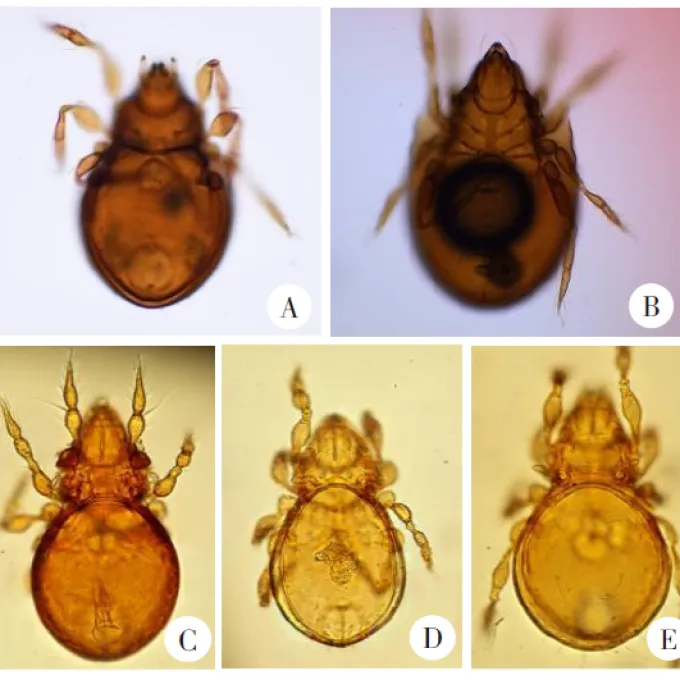
Description
How to identify
Oribatula sakamorii belongs to the group of oribatid mites (moss mites) within the order Sarcoptiformes. These are microscopic arthropods characterized by a dense, sclerotized cuticle that appears dark brown or black.
Adults have an oval body with relatively short, sturdy legs adapted for crawling through soil substrates. Unlike many fast-moving spider mites, oribatid mites move quite slowly and spend most of their life hidden in the soil.
Their physiological structure allows them to thrive in high-humidity environments with varying temperatures. The armored shell acts as a protective shield against external environmental stressors and potential predators.
Identifying this species in the field is difficult due to their tiny size, usually requiring a magnifying glass or a microscope for accurate confirmation. An agronomist should look for indirect clues rather than the individuals themselves.
It is crucial to distinguish between saprophytic oribatids that break down organic matter and those capable of transitioning to phytophagy if the availability of dead organic matter decreases.
What it damages
This mite species is primarily found attacking decorative plants and vegetable crops. Damage is most significant in nurseries and greenhouses where optimal moisture conditions support large mite populations.
The root system is the main target. Mites damage the epidermis of young, developing roots, which creates entry points for various soil-borne fungal pathogens and bacteria.
Root injury leads to overall plant stress, manifested by slowed growth, chlorosis, and in severe cases, wilting. Infected plants lose their commercial value and overall resilience.
Massive infestations often occur during prolonged rainy periods when mites migrate from the deeper soil layers to the base of the stems, causing necrotic lesions at the soil-line level.
The economic impact is primarily related to yield reduction and the loss of young seedlings, necessitating systematic monitoring and timely intervention to prevent complete crop failure.
When it appears
The activity of Oribatula sakamorii is highly dependent on soil hydrothermal conditions. Spring and autumn are the most favorable periods for population growth due to consistent soil moisture levels.
During summer, if the topsoil becomes too dry, these mites migrate into deeper soil horizons to survive. However, constant greenhouse irrigation keeps them active throughout the growing season.
The life cycle encompasses several stages: egg, larva, three nymphal stages, and adult. Development from egg to adult can take several weeks or months depending on the ambient temperature and substrate quality.
High adaptability allows the species to produce multiple generations per year under stable indoor conditions, making them a persistent pest in controlled-environment agriculture.
Mites typically emerge to the soil surface after heavy watering or rainfall, which serves as a key indicator for agronomists to perform a thorough plant inspection.
Signs of infestation
Early signs include the general "unhappy" appearance of plants, characterized by poor growth rates and a lackluster look despite the absence of obvious leaf damage.
Careful inspection of the root zone often reveals dark necrotic spots or damaged, decaying tissue on the roots. In advanced stages, the fine root hairs may be entirely destroyed.
Small, dark, mobile dots may be visible on the surface of the soil or mulch around the stem base, representing active mite colonies emerging when moisture levels are high.
- Retarded growth compared to healthy control plants.
- Dark, ulcer-like lesions at the base of the stem at the soil interface.
- A dusty appearance on the soil surface near the root collar.
Secondary symptoms often involve the onset of root rot diseases, which can sometimes mask the primary presence of the mites, making diagnostic accuracy essential.
Control measures
The primary control method is the management of soil moisture levels. Improving drainage and avoiding over-irrigation significantly reduces the suitability of the environment for mite reproduction.
Effective prophylaxis involves soil sterilization before planting. Heat treatment or steam sterilization of the growing media effectively destroys both the eggs and the active mite life stages.
Chemical control should be implemented using acaricides labeled for soil application. It is important to select products with systemic or contact-systemic activity to reach the mites in the root zone.
Rotating chemical classes is essential to prevent the development of pesticide resistance. Ensure that the treatment is directed specifically at the soil surface and the plant base for maximum efficiency.
Biological control, including the use of entomopathogenic fungi or beneficial nematodes, provides a sustainable and eco-friendly approach to suppressing oribatid populations without harming the plant's health.
Taxonomy
- Latin name
- Oribatula sakamorii
- Order
- Mites
- Family
- Oribatulidae
- EPPO code
- ORIBSA
Discussion
No discussions yet — be the first.