
Oraesia excavata
Oraesia excavata
Description
How to identify
Oraesia excavata is a species of fruit-piercing moth belonging to the family Erebidae. These insects are well-known in agricultural entomology for their unique ability to cause damage to ripening fruits by piercing the skin with their specialized mouthparts.
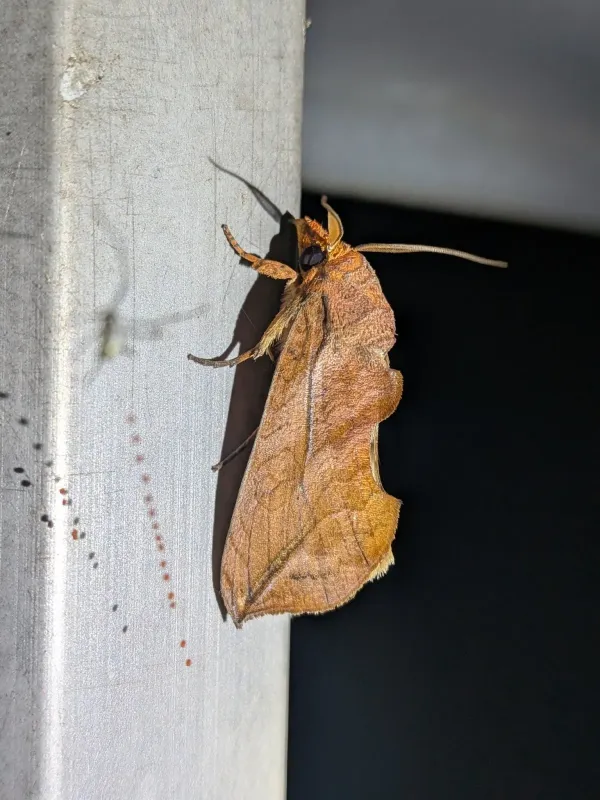
The adult moth features brownish forewings with intricate, wavy markings that provide excellent camouflage against tree bark. With a wingspan of approximately 30–40 mm, they are adept at flying unnoticed at night.
The larvae of this species typically develop on wild host plants, particularly members of the Menispermaceae family, which makes field margins and surrounding vegetation critical areas for population management.
Systematically, it falls under the subfamily Calpinae. These moths are characterized by a highly evolved proboscis, equipped with hard, tooth-like structures specifically adapted to puncture tough fruit skins.
Identification often requires careful inspection during the night, as these moths are strictly nocturnal and remain inactive and camouflaged during daylight hours.
What it damages
The primary damage is caused by the adult moths during their feeding process. They use their specialized proboscis to drill into the surface of ripening fruit, extracting the juice within.
A wide variety of crops are susceptible to attack, including peaches, nectarines, plums, grapes, and various citrus species. The economic impact is often amplified by the timing of the attack, which coincides with the final ripening stages.
Beyond the direct loss of fruit tissue, the puncture wounds serve as entry points for secondary infections. Fungi and bacteria often colonize these wounds, leading to rapid rotting of the fruit on the tree.
Many affected fruits show little external damage initially, but the internal tissues begin to break down rapidly, causing significant post-harvest losses and reduced marketability.
Growers often notice the damage too late, as the initial pin-prick punctures are small and easily missed during routine inspections before the rot sets in.
When it appears
The activity of Oraesia excavata is closely linked to the fruit-ripening season. As fruits accumulate sugars and aromatic compounds, they become increasingly attractive to these moths.
Adult flight periods generally occur during summer and autumn. Local climate conditions can influence the exact timing, but the moths are most active when nights are warm and humid.
Since the larvae feed on wild plants, the presence of the moth in orchards is often the result of migratory behavior. Moths move from wild host habitats to commercial orchards in search of high-energy food sources.
Understanding the seasonal cycle is vital, as control measures are most effective when applied just before or during the initial stages of fruit maturation in the orchard.
The population density can vary greatly between seasons, depending on environmental factors that influence the larval survival rate on non-crop host plants.
Signs of infestation
The most distinct sign of infestation is the presence of small, circular holes on the fruit skin, often surrounded by a slightly discolored or sunken area.
Juice exudation from the puncture sites frequently attracts secondary visitors, including wasps, bees, and ants, which can be seen feeding on the fruit during the day.
Softening or premature rot of the fruit is a common indicator of deeper tissue damage caused by the moth, leading to fruit drop in many sensitive stone fruit varieties.
Using a flashlight at night to inspect the orchard is the most reliable way to confirm the presence of Oraesia excavata, as the moths can be found feeding on the fruit surface.
Clusters of damaged fruit that look like they have been pierced by a needle are classic indicators of fruit-piercing moth activity in the absence of other obvious pests.
Control measures
Controlling Oraesia excavata requires an integrated pest management strategy because the moths are migratory and often originate from outside the orchard boundaries.
Light traps are a common tool for monitoring and reducing moth populations. Because these moths are attracted to light, these traps can significantly disrupt their feeding patterns.
- Managing weed hosts, especially Menispermaceae species, in areas surrounding the orchard.
- Bagging high-value fruits to provide a physical barrier against the moths' proboscis.
- Scheduling harvests to ensure that fruit is removed from the orchard before it reaches the peak attractiveness level for moths.
- Using botanical or safe chemical repellents that discourage moths from landing on ripening fruit.
- Implementing regular nighttime monitoring to determine if and when intervention is necessary.
Chemical control must be handled with care, particularly near the harvest window, to ensure food safety compliance and to avoid harm to beneficial predatory insects in the orchard ecosystem.
Taxonomy
- Latin name
- Oraesia excavata
- Order
- Lepidoptera (butterflies)
- Family
- Noctuidae
- EPPO code
- ORAEEX
Discussion
No discussions yet — be the first.