
Oraesia
Oraesia
Description
How to identify
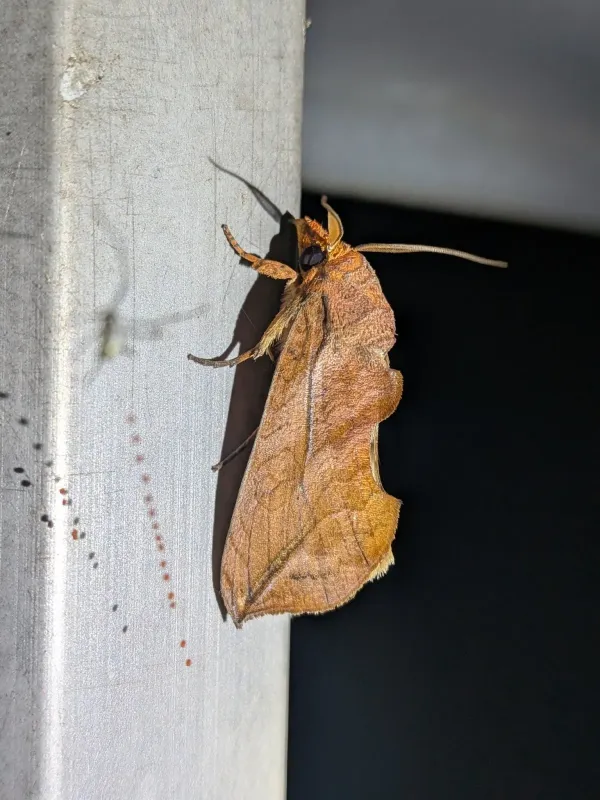
The genus Oraesia belongs to the Erebidae family. These nocturnal moths are well-known for their leaf-like appearance, as their forewings, when folded, closely resemble dry, withered leaves, providing excellent camouflage.
Adult moths typically have a wingspan ranging from 30 to 45 mm. Their coloration is usually a mix of brown and golden tones, often featuring intricate patterns that help them blend into tree bark or dead foliage during the day.
A key diagnostic feature of this genus is the heavily sclerotized proboscis. This anatomical adaptation allows the moths to pierce the tough skins of fruits, which is a rare trait among Lepidoptera species.
The life cycle follows a complete metamorphosis: egg, larva (caterpillar), pupa, and adult. The caterpillars usually feed on various herbaceous plants, while the adults are the stage that causes significant economic damage to horticulture.
Accurate species-level identification can be challenging due to the morphological similarity between closely related species within the genus, often requiring expert entomological analysis.
What it damages
Oraesia moths are classified as fruit-piercing pests. They primarily target ripening and mature fruits, including peaches, plums, grapes, and various citrus species, causing significant agricultural losses.
The damage is caused by the adult moth piercing the fruit skin to feed on the juices. This direct physical injury disrupts the surface and exposes the inner pulp to the environment.
Secondary infections occur rapidly after the piercing. Fungi and bacteria enter through the puncture holes, leading to rot and rapid degradation of the fruit while it is still on the tree.
Heavy infestations can lead to a drastic reduction in marketable yields. Even a small number of moths can spoil a large volume of fruit due to the secondary decay processes they initiate.
The moths are highly mobile and attracted to the high sugar content of ripening fruits, making orchards highly susceptible during the final stages of the maturation period.
Control measures
Managing Oraesia populations is difficult because the moths are nocturnal and highly elusive. Relying solely on standard chemical foliar sprays is often insufficient and inefficient.
Integrated Pest Management (IPM) strategies, such as the use of light traps, are highly recommended to monitor activity and reduce adult moth populations within the orchard environment.
Physical exclusion methods, such as bagging individual fruits or covering trees with fine netting, have proven to be the most reliable way to prevent moth access to the crop during the vulnerable ripening phase.
Sanitation practices are essential. Growers should promptly remove and destroy fallen or damaged fruit to eliminate attractants that lure moths into the orchard from surrounding areas.
Chemical control, if necessary, must be executed with extreme caution regarding pre-harvest intervals. Growers should choose low-toxicity, short-persistence products to ensure fruit safety for consumption.
Taxonomy
- Latin name
- Oraesia
- Order
- Lepidoptera (butterflies)
- Family
- Noctuidae
- EPPO code
- ORAESP
Discussion
No discussions yet — be the first.