
Window fly
Omphrale fenestralis
Description
How to identify
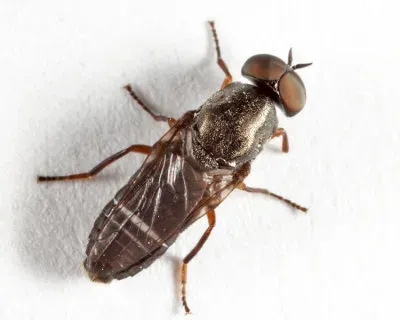
The window fly (Omphrale fenestralis, also known as Scenopinus fenestralis) is a member of the Scenopinidae family within the order Diptera. Adult specimens have a small body, typically 4–6 mm in length, characterized by a dark or blackish coloration with a metallic sheen.
The wings are clear and transparent, held flat against the back when the insect is at rest. The common name arises from the adults' distinct behavior of congregating on window panes, where they are attracted by natural light.
The larvae of the window fly are unique in appearance; they are extremely slender, long, and white or yellowish. Their body structure is highly segmented, allowing them to move rapidly through substrate materials.
The life cycle involves complete metamorphosis, progressing through egg, larval (several instars), pupal, and adult stages. Under favorable conditions, they typically produce one generation per year.
Biologically, these insects are not considered plant pests. They serve as predators in the larval stage, feeding on other small arthropods found in decaying organic matter or soil.
What it damages
It is important to clarify that the window fly is not a direct threat to agricultural crops. Unlike typical pests, these insects do not consume living plant tissues, roots, or foliage.
In an agronomic context, the larvae act as beneficial predators. They often feed on other insect larvae, such as those of wood-boring beetles, fleas, or various soil mites, effectively acting as a form of natural pest control.
Because they do not cause injury to crops, there is no need for pesticide application specifically targeting this species. Any perceived damage to a plant is strictly unrelated to the activity of the window fly.
The presence of these flies in greenhouses or storage facilities is purely incidental. It is often a sign of environmental conditions that support other small insects, which serve as prey for the window fly larvae.
Overall, the economic impact of the window fly is negligible, and it is widely categorized as an environmentally neutral or even beneficial organism in terms of its predatory habits.
When it appears
The adult flight period typically occurs from late spring through the summer months, specifically between May and August. During this time, they become most noticeable as they seek light sources.
Eggs are deposited in sheltered areas, such as cracks in wood, dry soil, or accumulations of organic debris. These sites ensure the larvae have access to their prey upon hatching.
The pupal stage is the primary method of overwintering. By pupating in hidden crevices or protected soil patches, the species successfully survives cold temperatures and emerges the following season.
Adult sightings in indoor environments during spring often indicate that the population completed its development within the structure's existing organic waste or wood debris.
Seasonal dynamics are heavily dependent on the abundance of prey species. Where there is a stable population of other small soil-dwelling insects, the window fly population remains consistent.
Signs of infestation
The primary sign of a window fly presence is the observation of adults on windowsills or glass panes. This is the most visible indicator of their activity within a building or structure.
Larval presence can be identified during soil preparation in greenhouses or by inspecting decaying organic matter. They appear as small, agile, pale threads that burrow quickly when disturbed.
There are no diagnostic signs of crop damage such as wilting, leaf scarring, or root rot associated with this species. Its presence does not necessitate the symptoms typically seen with phytophagous insects.
Large numbers of adults inside a greenhouse indicate the necessity of sanitary improvements. Cleaning out accumulated organic waste is usually sufficient to discourage their development.
No specific monitoring traps are required for this species, as they are not pests. Identification is usually performed via visual inspection of the adult specimens.
Control measures
Since the window fly does not damage crops, there is no requirement for specialized control measures. Good sanitation is the most effective way to manage their numbers.
- Conduct regular cleaning of greenhouses and storage areas to remove organic debris.
- Remove or treat rotting wood where larvae might congregate.
- Install insect-proof window screens to prevent adults from entering buildings.
- Maintain proper moisture levels to prevent the accumulation of rotting organic matter.
- Use manual methods to eliminate adult flies if their presence causes aesthetic distress.
Taxonomy
- Latin name
- Omphrale fenestralis
- Order
- Diptera (flies)
- Family
- Scenopinidae
- EPPO code
- OMPRFE
Discussion
No discussions yet — be the first.