
Marbled Minor
Oligia strigilis
Description
How to identify
The Marbled Minor (Oligia strigilis) is a nocturnal moth belonging to the Noctuidae family, often found in various agricultural and grassland ecosystems.
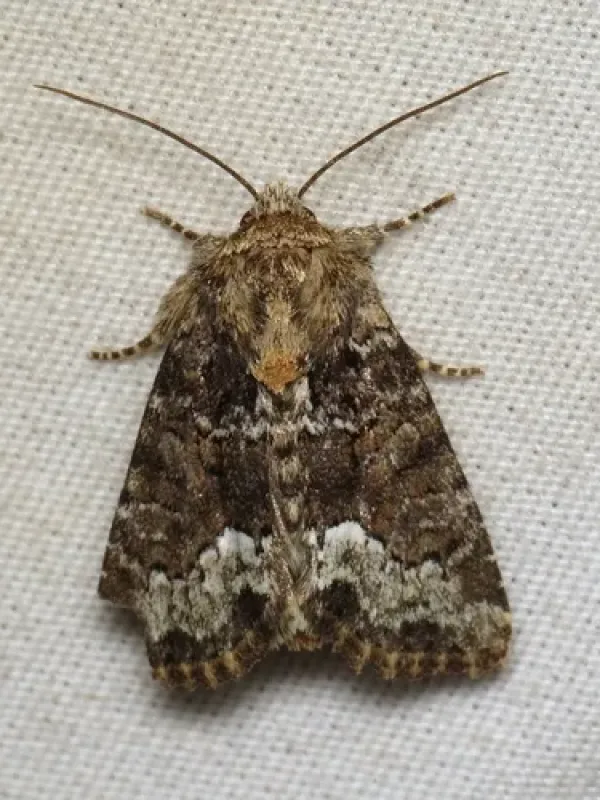
Adult moths typically have a wingspan of 25–30 mm, with forewings featuring a mottled dark pattern and a distinct pale patch that serves as a key identification mark.
The larvae, or caterpillars, reach lengths of up to 30 mm and possess a grayish-brown body, which provides effective camouflage against soil and plant debris.
Pupation occurs within a compact cocoon located in the upper layer of the soil, ensuring protection for the pupa during its transformation stage.
Due to their attraction to artificial light, adult moths are frequently monitored by agronomists using specialized light traps in open fields.
What it damages
This species is known to feed on a wide range of grasses, frequently causing economic damage to winter and spring cereals such as wheat and barley.
Larvae primarily attack the stems and crowns of young plants, severing the vascular tissues and causing stunted growth or total collapse of the seedling.
Beyond cultivated crops, the Marbled Minor thrives on various wild grasses, which serve as alternate hosts and allow the population to persist throughout the season.
Feeding damage is particularly severe during the tillering stage of cereals, when plants are highly vulnerable and have limited capacity for regrowth.
High larval densities can lead to significant thinning of crop stands, resulting in yield losses and uneven plant distribution across the field.
When it appears
The life cycle of the Marbled Minor typically spans one generation per year, with the species overwintering primarily as larvae in the soil.
Larval activity resumes in early spring as soil temperatures increase, coinciding with the germination and early growth of cereal crops.
Adult flight usually occurs during the summer months, facilitating mating and the subsequent egg-laying process on suitable host plants.
Larvae from the current season feed actively until the onset of autumn, eventually retreating into the soil to enter diapause for the winter.
Environmental variables such as soil moisture and temperature are critical factors influencing the duration and success of each developmental stage.
Signs of infestation
The most prominent sign of infestation is the sudden appearance of yellowish or withered patches in the field, often mistaken for drought stress.
Detailed inspection of the base of affected plants often reveals chewed stems and holes, which indicate feeding activity by the caterpillars.
The presence of larval frass (droppings) near the base of the plant is a reliable indicator that the pest is currently active in the area.
Larvae are shy and mostly nocturnal; therefore, they are best detected by examining the crown and soil surface during dawn or under damp conditions.
- Patches of chlorotic or yellowing seedlings.
- Visible damage at the base of the stem near the soil line.
- Stunted tillers that pull away easily from the root system.
- Presence of brownish frass near the plant base.
Control measures
Effective management starts with cultural practices such as deep autumn ploughing, which disrupts the overwintering sites of the larvae.
Strict weed control on field margins and within the crop is essential to eliminate alternative host plants and reduce overall population pressure.
When infestation levels surpass economic thresholds, targeted application of registered insecticides is recommended to protect the yield.
Integrated pest management strategies should be prioritized to preserve natural predators, such as carabid beetles, that help regulate the population.
Regular field scouting and the use of pheromone or light traps provide early warning signals, enabling timely and efficient pest control interventions.
Taxonomy
- Latin name
- Oligia strigilis
- Order
- Lepidoptera (butterflies)
- Family
- Noctuidae
- EPPO code
- OLIAST
Discussion
No discussions yet — be the first.