
Ochropleura implecta
Ochropleura implecta
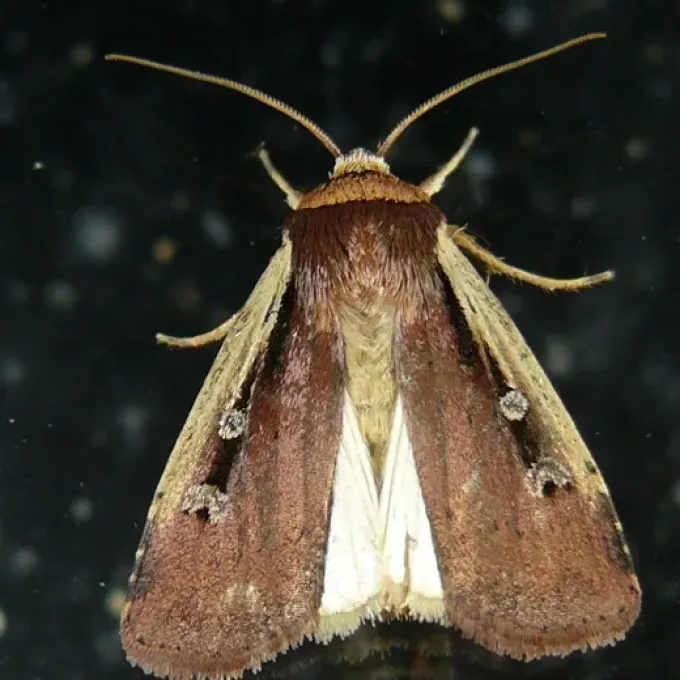
Description
How to identify
Ochropleura implecta belongs to the Noctuidae family, order Lepidoptera. The adult moth typically has a wingspan of approximately 30–35 mm.
The forewings are patterned with brownish shades, providing excellent camouflage against soil and organic debris during the day.
The larvae, commonly known as cutworms, reach lengths of 30–40 mm and exhibit grayish or brownish skin tones that blend with the surrounding environment.
A key identifying feature is the presence of pale longitudinal stripes on the dorsal side of the caterpillar, which aids in species differentiation.
The pupa is reddish-brown and typically resides in the soil, where it remains dormant throughout the winter months before emerging in spring.
What it damages
As a polyphagous insect, Ochropleura implecta feeds on a wide range of botanical hosts, making it a significant challenge in diverse agricultural settings.
Larvae cause substantial damage to cereals, vegetable crops such as tomatoes and cabbages, and various root vegetables, impacting overall yield and quality.
Besides crops, these larvae thrive on common weeds, allowing the population to survive and reproduce even in fields where preferred crops are absent.
In intensive farming areas, larvae often migrate from weed-infested patches to healthy crops, creating concentrated centers of damage within the field.
Young plants are particularly vulnerable, as the caterpillars may consume the roots or base of the stem, often killing the plant entirely.
When it appears
Moth flight typically commences in late spring or early summer, following the stabilization of warmer temperatures required for reproductive activity.
The peak period of larval hatching coincides with the rapid vegetative growth stage of most crops, increasing the risk of significant damage.
Depending on geographical location and climate, this species may complete one or two generations within a single growing season.
Adults are nocturnal, spending the daylight hours hidden in the soil or under dense vegetation to avoid predators and extreme temperatures.
As autumn approaches, the final generation of larvae retreats into the soil to pupate and overwinter, surviving until the next season's warmth.
Signs of infestation
Early symptoms of an infestation include small holes or irregular, jagged margins on the leaves caused by the feeding activities of young larvae.
As the infestation progresses, larvae may skeletonize the leaves, leaving behind only the tougher veins and significantly reducing the plant's photosynthetic capacity.
The presence of dark, granular fecal pellets at the base of the plant is a clear indicator that a larvae population is active in the vicinity.
Sudden wilting of seedlings or young shoots often signals that the cutworms have severed the root system or the primary stem at the soil line.
- Irregular holes in leaf blades
- Jagged or eaten leaf margins
- Wilting of stems due to root damage
- Presence of fecal pellets on the soil surface
Control measures
Deep autumn plowing is a highly recommended mechanical control method, as it disrupts the soil habitat and destroys overwintering pupae.
Consistent weed management along field borders and within rows effectively reduces the pest's alternative food sources and limits its population growth.
Biological control using Bacillus thuringiensis sprays is effective against younger larval stages, providing an eco-friendly option for early protection.
In cases of severe infestation, targeted insecticide applications with contact and stomach action are necessary to prevent extensive crop loss.
Field scouting and the use of monitoring traps for adult moths allow farmers to track population trends and apply control measures at the most effective time.
Taxonomy
- Latin name
- Ochropleura implecta
- Order
- Lepidoptera (butterflies)
- Family
- Noctuidae
- EPPO code
- OKHRIM
Discussion
No discussions yet — be the first.