
Flame Shoulder
Ochropleura
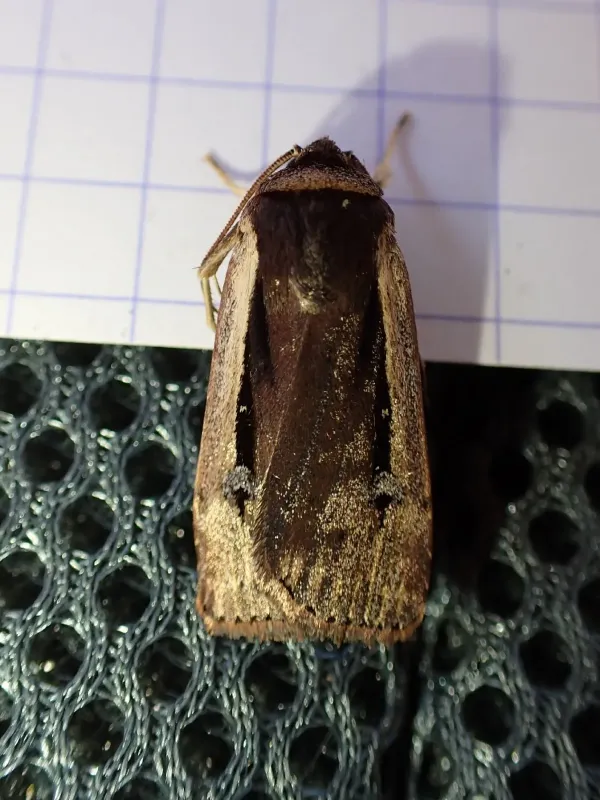
Description
How to identify
The Flame Shoulder (Ochropleura plecta) is a moth of the Noctuidae family. The adult moth is characterized by a wingspan of 30–35 mm. Its forewings are brownish with a distinct, broad creamy-white or pale streak along the costal edge, which gives it its common name.
The larvae are typical cutworms or soil-dwelling caterpillars, reaching up to 40 mm in length. They display a cryptic coloration ranging from greyish-brown to earthy tones, allowing them to remain hidden among organic debris and plant stems during the day.
Eggs are small, hemispherical, and pale yellow. Females deposit them singly or in small batches on the undersides of leaves of a diverse range of host plants, including weeds and cultivated crops.
Pupation occurs within the soil at a shallow depth. The pupae are dark brown, smooth, and remain in the soil until the next generation of moths emerges, making soil disturbance a critical factor in their lifecycle management.
As a nocturnal insect, the adult moth is rarely seen during the day. Monitoring requires the use of light traps or pheromone traps, which help identify the start of the flight period and potential infestation levels.
What it damages
Ochropleura plecta is highly polyphagous, meaning it feeds on a vast array of host plants. Economically significant crops that can be affected include cereals, corn, legumes, and a variety of vegetable species like lettuce and spinach.
Larval feeding causes the most severe damage. Young larvae primarily feed on leaves, creating small holes, while older larvae can consume larger portions of the leaf blade, often skeletonizing it and leaving only the main veins.
Cutworm behavior is particularly damaging to seedlings. Larvae can chew through the base of the stems, causing the plants to collapse and wither. This often leads to sparse crop stands that require replanting.
Vegetable crops are susceptible to root and tuber damage if the larvae are present in the soil near the harvestable parts. This damage provides entry points for secondary fungal and bacterial rot pathogens.
In cases of high infestation, the combined damage to foliage and stems can significantly reduce the overall photosynthetic capacity of the plant, leading to stunted growth and reduced market quality of the produce.
When it appears
The lifecycle of the Flame Shoulder typically involves two generations per year in temperate climates. The first flight of adults usually begins in late spring, around May or June, as temperatures rise.
Following mating, females lay eggs on suitable host plants. Larvae emerge shortly after and begin their development during the early summer months. This is the period when agricultural surveillance is most critical.
A second generation of adults typically appears in late summer, leading to a second wave of larval activity that can persist into the autumn months. This generation often poses a threat to late-harvest vegetables and emerging winter crops.
The species overwinters as either a mature larva or a pupa buried in the soil. The overwintering success is heavily dependent on soil temperature and the availability of shelter, such as weeds or crop residues.
Environmental monitoring is essential, as warmer springs can lead to earlier moth emergence, potentially shifting the windows for peak larval feeding and necessitating earlier intervention.
Signs of infestation
Key signs of an infestation include irregularly shaped holes or ragged edges on the leaves of host crops. Persistent feeding by larger larvae will leave behind noticeably depleted foliage.
Larval droppings (frass) found on leaves or near the base of the plant are reliable indicators of current pest activity. These are often easier to spot than the larvae themselves during daylight hours.
The sudden wilting or collapse of seedlings is a hallmark of cutworm activity. If a plant can be pulled from the soil with ease and the stem base is severed, an investigation for soil-dwelling larvae is necessary.
Searching for larvae is best done by examining the soil at the base of affected plants in the early morning or late evening, as they often retreat into the surface layer of the soil during the day to avoid heat and predation.
Large numbers of moths appearing in light traps during evening inspections serve as an early warning that egg-laying is imminent, allowing for pre-emptive control actions.
Control measures
Cultural control is the first line of defense. Keeping fields free of weeds significantly reduces the attractiveness of the area to egg-laying moths, as they prefer dense vegetation for shelter.
Fall tillage is an effective method to expose overwintering pupae to predators such as birds and to cold weather, significantly reducing the population density for the following growing season.
Biological control agents, such as formulations of Bacillus thuringiensis or entomopathogenic nematodes, can be used to manage larval populations with minimal impact on beneficial insects.
Chemical control should be applied based on economic thresholds. Selective insecticides should be used carefully to target larvae while preserving the natural enemy complex in the field.
- Maintain crop rotation to break pest cycles.
- Use light traps for population monitoring.
- Apply insecticides in the evening when larvae are active.
- Ensure adequate plant nutrition to improve resistance to pest damage.
Taxonomy
- Latin name
- Ochropleura
- Order
- Lepidoptera (butterflies)
- Family
- Noctuidae
- EPPO code
- OKHRSP
Discussion
No discussions yet — be the first.