
Rasberry crazy ant
Nylanderia pubens
Description
How to identify
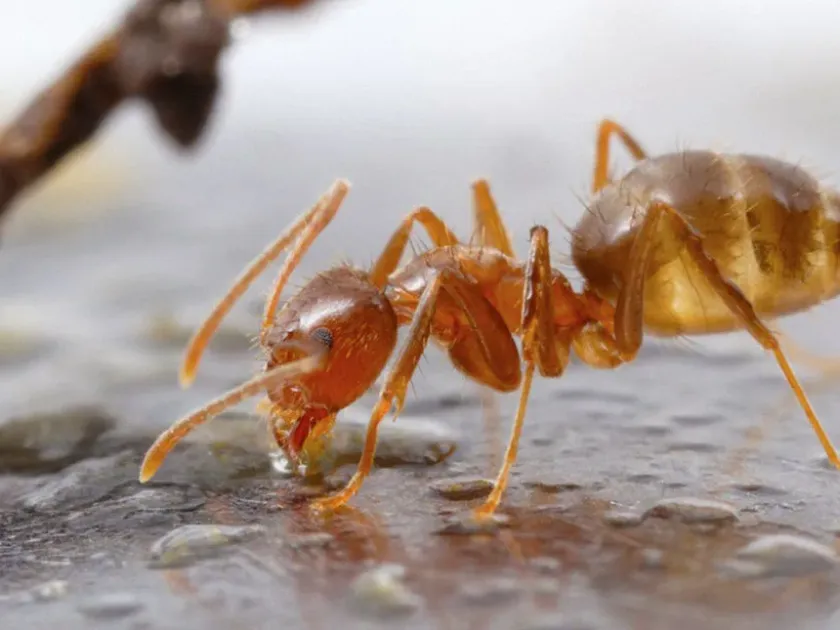
The Rasberry crazy ant (Nylanderia pubens) belongs to the order Hymenoptera and the family Formicidae. They are small, reddish-brown insects characterized by a body covered in dense hairs.
The name "crazy" is derived from their erratic, non-linear movement patterns. Unlike other ant species that follow established trails, these ants move in random, frantic directions across surfaces.
They are polygynous, meaning colonies contain multiple queens. This biological feature allows them to reproduce at an alarming rate and expand their territory with extreme efficiency.
Workers are typically 2–3 mm long. They do not build traditional mounds or structures but prefer to nest in existing voids, debris, leaf litter, or even within man-made structures.
These ants are highly adaptable to various environments, thriving in both humid and warm conditions, which facilitates their spread across agricultural and urban landscapes.
What it damages
The primary damage caused by Nylanderia pubens is indirect. They are known for tending to honeydew-producing insects such as aphids, scales, and mealybugs, protecting them from natural predators.
By preventing ladybugs and other beneficial insects from feeding on aphids, the ants cause an explosion in aphid populations, leading to severe plant sap depletion and leaf distortion.
The excess honeydew produced by these pests promotes the growth of sooty mold, a black fungus that coats leaves and prevents photosynthesis, severely weakening the plant's health.
In addition to these effects, the ants often nest in the root zones of plants. This can disrupt soil structure and moisture retention, ultimately harming the root system's ability to absorb water.
In greenhouses, these ants can become a catastrophic pest, as the contained environment allows them to proliferate unchecked, impacting yield and damaging young seedlings.
Signs of infestation
A primary sign of infestation is the observation of numerous small ants moving in erratic, zigzag patterns along stems, trunks, and over the ground surfaces.
A sudden and dense accumulation of aphids or mealybugs on new growth is a strong indicator of ant presence, as the ants actively shield these pests from predation.
You may find their nests under boards, stones, landscape mulch, or any objects that provide cover. They do not create distinct mounds, making them harder to spot at first glance.
Plants may show signs of wilting or nutrient deficiency despite proper irrigation, which can suggest that ant nesting activity at the base of the plant is interfering with roots.
In indoor or shed environments, signs include electrical failures or shorts, as these ants are known to invade electrical equipment, sometimes causing equipment to malfunction.
Control measures
Controlling the Rasberry crazy ant requires an integrated pest management (IPM) approach because individual nest removal is often ineffective due to their multi-queen structure.
The use of slow-acting toxic baits is highly recommended. These baits are carried back to the nest by worker ants, ensuring the insecticide reaches the queens and the colony brood.
Sanitation is a vital cultural practice. Removing piles of leaves, lumber, and unnecessary debris reduces the number of suitable nesting sites available to the ants on your property.
To protect individual trees or shrubs, applying physical barriers such as sticky bands on the trunks can effectively prevent the ants from reaching the foliage to attend their aphids.
Focusing on the management of aphids and scale insects is essential. By eliminating the food source that the ants depend on, you can make the area significantly less attractive to them.
Taxonomy
- Latin name
- Nylanderia pubens
- Order
- Hymenoptera
- Family
- Formicidae
- EPPO code
- PAATPU
Discussion
No discussions yet — be the first.