
Tawny crazy ant
Nylanderia fulva
Description
How to identify
The Tawny crazy ant (Nylanderia fulva) is a member of the Formicidae family, recognized for its aggressive invasive behavior and rapid population growth.
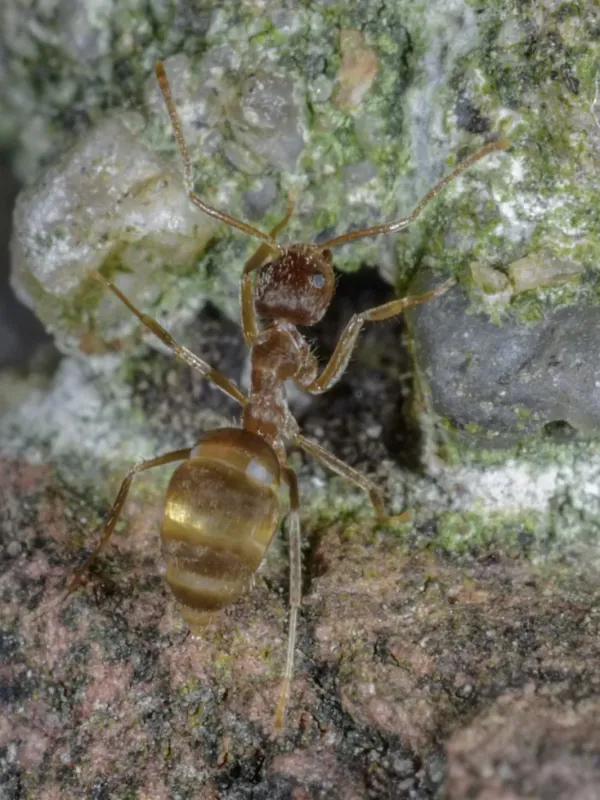
The workers are small, measuring approximately 2–3 mm in length, and possess a reddish-brown body covered with fine, dense hairs, giving them a distinct matte finish.
They earned the name "crazy" due to their erratic and rapid movement patterns, which lack the organized trails typically observed in other ant species.
Colonies of Nylanderia fulva are polygynous, meaning they feature multiple queens, which allows them to build massive, multi-queen colonies that are extremely difficult to eradicate.
Unlike many other ant species, they do not possess a stinger, yet they can cause significant environmental disruption by displacing native insects and threatening local ecosystems.
What it damages
Tawny crazy ants do not feed directly on plant tissue, but they are notorious for their mutualistic relationship with honeydew-producing insects like aphids and scale insects.
By aggressively protecting these pests from natural predators and parasitoids, the ants enable aphid populations to reach levels that cause severe plant stress and nutrient depletion.
Affected plants often show stunted growth, leaf curling, and yellowing, as the massive populations of aphids drain the plant's essential sap resources.
The honeydew excreted by the aphids provides a substrate for sooty mold growth, which coats leaves and blocks sunlight, thereby significantly reducing the efficiency of photosynthesis.
Additionally, their sheer numbers can disturb soil around plant roots, leading to dehydration and weakened structural stability for young agricultural and ornamental crops.
When it appears
Activity levels for these ants increase significantly during the spring and summer months, coinciding with the peak breeding season of the aphids they tend.
During hot and dry periods, they become particularly active as they seek moisture, often invading irrigation equipment, compost piles, and shaded areas near crops.
As temperatures begin to drop in the autumn, colonies often seek protection within buildings, dense mulch layers, or the root zones of large plants to survive the cooler weather.
In warmer climates or greenhouses, the activity of the Tawny crazy ant can persist throughout the year, making consistent monitoring and management essential.
They are highly mobile, frequently shifting the location of their nests to optimize access to food sources, which makes them a constant threat throughout the growing season.
Signs of infestation
The most reliable sign of an infestation is the presence of large, scattered groups of ants moving in erratic directions on plant stems, foliage, and garden structures.
Farmers often notice a sticky residue (honeydew) on the leaves, which frequently results in the development of black, powdery sooty mold on the surface of the vegetation.
Increased ant traffic without clear, linear trails suggests a Nylanderia fulva presence, as they prioritize exploring areas for aphids rather than following traditional pathways.
Observing ants inside flower buds or fruit stems is another common indicator that the ants are exploiting the plant's resources for their aphid-tending activities.
- Erratic ant movement without defined trails.
- Presence of honeydew and sooty mold on leaves.
- Aggressive protection of aphid or scale colonies on plants.
Control measures
Management of the Tawny crazy ant is complex and requires a multi-faceted approach, focusing on baiting strategies that target the entire colony rather than individual workers.
The use of slow-acting toxic baits is highly effective, as it allows the foragers to carry the bait back to the nest, eventually eliminating the queens and collapsing the colony.
Controlling the honeydew-producing pests, such as aphids and mealybugs, is crucial, as it removes the primary food source that attracts and sustains the ant population.
Physical barriers, such as Tanglefoot or other sticky barriers applied to tree trunks, can prevent ants from reaching the canopy and protecting the pests located there.
Maintaining a clean, weed-free environment and proper moisture management helps minimize the attractiveness of the site to foraging ants and prevents rapid recolonization.
Taxonomy
- Latin name
- Nylanderia fulva
- Order
- Hymenoptera
- Family
- Formicidae
- EPPO code
- NYLAFU
Discussion
No discussions yet — be the first.