
Large Yellow Underwing
Noctua pronuba
Description
How to identify
The Large Yellow Underwing (Noctua pronuba) is a highly adaptable moth belonging to the family Noctuidae. The adult moth features a wingspan of up to 60 mm. The forewings are variable in color, ranging from sandy brown to dark brown with distinct markings, while the hindwings are unmistakable: bright yellow with a broad black submarginal band.
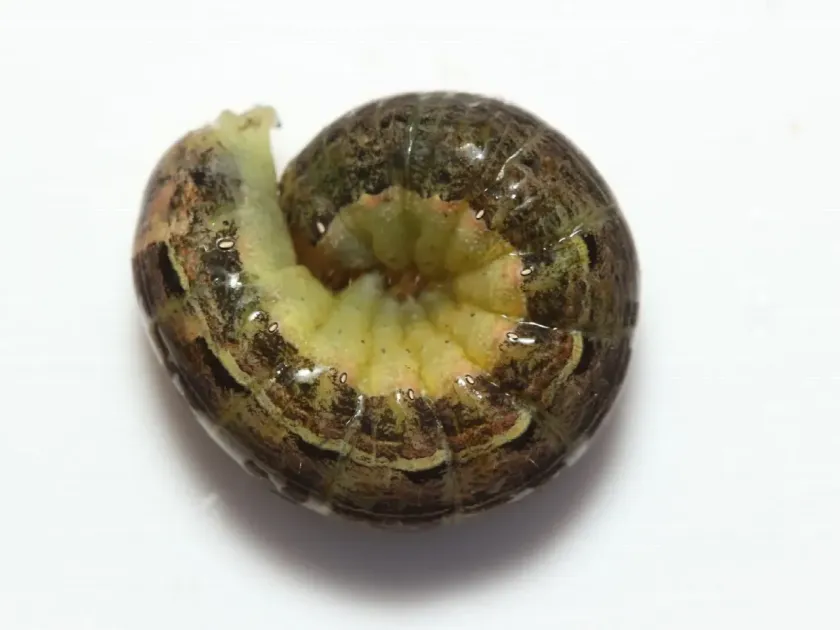
The larvae, often called cutworms, are stout and reach 40-50 mm when fully grown. They typically exhibit a dull brownish or grayish color, which provides excellent camouflage against soil backgrounds. The head is usually light brown with darker, mottled patterns.
This species is univoltine in most regions, with moths flying from June through September. The larvae spend the winter buried in the soil or under debris, feeding occasionally during mild spells. In spring, they resume feeding, grow rapidly, and pupate within a subterranean cell.
Female moths are prolific, laying large masses of eggs on the undersides of leaves or on stems. These eggs hatch into small larvae that are capable of consuming a vast variety of green plant tissues.
Being nocturnal insects, both adults and late-instar larvae are rarely seen during the day, as they hide deep within the soil canopy or beneath dense foliage, emerging only at night to feed.
What it damages
The Large Yellow Underwing is a generalist herbivore. It feeds on a diverse range of crops, including cereals, grasses, potatoes, carrots, lettuce, brassicas, and various ornamental plants, causing significant economic losses.
Young larvae initially graze on the surface of leaves, creating small holes. As they grow, they move toward the base of the plant, often severing the stems of young seedlings near the soil surface, leading to plant death.
In addition to surface damage, the larvae can attack underground storage organs, such as carrots or potatoes, drilling holes into the flesh and causing structural damage that facilitates fungal and bacterial infections.
During spring outbreaks, entire fields of seedlings can be decimated in a matter of days. The cryptic behavior of the larvae makes them particularly difficult to detect before substantial damage has already occurred.
Because the larvae are polyphagous, they do not rely on a single host plant, allowing them to migrate between fields or switch from weed hosts to cultivated crops seamlessly.
Signs of infestation
The most common sign of infestation is the presence of irregular, ragged holes in the leaves. In seedling stages, the sudden wilting or complete collapse of plants is a major indicator of cutworm activity.
Upon closer inspection, you may find small, dark, granular frass (droppings) on the soil surface near the base of the affected plant, which serves as a definitive sign of larval feeding.
Exposing the top few centimeters of soil around a wilting plant often reveals the larvae, which curl into a characteristic "C" shape when disturbed or uncovered during the day.
Increased moth activity at night, observed via light traps, often precedes an outbreak of larvae. Tracking moth populations can help farmers predict when the next generation of larvae will likely emerge.
Stunted growth or missing plants in rows where seeds were sown should trigger a manual inspection of the soil for the presence of cutworms.
Control measures
Cultural control practices are essential for managing this pest. Tilling the soil in autumn and spring helps to disrupt the larval development and exposes them to natural predators like birds and ground beetles.
Maintaining a weed-free field edge is critical, as these areas often serve as nurseries where the larvae develop before invading the main crop.
Biological control methods, such as applying Bacillus thuringiensis (Bt) or entomopathogenic nematodes to the soil, can significantly reduce larval populations without harming non-target organisms.
For chemical interventions, contact insecticides should be applied in the late evening, coinciding with the period when larvae emerge from the soil to forage on the foliage.
- Practice crop rotation to break the life cycle.
- Monitor moth activity using pheromone or light traps.
- Hand-pick larvae during evening scouting.
- Use physical barriers for high-value garden crops.
Taxonomy
- Latin name
- Noctua pronuba
- Order
- Lepidoptera (butterflies)
- Family
- Noctuidae
- EPPO code
- NOCTPR
Discussion
No discussions yet — be the first.