
Orbona
Noctua orbona
Description
How to identify
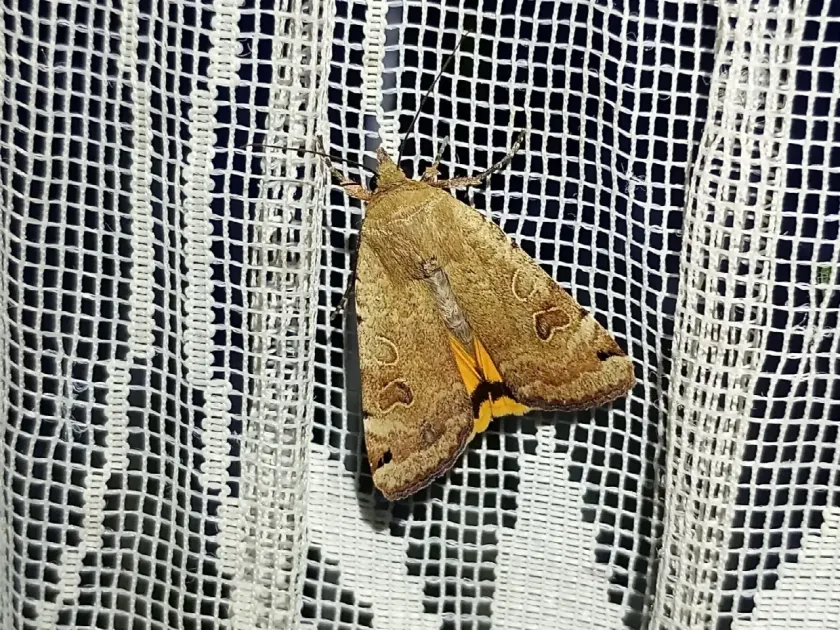
Orbona (Noctua orbona) is a nocturnal moth belonging to the family Noctuidae, order Lepidoptera. The adult moth features a characteristic pattern on the forewings, varying from light yellow to reddish-brown with dark spots, providing effective camouflage.
The larvae (caterpillars) of this species undergo several developmental stages, changing color from light green to brown with longitudinal light stripes. Small black dots are often visible on the body, and the caterpillar curls into a tight circle when threatened.
Pupae are usually reddish-brown with a smooth surface. They develop in the soil within specially constructed earthen chambers at a shallow depth, which protects them from extreme temperature fluctuations and predators.
Eggs are laid by females on the underside of host plant leaves in clusters. They are hemispherical with a ribbed surface, serving as a key diagnostic feature for entomological identification.
The insect's life cycle is closely linked to regional climate conditions, as the species is sensitive to soil moisture and the availability of biomass for larval feeding during early development stages.
What it damages
This pest affects a wide range of agricultural crops, including cereals, forage grasses, and various vegetables. The most significant damage occurs during the active growth phase of young seedlings and leaves.
The larvae are polyphagous phytophages. They are capable of consuming entire leaf blades, leaving only coarse veins, which leads to a critical decrease in the plant's photosynthetic activity.
In cases of mass outbreaks, Orbona can consume the apical meristems (growing points) of young plants, resulting in crop death or severe growth delays and significant yield reductions.
Damage to the root collar in early stages often leads to plant lodging and subsequent wilting under sunlight, which complicates the visual diagnosis of the cause of plant death in the field.
The economic threshold varies by crop: for vegetables, it is significantly lower than for field cereals due to the high market value and sensitivity to even minor feeding injuries.
When it appears
The flight period of the adults begins in mid-summer and can continue until early autumn, depending on temperatures. Nocturnal moth activity facilitates rapid population spread across fields.
Larvae of early or mid-instars overwinter in the upper soil layer or under plant debris. In spring, when temperatures remain stable, they resume feeding and pupation.
The most active crop damage by larvae is observed at night, as they emerge from their hiding places. During the day, they prefer to hide in the root zone or inside curled leaves.
A second activity peak may occur in autumn before hibernation, when the overwintering generation or the second generation consumes remaining vegetation to accumulate energy reserves.
Agronomists track population surges following mild, wet winters, which enhance the survival rates of larvae overwintering in the soil.
Signs of infestation
The first sign of infestation is the presence of characteristic "windows" in leaves or unevenly eaten leaf edges. Larvae feed actively both on the surface and on lower plant levels.
Pest presence can be identified by inspecting the root zone in the early morning. The presence of frass (excrement) under the plant is a reliable indicator of noctuid larvae activity.
Gradual wilting of individual plants in the field without visible signs of root rot often indicates stem or root chewing by Orbona larvae.
The use of light traps at night allows for tracking the start of moth flights and conducting timely monitoring for egg-laying in the fields.
- Presence of egg masses on leaf undersides.
- Holes in leaf tissue.
- Aggregation of larvae in the root-zone soil.
- Damaged growing points.
Control measures
The primary control method is agrotechnical: deep autumn plowing helps destroy a significant portion of overwintering larvae and pupae by exposing them to freezing temperatures on the soil surface.
Timely weed control is essential, as weeds serve as a reservoir for larval feeding before they migrate to target agricultural crops.
Upon reaching the economic threshold, the application of systemic and contact-stomach insecticides, which are effective against lepidopteran pests at night, is recommended.
Biological protection methods include the use of entomophages, such as Trichogramma wasps, which parasitize noctuid eggs, naturally suppressing population development.
Regular monitoring using pheromone traps allows for precise timing of treatments, which minimizes the pesticide load on the agroecosystem.
Taxonomy
- Latin name
- Noctua orbona
- Order
- Lepidoptera (butterflies)
- Family
- Noctuidae
- EPPO code
- NOCTOR
Discussion
No discussions yet — be the first.