
Large Yellow Underwing (Dark form)
Noctua janthina
Description
How to identify
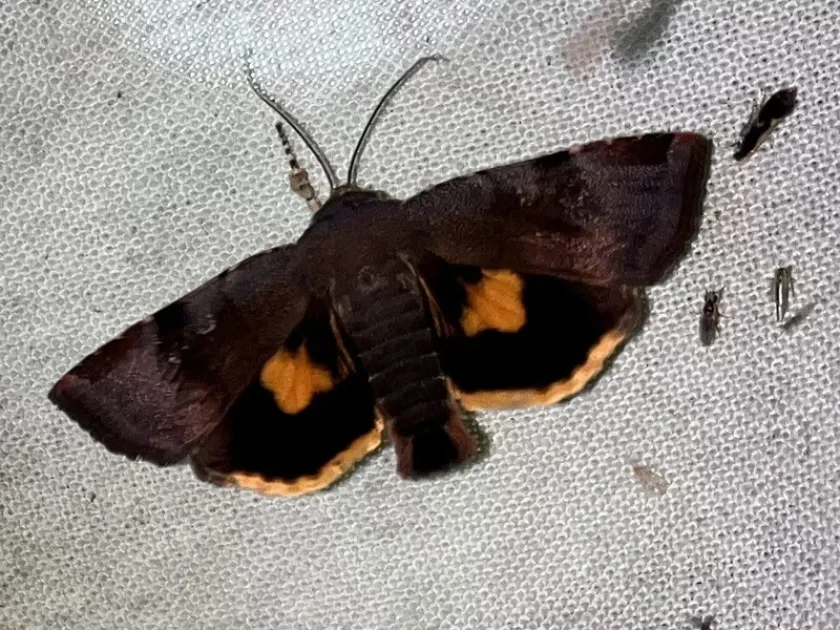
Noctua janthina, commonly known as a variation of the Large Yellow Underwing, is a moth species within the family Noctuidae. The adult moth has a wingspan of approximately 40–45 mm, with forewings displaying a deep, dark brown to violet-brown coloration.
The hindwings are distinctively orange-yellow, featuring a broad black submarginal band, which serves as a key identification mark. The thorax and abdomen are robust and densely covered in hair-like scales, typical of the genus.
The larvae are stout, reaching up to 50 mm in length when mature. Their coloration ranges from grayish-brown to greenish, often with lighter longitudinal stripes running along the dorsal side of the body.
The pupae are reddish-brown and glossy, developing within subterranean chambers. This pupal stage is the primary method for the species to survive colder periods in the soil.
These moths are primarily nocturnal, remaining hidden during daylight hours. They prefer resting in dense vegetation, leaf litter, or crevices in bark to avoid predators and desiccation.
What it damages
This species is a generalist polyphagous pest, meaning it feeds on a wide range of vegetable, ornamental, and field crops. The larvae cause significant economic damage through their voracious feeding habits.
Young larvae initially skeletonize foliage, feeding on the soft tissue between leaf veins. This activity reduces the overall photosynthetic capacity of the plant, leading to stunted growth.
Older larvae consume entire leaf blades, buds, and young fruits. Their feeding on developing fruits causes physical holes and deformities, which significantly lowers the marketability of the produce.
Severe infestations can lead to total loss of seedling stands, as larvae may chew through stems near the soil line. This type of damage is particularly devastating in high-density horticultural plantings.
Open wounds left by the larvae on fruits and stems provide easy entry points for various bacterial and fungal pathogens, potentially causing rot and further destroying the harvest.
When it appears
Noctua janthina typically undergoes one generation per year, though warmer climates may allow for a partial or full second generation. Adult moths are typically seen from June through July.
Eggs are deposited in clusters on the underside of leaves of host plants. The incubation period is relatively short, usually lasting about 10 to 14 days depending on environmental temperature.
The larval stage is the most active feeding period, occurring from late summer through early autumn. Larvae remain active at night and retreat to the soil surface or base of plants during the day.
Overwintering occurs as larvae in intermediate instars. They burrow into the topsoil or find shelter under plant debris to survive winter conditions, resuming activity when temperatures rise in spring.
Pupation takes place in the spring or early summer within the soil. This seasonal timing is strictly synchronized with the growth cycle of host plants, ensuring food availability for the emerging larvae.
Signs of infestation
The earliest signs of infestation include small, transparent windows on leaves caused by early-instar larval feeding. These patches eventually turn into ragged holes as the larvae grow.
The accumulation of larval frass (droppings) on leaves or at the base of the plant is a clear indicator of active feeding in the immediate vicinity.
Visible damage to fruits, such as irregular excavations or deep tunnels, is a sign that older larvae are present. Checking the lower canopy and soil base is essential in these cases.
Observing moths near light sources at night provides an early warning of population presence and potential upcoming egg-laying cycles.
Wilting of young shoots or stems often indicates that larvae have been feeding at the base or internally within the stem, disrupting the plant's vascular system.
Control measures
Cultural control strategies, such as deep plowing in autumn, are highly effective as they disturb the soil, exposing pupae and overwintering larvae to predators and environmental stress.
Weed management is critical in limiting alternative food sources and egg-laying sites. Keeping fields clean reduces the attractiveness of the area to female moths.
Biological control using Bacillus thuringiensis sprays has proven effective, especially when applied early in the larval stage. Natural enemies, such as parasitic wasps, can also help regulate populations.
Chemical intervention should rely on selective insecticides applied during the evening, when larvae are most active on the foliage. Always consider the impact on non-target beneficial insects.
Using pheromone traps or light traps for monitoring allows growers to track population trends and time insecticide applications precisely, preventing unnecessary chemical use.
Taxonomy
- Latin name
- Noctua janthina
- Order
- Lepidoptera (butterflies)
- Family
- Noctuidae
- EPPO code
- NOCTJA
Discussion
No discussions yet — be the first.