
Cutworms and Armyworms
Noctua
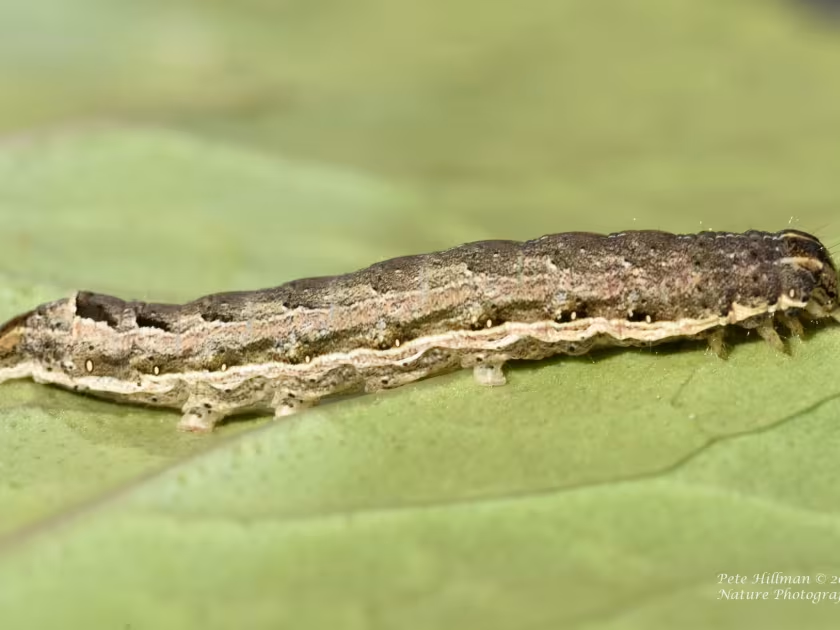
Description
How to identify
Cutworms and armyworms belong to the Noctuidae family, a diverse group of moths often referred to as owlet moths. The adults are typically nocturnal, medium-sized moths with mottled, dull-colored wings that provide excellent camouflage against tree bark or soil when at rest during the day.
The larvae, commonly known as cutworms (when they dwell in the soil) or armyworms (when they move in groups to feed), have soft, cylindrical bodies. They are often dark, greasy-looking, and vary in color from pale gray to nearly black, sometimes featuring distinctive stripes or spots along their length.
The life cycle involves four stages: egg, larva, pupa, and adult. Most species overwinter as pupae or larvae within the soil profile. This subterranean habit makes them difficult to target with preventative measures, as they remain insulated from temperature fluctuations until spring conditions trigger their activity.
Adult moths are strong fliers and are highly attracted to light sources at night. They prefer to lay their eggs in moist soil or on the undersides of leaves near dense, succulent vegetation, which ensures that the newly hatched larvae have immediate access to a food source.
Developmental rates are heavily dictated by environmental conditions. Warm, humid summers often lead to multiple overlapping generations within a single growing season, significantly complicating pest management efforts for farmers as different life stages may be present simultaneously.
What it damages
Noctuids are highly polyphagous, meaning they attack a wide array of crops including cereals, corn, legumes, and various vegetables. Their damage can be catastrophic, as they often target the most vulnerable stages of plant development, such as newly emerged seedlings or maturing fruits.
Cutworms are named for their habit of severing the stems of young plants at or just below the soil surface. This leads to the plant toppling over, essentially killing the plant at the seedling stage. This can result in significant stand loss and may require replanting entire fields.
Armyworms, conversely, often feed in large numbers. They can rapidly consume foliage, sometimes stripping a plant down to its primary veins. When their food source is exhausted, they move in "armies" to the next available green crop, causing extensive damage in a very short duration.
Some species are fruit-feeders, boring into tomatoes, corn ears, or peppers. This tunneling activity ruins the marketability of the produce and frequently introduces secondary infections like mold or bacteria, leading to the rapid decay of the fruit while it is still in the field.
The cumulative impact of Noctuid damage is profound, resulting in reduced yields, stunted plant growth, and increased costs for replanting or remedial pesticide applications. Their ability to persist in the soil makes them a recurring challenge for agricultural sustainability.
Signs of infestation
The most telltale sign of cutworm activity is the presence of wilted or toppled seedlings in an otherwise healthy field. Upon closer inspection, one will find the stem severed at the soil line, and if the soil around the base is disturbed, the larva can often be found curled up nearby.
Armyworm activity is characterized by large-scale skeletonization of leaves and ragged, irregular holes along the edges of the foliage. In severe cases, the entire plant may be stripped, leaving only the midribs of the leaves, which is highly visible from a distance.
Egg masses are another key indicator of an impending infestation. These are usually found on the undersides of leaves or on stems, appearing as small clusters of eggs covered in a protective, fuzzy material that helps them blend in with the leaf surface.
Frass (larval excrement) is a reliable sign of active feeding. Finding dark, pellet-like droppings in leaf axils or on the soil surface confirms the presence of larvae. For fruit-boring species, small entry holes in the fruit are the most distinct sign of an infestation.
Light traps and pheromone traps are standard tools used for early detection. A sudden spike in the number of adult moths captured in these traps serves as a warning for farmers, indicating that egg-laying is occurring and protective measures should be initiated shortly thereafter.
Control measures
Integrated Pest Management (IPM) is essential for managing cutworms and armyworms. Cultural practices, such as maintaining weed-free fields, are vital because many noctuid species rely on wild grasses and weeds as initial hosts before migrating to crop plants.
Tillage operations, particularly deep plowing, can disrupt the life cycle of these pests. By bringing pupae and larvae to the surface, tillage exposes them to predators such as birds and ground beetles, as well as extreme temperature fluctuations, which significantly reduces the surviving population.
Biological controls include the application of specific strains of Bacillus thuringiensis (Bt), which is highly effective against young larvae. Additionally, releasing egg parasitoids like Trichogramma wasps can help keep Noctuid populations in check during the egg-laying phase.
Chemical control should be based on economic thresholds and careful field scouting. It is most effective to treat during the early larval stages when the caterpillars are more susceptible to contact and systemic insecticides and before they have caused irreversible damage to the crop.
Proper timing of applications, preferably during the evening when larvae are most active on the foliage, significantly improves control efficacy. Rotating insecticide modes of action is also recommended to mitigate the risk of larvae developing resistance to chemical treatments.
Taxonomy
- Latin name
- Noctua
- Order
- Lepidoptera (butterflies)
- Family
- Noctuidae
- EPPO code
- NOCTSP
Discussion
No discussions yet — be the first.