
Neumichtis saliaris
Neumichtis saliaris
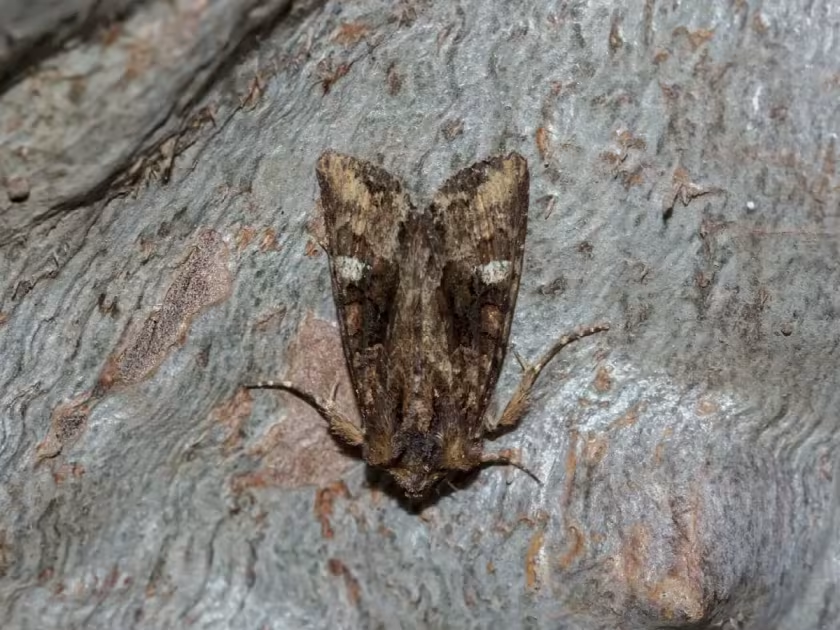
Description
How to identify
Neumichtis saliaris belongs to the Noctuidae family, within the order Lepidoptera. It is a nocturnal moth whose life cycle is closely linked to herbaceous vegetation in arid and semi-arid regions.
The adult insect is characterized by gray-brown wings, which provide effective camouflage against dry soil and plant debris. Its wingspan reaches approximately 35–40 millimeters.
The larvae, or caterpillars, have a typical cylindrical appearance for cutworms. The color of the larvae ranges from earthy to greenish, making them difficult to detect during daylight inspections.
The insect undergoes complete metamorphosis, passing through egg, larva, pupa, and adult stages. The species usually overwinters in the pupal stage, burrowing into the upper soil layers.
Species identification requires careful examination of the morphological features of the adults or laboratory analysis of larval feeding, as many noctuid species are visually similar.
What it damages
This pest exhibits trophic activity on various agricultural crops, primarily cereals and grasses.
Caterpillars feed on the vegetative parts of plants, particularly the leaves, which leads to a reduction in the photosynthetic area and overall plant vigor.
In cases of mass outbreaks, the pest can damage generative organs, including ears and panicles, which directly affects the yield quality.
Damage to seedlings during early development phases is particularly hazardous when the plant is most vulnerable to mechanical tissue loss.
The host range of Neumichtis saliaris also includes many wild weeds, which can serve as reservoirs for the pest in adjacent fields.
When it appears
The activity of adult Neumichtis saliaris occurs during the warm season, when climatic conditions favor moth flight.
The hatching of caterpillars coincides with the start of the active vegetation period of primary host crops, providing the larvae with sufficient nutrients.
Peak damage occurs during evening and night hours, as this is when the caterpillars are most active in their search for food.
Multiple generations can develop throughout the season, provided there are stable temperature and humidity conditions.
By autumn, the population prepares for diapause by moving deeper into the soil profile for safe overwintering.
Signs of infestation
The primary sign of field infestation is irregular "figure" leaf margins, typical for cutworm feeding activity.
The presence of excrement on the leaf surface or in plant axils is a clear indicator of recent pest activity in the specific field area.
During night field inspections, one can spot the caterpillars moving along the plants to feed, leaving behind visible damage marks.
Wilting of individual shoots or the presence of holes bored into stems may also indicate the hidden activity of younger instar larvae.
The mass appearance of moths near light sources in the evening is an indirect signal to begin monitoring the pest population density.
Control measures
The foundation of control is strict adherence to crop rotation, which limits the pest's access to preferred host plants.
Deep autumn plowing helps reduce the number of overwintering pupae through mechanical damage and by exposing them to the soil surface.
The use of biological insecticides based on entomopathogenic fungi or bacteria allows for effective population control without environmental impact.
Chemical field treatments using systemic or contact insecticides should be conducted during periods when early-instar larvae are most abundant.
The use of pheromone traps allows for precise tracking of adult flight dynamics, enabling timely protective measures and minimizing unnecessary pesticide applications.
Taxonomy
- Latin name
- Neumichtis saliaris
- Order
- Lepidoptera (butterflies)
- Family
- Noctuidae
- EPPO code
- NEUMSA
Discussion
No discussions yet — be the first.