
Neumichtis expulsa
Neumichtis expulsa
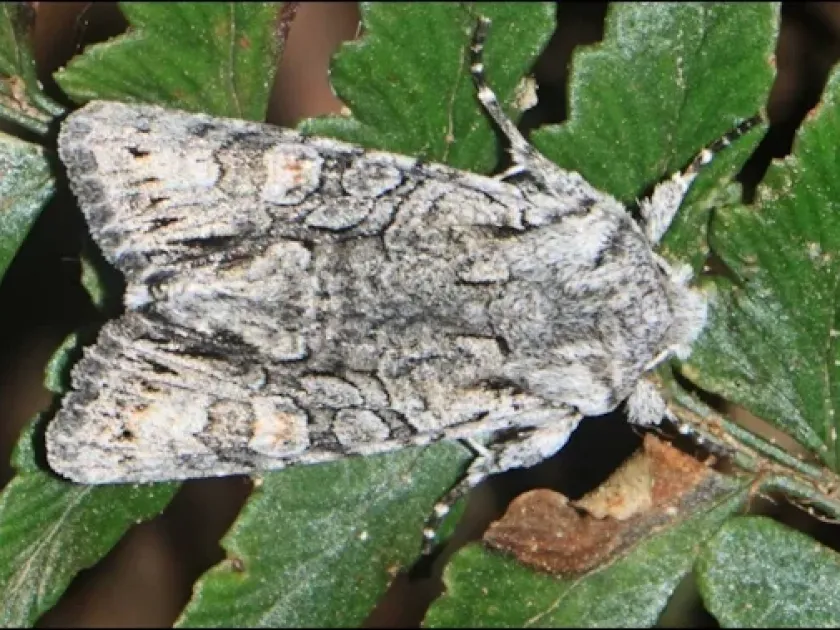
Description
How to identify
Neumichtis expulsa belongs to the family Noctuidae (cutworms and owlet moths) within the order Lepidoptera. It is a nocturnal moth characterized by a secretive lifestyle, making it difficult to spot during daytime.
The adult moth features cryptic coloration, blending perfectly with bark or dry vegetation. Its wings exhibit grey and brown patterns that serve as effective camouflage against natural backgrounds.
The larvae, or caterpillars, are typical of the Noctuidae family, possessing a cylindrical body and well-developed prolegs that enable efficient movement and feeding on host plants.
The lifecycle follows complete metamorphosis: egg, larva, pupa, and adult. Each stage is adapted to survival in agricultural ecosystems, with larvae being the primary stage responsible for crop damage.
This species is well-adapted to temperate climates and frequently inhabits various agricultural landscapes, where it finds suitable host plants for its lifecycle development.
What it damages
The pest poses a threat to a variety of plants, including cereals, vegetables, and young fruit tree saplings. Its feeding habits can cause significant economic losses in affected fields.
Larvae primarily consume leaf tissue, often leaving behind only the veins or creating large, irregular holes in the leaf surface, which severely hinders the plant's ability to photosynthesize.
In cases of high population density, the pest can defoliate entire sections of a crop, resulting in reduced growth, stunted development, and potential loss of yield for the farmer.
Young plants are particularly vulnerable; feeding on the terminal bud or the main stem can cause permanent deformation or even the death of the crop plant.
While the larvae are the destructive stage, the adults' flight activity indicates the potential for future outbreaks, as they lay eggs on or near suitable host crops.
When it appears
Adult moths are typically active during the summer months. Their flight pattern is nocturnal, meaning they are most active under the cover of darkness, which is a key factor for pest monitoring.
Caterpillars are most abundant in late spring and throughout the summer, aligning their feeding period with the vigorous growth phase of most crops.
The species survives winter primarily in the pupal stage, often resting in the soil or leaf litter, which provides protection from extreme temperatures.
In the spring, rising soil temperatures trigger the emergence of the first generation of adults, marking the start of the reproductive cycle for the new season.
Depending on the climatic zone and temperature conditions, the pest may produce one or more generations per year, which directly impacts the intensity of control efforts needed.
Signs of infestation
The most common sign of an infestation is the presence of irregular damage to the foliage, which indicates the presence of a chewing insect.
Locating the larvae during the day is challenging as they often burrow into the soil near the plant base or hide in the folds of leaves to avoid sunlight and predators.
Frass (larval droppings) left on the foliage or at the base of the plant is a clear indication that caterpillars are feeding nearby.
A sudden decline in plant health, wilting without apparent cause, or visible thinning of the crop canopy are late-stage signs of high larval population density.
Nighttime field inspections using a light source can reveal the larvae actively feeding on leaves, confirming the identity and location of the infestation.
Control measures
Effective management requires an integrated approach to reduce population levels below the economic injury threshold.
- Deep autumn plowing to expose and destroy pupae residing in the soil.
- Rigorous weed control to eliminate alternative food sources and refuges for the pest.
- Use of biological control agents, such as microbial insecticides, during the early larval stages.
- Application of chemical insecticides when population thresholds are exceeded, ensuring correct timing for maximum efficiency.
- Encouraging natural predators, including beneficial insects and local bird species, which help keep pest numbers in check.
Taxonomy
- Latin name
- Neumichtis expulsa
- Order
- Lepidoptera (butterflies)
- Family
- Noctuidae
- EPPO code
- NEUMEX
Discussion
No discussions yet — be the first.