
Neumichtis
Neumichtis
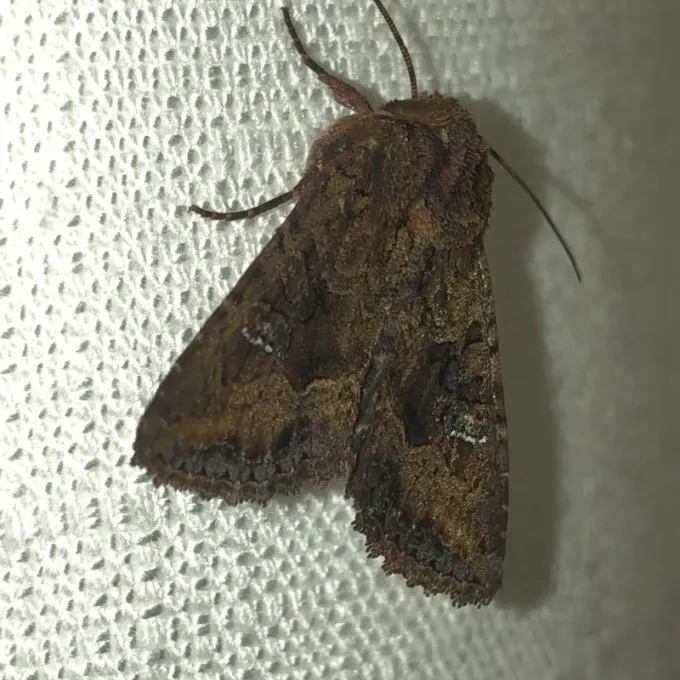
Description
How to identify
The genus Neumichtis belongs to the family Noctuidae, order Lepidoptera. These are nocturnal moths with a camouflage coloration that helps them blend in with tree bark or leaf litter during the daytime.
Adult moths have a well-developed proboscis typical of this family, allowing them to feed on floral nectar. Their wings often exhibit grey, brown, or olive patterns that mimic their natural habitat.
The larvae, known as caterpillars, have cylindrical bodies typical of owlet moths. Their coloration varies from green to brownish, providing excellent concealment among the leaves and stems of their host plants.
The life cycle involves a complete metamorphosis: egg, larva (caterpillar), pupa, and adult. The pupal stage typically occurs in the soil or within protective debris, ensuring survival against adverse conditions.
A key behavioral trait is the nocturnal feeding habit; the larvae are most active during the night, remaining hidden near the roots or within foliage during daylight hours.
What it damages
The Neumichtis genus is capable of damaging a wide range of agricultural and horticultural crops. Both woody plants and certain herbaceous crops are susceptible to their feeding activities.
Caterpillars act as defoliators. During early stages, they skeletonize the leaves, consuming the soft tissues between the veins, which causes the foliage to wither and drop prematurely.
In later stages, the larvae move on to consuming the entire leaf blade, leaving only the primary veins. This drastically reduces the photosynthetic surface, weakening the host plant significantly.
Significant infestations can lead to substantial defoliation, particularly in young plantations, which inhibits plant growth and reduces the overall yield of the crop.
Damage to the growth points, flower buds, and young fruitlets is particularly critical, as it directly impacts reproductive output and leads to physical deformations of the plant structure.
When it appears
The peak activity of Neumichtis adults generally occurs in the late summer and early autumn. During this time, mating and oviposition take place to ensure the survival of the next generation.
The larval development period coincides with the most active growing phases of the plants. Depending on the species and climate, the number of generations per season can vary.
The insect typically overwinters as a pupa, either in the soil or protected in bark crevices. This diapause allows them to withstand cold winter temperatures until the following spring.
With the arrival of warmer temperatures in spring, adults emerge to start a new cycle. Monitoring these emergence periods is crucial for timing effective management strategies.
Environmental factors, such as humidity and temperature, play a significant role in the speed of development, often leading to fluctuations in population density between years.
Signs of infestation
The first sign of infestation is often the presence of small, irregular holes in the leaves. As the larvae grow, these holes become more prominent and coalesce into larger patches of missing leaf tissue.
Frass (larval droppings) left on the foliage or on the ground beneath the plant is a clear indicator that the larvae are actively feeding in the vicinity.
Distorted or curled leaves, sometimes held together by fine silk strands, are another visual clue that larvae are nesting or feeding within that specific area.
Direct observation at night using a flashlight will often reveal the larvae, as they are not hidden during their peak feeding hours.
- Premature yellowing and necrosis of leaves due to damaged vascular structures.
- Drop of buds and immature fruit following direct feeding damage.
- Stunted shoot growth caused by severe loss of photosynthetic area.
Control measures
Cultural control methods, such as deep autumn tillage or soil cultivation around tree trunks, are effective in destroying overwintering pupae hidden in the soil.
Maintaining a clean field by removing weeds and plant debris reduces potential refuges for the larvae and limits their available food sources during the off-season.
Biological control options, including the use of Bacillus thuringiensis or releasing natural egg parasitoids like Trichogramma, can keep populations below economic thresholds.
Chemical control should only be utilized when monitoring confirms that the economic threshold is exceeded, utilizing selective insecticides that minimize harm to beneficial pollinators.
Using pheromone traps helps in detecting the onset of adult flights, allowing farmers to predict potential larval outbreaks and apply control measures precisely when needed.
Taxonomy
- Latin name
- Neumichtis
- Order
- Lepidoptera (butterflies)
- Family
- Noctuidae
- EPPO code
- NEUMSP
Discussion
No discussions yet — be the first.