
Pelagic ragworm
Nereis pelagica
Description
How to identify
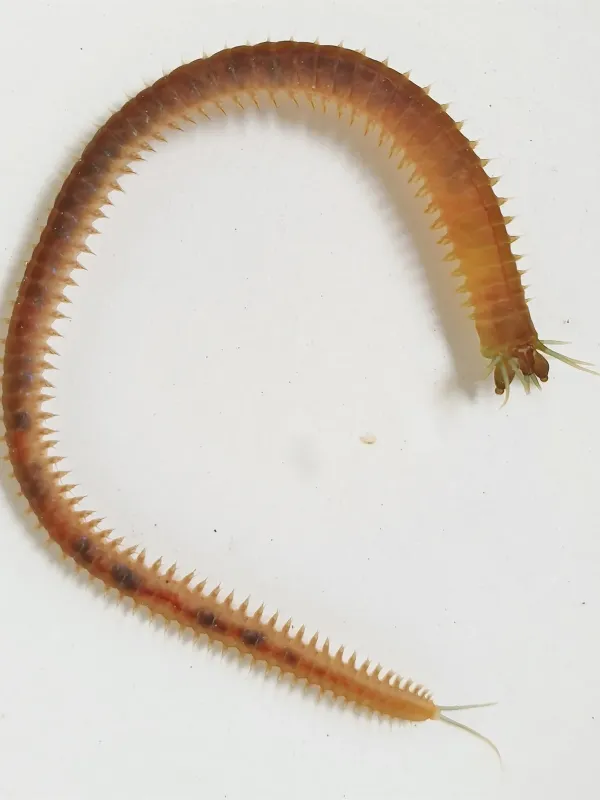
The Pelagic ragworm (Nereis pelagica) is a marine polychaete worm belonging to the family Nereididae. It is characterized by an elongated, segmented body equipped with lateral parapodia used for movement.
Adult individuals can grow up to 15 centimeters in length, showing reddish-brown to greenish coloration that facilitates camouflage in bottom substrates and seaweed beds.
Taxonomically, the species is placed in the class Polychaeta and the order Phyllodocida. They possess well-developed jaws, making them active foragers in aquatic environments.
Their life cycle includes a pelagic larval stage, during which they drift with currents before settling into the bottom substrate to mature as benthic organisms.
Sensory organs, including eyes and tentacles, are highly developed, allowing them to detect organic food sources and potential habitats efficiently.
What it damages
While not a common terrestrial pest, the Pelagic ragworm can cause significant damage in marine agriculture and coastal plant nurseries. They feed on the roots and stems of halophytic plants.
Damage symptoms include shredded or gnawed plant tissue, leading to stunted growth, reduced nutrient uptake, and eventual wilting of affected plants.
In high-density environments, these worms can cause structural damage to the substrate, destabilizing the root system of crops and creating voids that dry out roots.
The economic impact is concentrated in aquaculture farms where seaweed or coastal crops are cultivated, resulting in loss of inventory and replanting costs.
Young seedlings are particularly vulnerable, as even minor feeding by the worms can prevent successful establishment in saline soil conditions.
Control measures
Effective control requires strict monitoring of the substrate. Maintaining a clean environment by removing decaying organic debris reduces the available food supply.
Mechanical exclusion using fine-mesh filtration in water intake systems prevents the introduction of larvae into controlled farming zones.
Biological management involves introducing natural predators, such as small crustaceans or specific fish species, which can regulate ragworm numbers in enclosed systems.
Cultural practices, such as controlling salinity levels or periodic substrate drying, are highly effective in disrupting the life cycle of the worm.
Chemical applications should be avoided where possible due to the ecological sensitivity of marine systems; integrated pest management (IPM) is strongly recommended.
Taxonomy
- Latin name
- Nereis pelagica
- Family
- Nereididae
- EPPO code
- NEREPE
Discussion
No discussions yet — be the first.