
European crane fly
Nephrotoma makiella
Description
How to identify
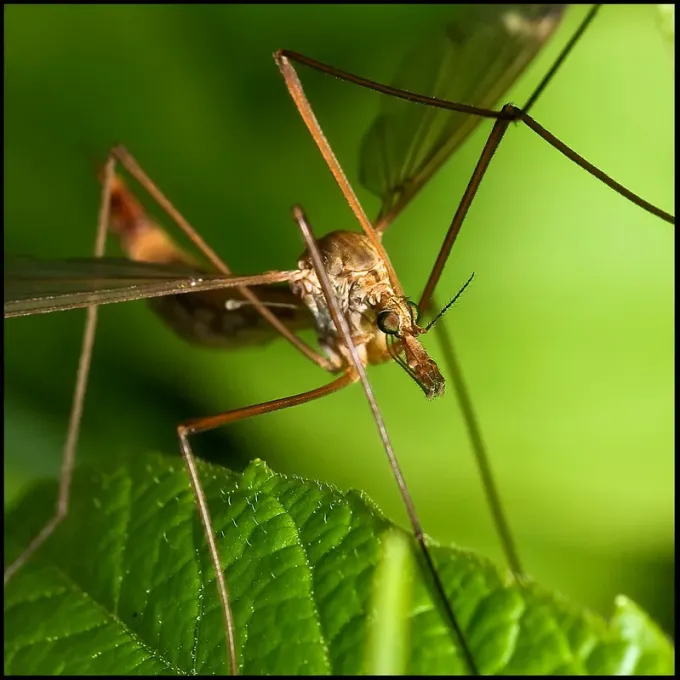
The European crane fly (Nephrotoma makiella) is a member of the Tipulidae family, characterized by long, fragile legs and a slender body. Adults are often mistaken for giant mosquitoes but do not bite humans.
The adult insect displays a yellowish-brown coloration with distinctive dark stripes on the thorax. They are relatively weak fliers and are commonly observed resting on tall grasses or vegetation.
The larvae, known as leatherjackets, are cylindrical, legless, and have a tough, leathery skin. They typically measure 30 to 40 mm when fully grown and are gray-brown in color.
Development involves complete metamorphosis. The larvae go through four instars within the soil, feeding on organic matter and living roots depending on their growth stage.
The species prefers moist habitats. High soil moisture is essential for the survival of eggs and young larvae, making low-lying areas of fields particularly susceptible to infestation.
What it damages
Larvae are the primary cause of economic loss in agriculture. They feed on roots, crowns, and stems of a wide range of grasses, cereals, corn, and vegetable crops.
Young plants are particularly vulnerable. When larvae feed on the roots, the plant loses its ability to uptake water and nutrients, resulting in yellowing, stunted growth, or death.
In winter cereals and early spring crops, heavy infestations can result in thin stands or complete failure of sections of the field. This loss often necessitates replanting.
Root damage is typically characterized by ragged edges on the stems near the soil surface. Unlike wireworms, crane fly damage is often surface-level and involves significant tissue destruction.
Vegetable crops and potatoes may suffer from tunneling by the larvae. These wounds not only physically weaken the plant but also create entry points for secondary pathogens like rot-causing fungi.
When it appears
The crane fly typically has one generation per year. Adults emerge during late spring or early summer to mate and lay eggs in the soil.
Females prefer to lay eggs in areas with dense vegetation or moist soil. The eggs hatch within a couple of weeks, depending on temperature and moisture levels.
Larval activity increases during autumn, as they feed in preparation for winter. They overwinter in the soil and resume intense feeding as the soil warms in early spring.
Spring is the peak period for crop damage as the larvae are large and require significant energy for their final development phases before pupation.
Pupation occurs in the soil, and the pupae have small hooks that allow them to wiggle to the surface just before the adult insect emerges.
Signs of infestation
One of the earliest signs is the emergence of patchy, yellowed areas in a field. These plants are often loose in the soil and can be easily pulled out with minimal resistance.
Inspection of the soil around the base of damaged plants usually reveals the presence of gray, leathery larvae at a shallow depth of 2 to 5 centimeters.
In spring, the remnants of empty pupal cases can be found protruding from the soil surface, providing a clear indication that a new generation of adults has recently emerged.
The presence of large holes or ragged chewing on root systems and lower stems confirms the diagnostic signs of leatherjacket infestation rather than other soil-borne pests.
In lawns or pastures, surface disturbance by birds, such as starlings or crows, often points to an underlying population of larvae feeding in the soil.
Control measures
Cultural control is the first line of defense. Tillage practices, especially deep plowing in the autumn, can significantly reduce larval survival by exposing them to desiccation and predators.
Field drainage and weed control are crucial. Reducing soil moisture and removing preferred egg-laying sites (weeds) makes the field environment less suitable for the pest.
Crop rotation helps interrupt the life cycle, especially when moving from highly attractive crops like cereals to less preferred varieties or non-host plants.
- Seed treatment with systemic insecticides.
- Targeted use of bait stations in severely infested areas.
- Monitoring soil moisture levels in low-lying parts of the field.
Chemical intervention should be based on the economic injury level. Applying insecticide sprays or granules when larvae are actively feeding near the surface can be effective if done at the right time.
Taxonomy
- Latin name
- Nephrotoma makiella
- Order
- Diptera (flies)
- Family
- Tipulidae
- EPPO code
- PALEMK
Discussion
No discussions yet — be the first.