
Bronze cutworm
Nephelodes minians
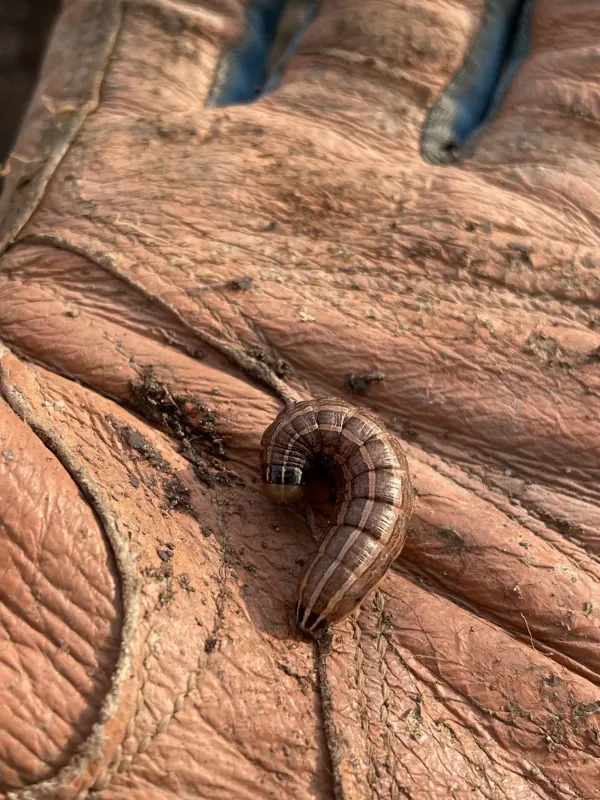
Description
How to identify
The Bronze cutworm (Nephelodes minians) belongs to the order Lepidoptera and the family Noctuidae. The adult is a nocturnal moth with a wingspan of approximately 40–45 mm.
The forewings are characterized by a distinct bronze-brown or reddish-brown coloration, featuring dark transverse lines and spots typical of the cutworm family.
The larvae, known as cutworms, grow up to 40–50 mm in length. They have a smooth body with a color range from grayish-brown to greenish-black, marked by light longitudinal stripes.
The species completes one generation per year. They overwinter as larvae in the soil or under crop debris, which protects them from extreme winter temperatures.
During the spring, the overwintered larvae emerge to feed on green vegetation before undergoing pupation in the top layers of the soil.
What it damages
The Bronze cutworm is a polyphagous pest that causes significant damage to cereal crops, including wheat, barley, oats, and occasionally corn.
Early in the growing season, larvae feed on young foliage and may cut through the stems of seedlings at the base, leading to plant loss and gaps in the crop stand.
In addition to cereals, the pest can impact perennial grasses, which often serve as primary food sources in regions with high humidity and lush vegetation.
The most severe damage typically occurs during cool, wet spring weather, which promotes active larval feeding and contributes to rapid development of the population.
When infestation levels are high, the pest can devastate significant sections of a field, directly reducing the plant density and the overall potential yield.
When it appears
The activity of the larvae begins early in the spring, immediately after the snow melts and the soil begins to warm, marking the start of their feeding phase.
Peak damage generally occurs throughout April and May, as the larvae consume large amounts of green tissue to fuel their development prior to pupation.
The moth flight period typically takes place in mid-summer, spanning from June to August, depending on the specific environmental conditions of the region.
Female moths lay eggs on the leaves of host plants or directly on the soil surface, selecting locations that provide optimal humidity for larval survival.
By late summer, the newly hatched larvae begin their feeding cycle and continue until cold weather forces them into the soil for winter dormancy.
Signs of infestation
Visible symptoms of infestation include irregular holes in the leaf blades and ragged margins along the edges of the leaves caused by larval feeding.
A classic sign of cutworm presence is the wilting or complete collapse of young seedlings, often accompanied by the stem being severed at or near the ground level.
The presence of larval frass (droppings) on the soil surface near the base of the plant is a reliable indicator of active nocturnal feeding by the pest.
During daytime hours, larvae are usually hidden under soil clods or deep within the plant debris to avoid predation and drying out.
- Thinning stands and patches of missing plants.
- Severed seedling stems at the base.
- Notched or skeletonized leaf edges in cereals.
Control measures
Crop rotation is the most effective cultural practice to manage the Bronze cutworm, as it prevents the pest from establishing a stable food source in one location.
Tillage operations, particularly fall plowing, are highly effective because they expose the overwintering larvae to predators and environmental stress, reducing population numbers.
Sanitation practices such as weed management on field margins significantly reduce the availability of alternative food sources for the larvae throughout the season.
When scouting reveals populations exceeding economic thresholds, the application of registered contact or systemic insecticides can protect the crop from further injury.
Monitoring adult flight patterns using pheromone traps allows farmers to predict potential outbreaks and apply protective measures at the most vulnerable stage.
Taxonomy
- Latin name
- Nephelodes minians
- Order
- Lepidoptera (butterflies)
- Family
- Noctuidae
- EPPO code
- NEPEMI
Discussion
No discussions yet — be the first.