
Nephelodes
Nephelodes
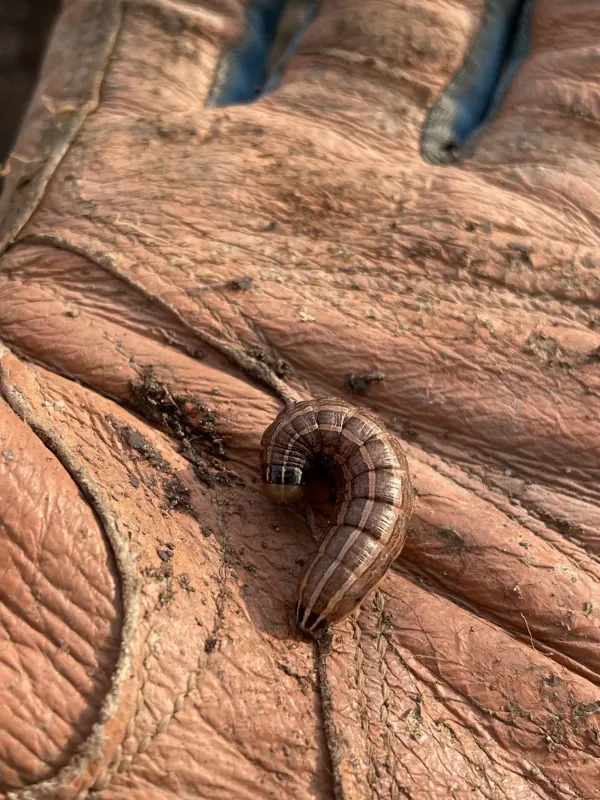
Description
How to identify
The Nephelodes moth (scientific name Nephelodes minians) belongs to the family Noctuidae, order Lepidoptera. The adult moth has a wingspan ranging from 35 to 45 mm.
The forewings are typically reddish-brown to dark brown, often featuring darker markings and wavy lines that provide excellent camouflage against vegetation.
The larvae, known as cutworms, have robust, smooth bodies that can reach up to 40 mm in length, often appearing brownish with distinct longitudinal stripes.
This species undergoes a complete metamorphosis, including egg, larval, pupal, and adult stages, with most populations completing one generation annually.
The pest typically overwinters in the soil as larvae, allowing them to remain protected from cold winter temperatures and emerge early in the spring.
What it damages
The Nephelodes moth primarily infests cereal crops such as wheat, oats, barley, as well as corn and various species of forage grasses in pastures.
Larvae are polyphagous, meaning they feed on a wide variety of plants, which makes them highly adaptable and dangerous in mixed agricultural environments.
Damage usually occurs during the early stages of crop growth, where larvae consume foliage and can even cut off young shoots at the soil line.
Severe infestations can lead to significant thinning of the stands, requiring replanting and resulting in substantial economic loss for the farmer.
Beyond leaf consumption, the physiological stress caused by larval feeding makes young plants more susceptible to secondary pathogens and drought stress.
When it appears
Adult moths typically emerge in late summer to early autumn, when they mate and lay eggs on host plants or directly on the soil surface.
Larval activity begins early in the spring as temperatures rise, prompting the overwintering larvae to emerge from the soil to feed on fresh growth.
The peak period of damage is often observed during May and June, as the larvae grow rapidly and consume large amounts of green plant tissue.
By mid-summer, the larvae reach maturity and move deeper into the soil to pupate, signaling the end of the active feeding stage for the season.
Environmental factors, such as soil moisture and temperature, play a critical role in the developmental rate and survival success of each larval generation.
Signs of infestation
The most noticeable signs of infestation include ragged leaf edges and holes in the foliage of young grain plants caused by larval chewing.
Presence of larvae can often be confirmed by examining the soil at the base of damaged plants during the cool early morning hours.
The accumulation of larval frass (excrement) around the base of the plant is another reliable indicator that a population of Nephelodes is present.
In cases of heavy infestation, farmers may notice entire patches of wilting or missing plants as the cutworms sever stems at the surface.
- Ragged, notched, or missing leaf tissue.
- Presence of larvae in the soil near the plant base.
- Stunted growth or wilting of young seedlings.
Control measures
Cultural practices such as deep fall plowing are effective at exposing larvae and pupae to predators and environmental extremes, reducing population numbers.
Effective weed management is crucial, as many wild grasses serve as primary hosts that support larval growth before crop emergence.
Chemical control involving the application of insecticides may be necessary when population counts exceed established economic thresholds for the crop.
Biological control options, including the use of entomopathogenic fungi or bacterial agents, provide a sustainable alternative for managing larval populations.
Continuous monitoring using pheromone or light traps helps agronomists track moth activity and determine the optimal timing for protective interventions.
Taxonomy
- Latin name
- Nephelodes
- Order
- Lepidoptera (butterflies)
- Family
- Noctuidae
- EPPO code
- NEPESP
Discussion
No discussions yet — be the first.