
Neottiophilum praeustum
Neottiophilum praeustum
Description
How to identify
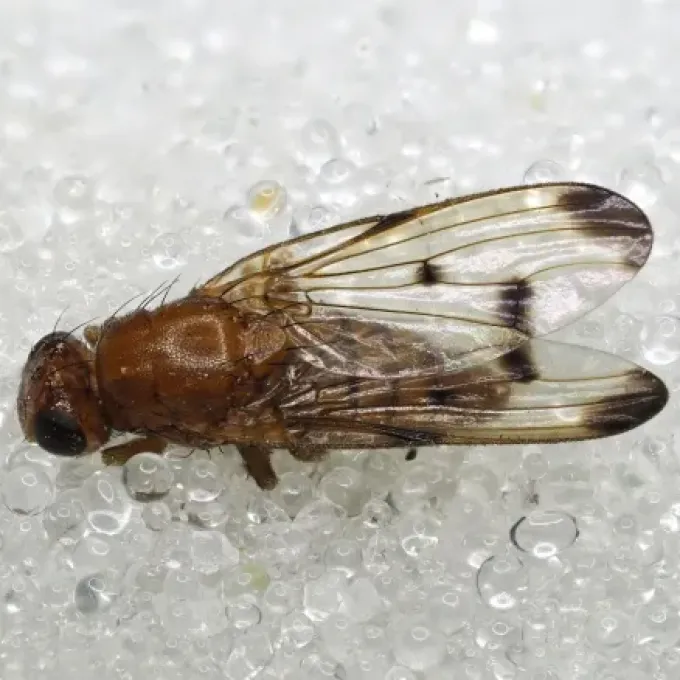
Neottiophilum praeustum is a fly species belonging to the family Neottiophilidae. The adult insect resembles a small fly with a yellowish-brown body coloration.
The imago reaches a small size, typical for members of this family. Its wings are transparent, sometimes with a slight dark shading at the tips, which serves as a diagnostic feature.
The larvae have the typical morphology for neottiophilid flies: they are legless, maggot-like, with well-developed mouthparts adapted for feeding on plant tissues.
Systematically, this species belongs to the suborder of cyclorrhaphous flies. The life cycle consists of a complete metamorphosis: egg, larva, pupa, and imago.
Unlike many other pests, this species displays specific activity related to colonizing the young shoots and vegetative organs of certain woody and shrub species.
What it damages
The primary damage is caused by larvae that penetrate the soft tissues of young shoots, stems, or buds. They create tunnels inside the plant tissue, disrupting the normal transport of sap.
This pest is most dangerous to young saplings and ornamental plants in nurseries, where damage to apical shoots can lead to stem deformity and loss of aesthetic quality.
Damaged tissues become susceptible to secondary infections, including fungal diseases and bacterial rots, which significantly accelerate the death of plant organs.
Mass outbreaks are particularly dangerous in years with favorable weather, where the percentage of damaged young growth can reach critical thresholds.
The economic impact of this species lies in the reduction of the plant's overall immunity, making it less resilient to unfavorable abiotic environmental factors.
When it appears
The flight of adult insects usually begins in late spring when the average daily temperature reaches the levels necessary for the activation of the pest's metabolism.
The peak of egg-laying occurs during the period of active sap flow and the formation of young foliage, ensuring optimal feeding conditions for the larvae upon hatching.
The complete development cycle of one generation takes from several weeks to a month, depending on the temperature and air humidity in the current season.
In temperate climates, the species is capable of producing one or more generations, with the most intense development observed in the first half of the summer.
By autumn, the insect development slows down, and the species enters a diapause state (usually in the pupal or imago stage) to successfully survive the winter period.
Signs of infestation
The main sign of infestation is a slowing of apical shoot growth and their subsequent wilting, despite adequate soil moisture levels.
Upon careful examination, one can find entry holes or small swellings on the stems caused by the activity of the larvae residing inside the plant tissues.
Leaves on the damaged shoots often deform, curl, or turn yellow prematurely due to the disruption of the plant's vascular transport system.
- presence of larval frass at the base of damaged buds;
- appearance of necrotic spots at the site of pest entry;
- death of the apical growth point in saplings;
- general chlorosis of vegetative organs.
The characteristic "signature" of the damage allows for the differentiation of Neottiophilum praeustum activity from other pests that prefer feeding on leaf surfaces or roots.
Control measures
The protection system includes agrotechnical methods aimed at increasing the overall resistance of plants to pest attacks during their peak activity periods.
An important technique is the timely pruning and destruction of damaged shoots where larvae concentrate, which effectively reduces the population density.
Biological control involves the use of natural enemies (entomophages) and entomopathogenic microorganisms that limit the insect's reproduction in the natural environment.
The use of contact-systemic insecticides is justified only during periods of mass outbreaks, with mandatory adherence to pre-harvest intervals.
Regular monitoring of plantation health and maintaining optimal planting density help minimize the risks of the pest spreading rapidly across the site.
Taxonomy
- Latin name
- Neottiophilum praeustum
- Order
- Diptera (flies)
- Family
- Neottiophilidae
- EPPO code
- NTTIPR
Discussion
No discussions yet — be the first.