
Neodusmetia sangwani
Neodusmetia sangwani
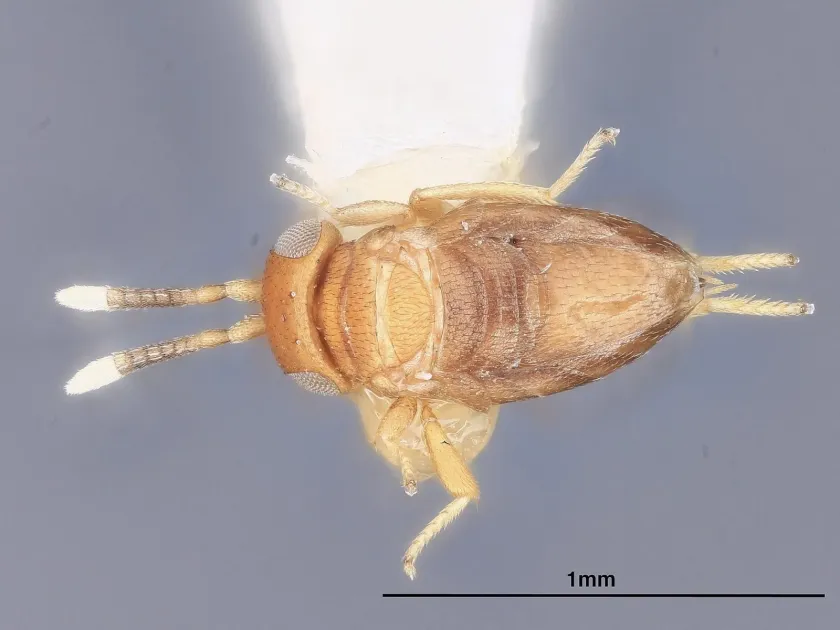
Description
How to identify
Neodusmetia sangwani, commonly known as the Rhodes grass mealybug, is a hemipteran insect belonging to the family Pseudococcidae. It is a highly specialized pest that primarily targets various species of grasses.
Adult females are wingless, oval-shaped, and covered with a white waxy secretion. They remain relatively sedentary, typically hiding in protected areas such as leaf sheaths or near the nodes of grass stems.
The insect follows a typical mealybug life cycle, including egg, nymph (crawler), and adult stages. The crawler stage is the primary mobile phase responsible for dispersing the population to new plants.
The species thrives in warm, humid climates, which allow it to maintain continuous reproductive cycles throughout the growing season if a suitable host is available.
Taxonomically, it is recognized as a significant pest in several regions where its host plants, such as Buchloe dactyloides and others, are cultivated for forage or turf purposes.
What it damages
The pest causes damage by piercing the plant tissue and extracting sap. This nutrient extraction significantly weakens the grass, leading to reduced vigor and stunted overall growth.
Because the insects cluster in protected sites like leaf axils, the damage is often localized initially, but as the population grows, it can spread to affect the entire grass canopy.
Heavy infestations result in severe yellowing and drying of the grass leaves. If left unmanaged, the damage can lead to the death of entire stands, especially during periods of environmental stress.
Beyond direct sap depletion, the stress caused by the mealybug makes the host plants more susceptible to secondary infections by various pathogens and drought conditions.
The economic impact is substantial, particularly in agricultural settings where pastures and seed production fields suffer from reduced biomass yield and poor plant health.
Signs of infestation
Early warning signs include the yellowing of leaf blades, starting from the tips. The grass may appear lackluster or dull compared to healthy specimens in the immediate vicinity.
Upon closer inspection, the presence of white, cottony masses—consisting of the mealybugs themselves and their waxy secretions—will be visible under the leaf sheaths or near the stem nodes.
Stunted growth patterns are a key indicator of infestation. Plants appear shorter than those in non-infested areas, and the development of new leaves is significantly slowed.
The development of sooty mold on the foliage is a secondary sign, caused by the buildup of honeydew secreted by the mealybugs, which acts as a substrate for fungal growth.
In advanced cases, circular or irregular patches of necrotic, dried-up grass are observed, which clearly distinguish the infected area from the surrounding healthy vegetation.
Control measures
Biological control is the most successful and sustainable method for managing Neodusmetia sangwani. The introduction of specific parasitoid wasps, such as Anagyrus pseudococci, has been highly effective in suppressing populations.
Chemical control is often difficult due to the insect's sheltered habitat. If insecticides are required, they should be applied precisely when crawlers are active and exposed on the plant surface.
Cultural practices, such as proper irrigation and mowing schedules, help maintain grass vigor, which can increase the plant's tolerance to minor infestations of the mealybug.
Phytosanitary measures are essential to prevent the spread of the pest through infested grass cuttings or contaminated equipment moved between agricultural fields.
Integrated Pest Management (IPM) strategies, focusing on monitoring for the presence of the mealybug and prioritizing biological control agents, are recommended for long-term reduction of this pest.
Taxonomy
- Latin name
- Neodusmetia sangwani
- Order
- Hymenoptera
- Family
- Encyrtidae
- EPPO code
- NEDUSA
Discussion
No discussions yet — be the first.