
Neocaridina
Neocaridina
Description
How to identify
The genus Neocaridina belongs to the order Decapoda and the family Atyidae. It is important to clarify that these organisms are not agricultural pests; they are strictly aquatic crustaceans.
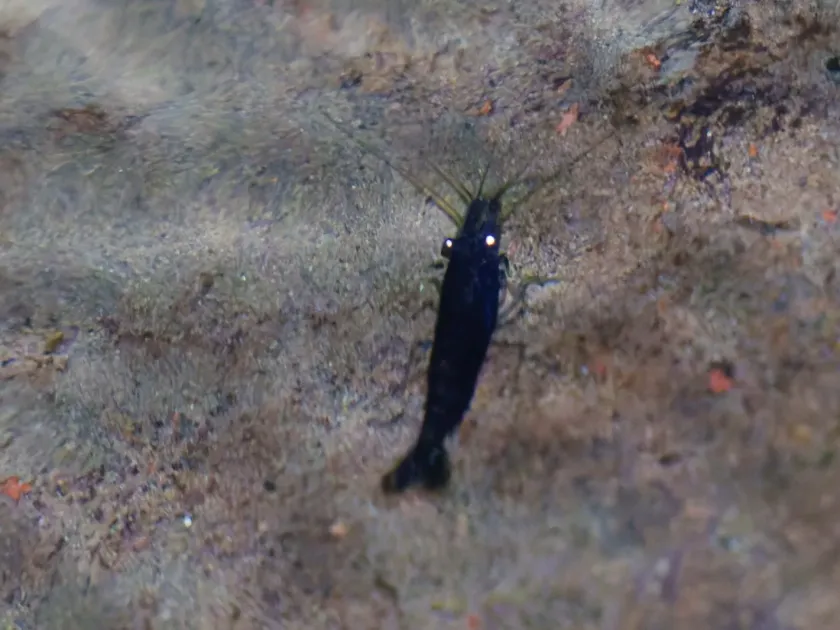
They are small freshwater shrimp, typically measuring 2 to 3 cm in length. Their body consists of a protective carapace covering the cephalothorax and a flexible abdomen equipped with swimming appendages.
Neocaridina davidi (cherry shrimp) is the most widely known species. They are highly valued in the hobby for their adaptability to a wide range of water parameters and their peaceful nature.
Due to selective breeding, Neocaridina display a vast array of colors, including vibrant red, blue, yellow, and orange, as well as wild-type translucent forms.
Their reproduction is direct, meaning the larvae bypass a free-swimming planktonic stage and hatch as miniature, fully formed versions of the adults, making them very successful in captive environments.
What it damages
Often mislabeled as plant pests, Neocaridina are actually detritivores. They act as natural janitors within the ecosystem, feeding primarily on decomposing organic matter, uneaten food, and algal films.
They only interact with live plants if the plants are already decaying, suffering from nutrient deficiency, or have damaged tissues. In such cases, the shrimp consume the dying parts, which can be mistaken for active herbivory.
Healthy, thriving aquatic plants with strong cell walls are rarely touched by these shrimp. In fact, their presence is often beneficial, as they remove micro-algae and debris that could otherwise suffocate the leaves.
Issues may arise only in heavily overcrowded aquariums where food sources are extremely scarce. Under extreme starvation, shrimp might graze on very soft or delicate new growth, causing minor mechanical damage.
By keeping plant surfaces clean from biofilm, Neocaridina actually promote better nutrient uptake and photosynthesis for the host plants, acting as symbiotic assistants rather than destructive pests.
Control measures
Since Neocaridina are not true plant pests, active eradication methods are unnecessary and counterproductive. Management should focus on balancing the tank environment.
To prevent any risk of plant damage, maintain a regular feeding schedule. High-quality shrimp pellets or protein-rich sinking food will ensure they remain satisfied and disinterested in the surrounding flora.
Providing supplementary vegetation such as blanched zucchini, spinach, or kale can offer essential nutrients and keep the shrimp occupied with a preferred food source.
Effective aquarium maintenance, such as proper filtration and regular water changes, prevents the buildup of excess detritus that might attract too many shrimp to specific areas of the tank.
Controlling the population size through sustainable husbandry—such as regulating food inputs or moving surplus shrimp to other tanks—is the best way to maintain a healthy balance between the plant population and the crustacean inhabitants.
Taxonomy
- Latin name
- Neocaridina
- Family
- Atyidae
- EPPO code
- NEOCSP
Discussion
No discussions yet — be the first.