
Flesh fly
Neobellieria bullata
Description
How to identify
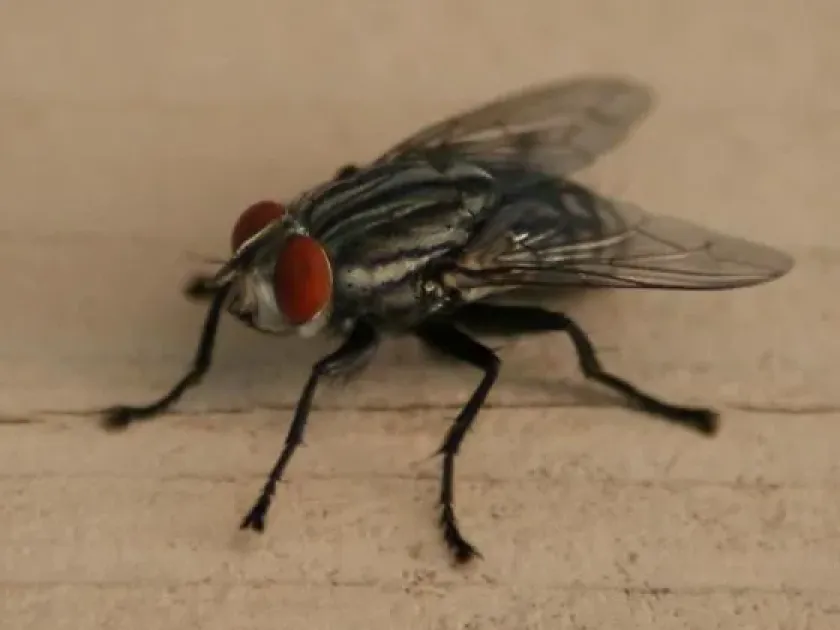
The flesh fly (Neobellieria bullata) belongs to the Sarcophagidae family. These insects are easily recognized by their grey coloration, distinctive longitudinal stripes on the thorax, and a checkered abdominal pattern.
Adult flies typically measure between 10 and 14 mm in length. Their bodies are covered in dense, coarse black bristles, and their eyes are reddish-brown. Males are often identified by a conspicuous red or orange tip on the abdomen.
What it damages
While primarily saprophagous, Neobellieria bullata poses a threat to agriculture by acting as a vector for various plant pathogens. They frequent damaged produce, introducing bacteria that accelerate decay.
Crops such as tomatoes, cucumbers, and melons are particularly vulnerable if they have pre-existing cracks or wounds. The presence of larvae causes rapid tissue destruction, often leading to total loss of the affected fruit.
When it appears
These flies are most active from late spring through early autumn, with population peaks occurring during the hottest summer months. High temperatures facilitate the rapid decomposition of organic matter, which is essential for their larvae.
The species is ovoviviparous, meaning females deposit live larvae directly onto the substrate. The larval stage lasts approximately one week, followed by pupation in the soil, allowing for multiple generations per year.
Signs of infestation
The most obvious sign of an infestation is the presence of adult flies hovering around decaying vegetation or damaged fruits. Their activity is almost always accompanied by the smell of fermentation or decay.
Upon closer inspection of produce, one may observe clusters of whitish, cylindrical larvae burrowed into the fruit tissue. The area surrounding the larvae typically exhibits rapid softening and darkening due to bacterial infection.
Control measures
Sanitation is the most critical component of control. Removing rotting fruits and crop residues immediately prevents the flies from finding suitable sites for larval development.
Using physical barriers such as insect-proof screens on storage facility windows and doors is highly effective. Regular monitoring of the storage area and immediate disposal of compromised items will suppress population growth.
Taxonomy
- Latin name
- Neobellieria bullata
- Order
- Diptera (flies)
- Family
- Sarcophagidae
- EPPO code
- SARCBU
Discussion
No discussions yet — be the first.