
Neleucania praegracilis
Neleucania praegracilis
Description
How to identify
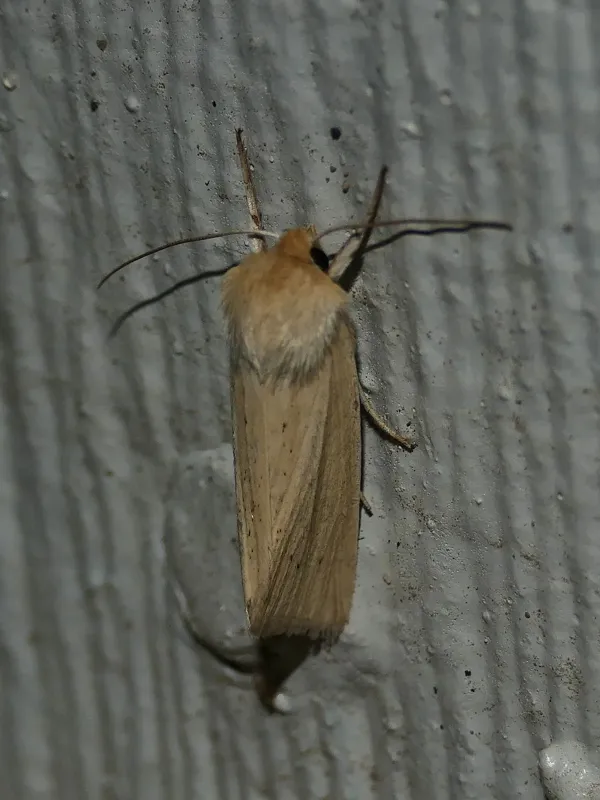
Neleucania praegracilis is a moth species belonging to the Noctuidae family, often referred to as a type of cutworm or armyworm moth. These moths are generally nocturnal and possess a morphology adapted for survival in agricultural landscapes.
The adult moths are characterized by modest, cryptic coloration, typically shades of gray and brown. This camouflage is essential for them to remain undetected during the day while resting on soil or plant debris.
The life cycle includes the egg, larval (caterpillar), pupal, and adult stages. The larvae are the primary damaging stage and go through several instars before pupating in the soil or protected crevices.
The species usually completes one or two generations per year, depending on the local climate and temperature conditions. Warm springs often accelerate their development and increase population density.
Overwintering occurs primarily in the pupal or late-larval stage, buried in the soil or under dense organic mulch, which provides necessary protection against freezing temperatures.
What it damages
Neleucania praegracilis primarily targets members of the Poaceae (grass) family. Larvae consume foliage, which can significantly affect the health and yield of various important cereal crops.
Common host crops include wheat, barley, and oats. In years of high pest pressure, the larvae may also migrate to surrounding forage grasses if their primary food source is depleted.
Damage is manifested as irregular feeding on leaves, starting from the margins or creating holes in the leaf blades. This reduces the photosynthetic area of the plant, weakening its physiological structure.
Severe infestations can lead to significant biomass loss. If the defoliation occurs during critical growth stages like tillering or stem elongation, it directly impacts grain filling and crop quality.
Beyond direct yield loss, the feeding wounds create entry points for opportunistic pathogens, leading to secondary infections that further complicate the health status of the field.
Signs of infestation
The presence of Neleucania praegracilis is often signaled by the appearance of ragged edges on the leaves of cereal crops, which are classic signs of lepidopteran larval feeding.
Dark granular frass (excrement) found near the base of the plants is a clear indicator of active larval feeding. Detecting this sign is crucial for early intervention.
Since the larvae are largely nocturnal, they are difficult to observe during the day. Inspections of the crown area and soil surface near the base of the plants are necessary to reveal the hiding caterpillars.
Nighttime field scouting with a flashlight is the most effective way to confirm an infestation, as larvae are usually active and feeding on the upper parts of the plants at night.
A thinning or patchy crop stand, especially if combined with observable leaf tissue missing, suggests that a high density of larvae is actively damaging the field and requires immediate attention.
Control measures
Integrated Pest Management (IPM) is essential. Cultural practices like deep fall plowing are highly effective in disrupting the life cycle by burying pupae, preventing their emergence in the spring.
Weed management, particularly focusing on grasses in and around the field, is vital as these weeds can harbor early-stage larvae before they move into the primary crop.
Monitoring using pheromone traps for adults allows growers to track population levels and time chemical interventions precisely, which helps in reducing unnecessary pesticide use.
When economic thresholds are exceeded, targeted applications of insecticides with contact or stomach action are recommended to manage the larval population effectively.
Encouraging natural biological controls, such as predatory beetles or parasitoid wasps, provides a long-term strategy for suppressing the population density of these moths in agricultural fields.
Taxonomy
- Latin name
- Neleucania praegracilis
- Order
- Lepidoptera (butterflies)
- Family
- Noctuidae
- EPPO code
- NELEPR
Discussion
No discussions yet — be the first.