
Jericho scorpion
Nebo hierichonticus
Description
How to identify
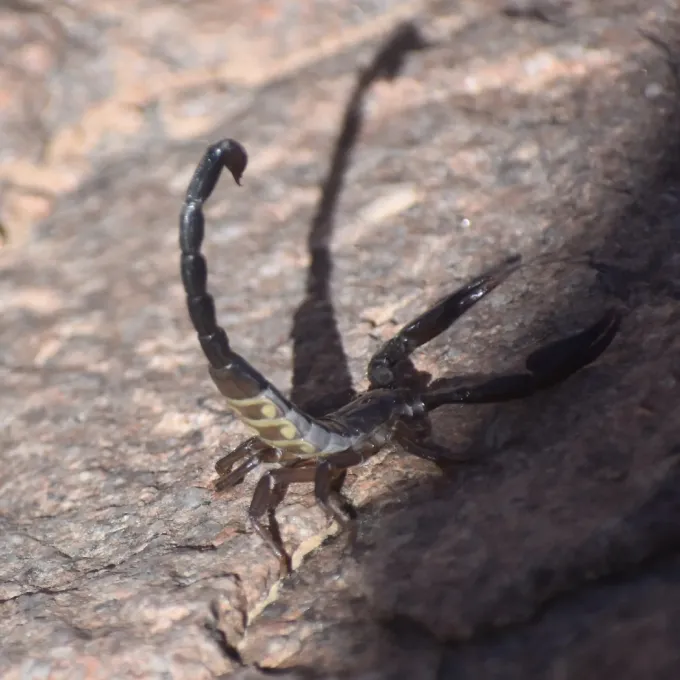
The Jericho scorpion, scientifically classified as Nebo hierichonticus, belongs to the family Diplocentridae. It is a robust arachnid characterized by large, powerful pedipalps and a dark, segmented body adapted for arid environments.
These scorpions are typically nocturnal, spending their days in deep burrows. Their physical presence in agricultural soils is often indicated by the openings of their tunnels, which they dig to maintain proper moisture and temperature levels.
The life cycle of Nebo hierichonticus is slow, with the species undergoing several molts as it matures. They are highly resilient and capable of surviving in the harsh climate conditions common in the Middle East.
Identification in the field is usually performed during night surveys using UV light, as the scorpion's exoskeleton fluoresces under these specific wavelengths.
While often solitary, localized infestations can occur in areas with abundant organic matter and high soil moisture, which attract the small insects they prey upon.
What it damages
The Jericho scorpion is not a direct plant feeder; however, its burrowing activity can cause mechanical damage to the root systems of young plants, leading to weakened growth and susceptibility to secondary infections.
In nurseries and greenhouse operations, the tunnels created by these scorpions can disrupt soil moisture distribution, leading to localized drought stress in affected plant beds.
The primary economic impact stems from the disruption of field labor, as the presence of a venomous species necessitates increased safety precautions and can lead to work stoppages during harvest or soil maintenance.
Root damage provides entry points for soil-borne pathogens, which may lead to root rot or stem blight in sensitive crops, potentially causing significant yield reductions.
High population densities can indicate an imbalanced ecosystem, often triggered by excessive irrigation or accumulation of field debris that provides nesting sites.
Control measures
Integrated management of the Jericho scorpion centers on physical disruption of their habitat, as they rely on stable, undisturbed soil environments for their burrows.
Regular tillage and soil cultivation are highly effective at destroying existing tunnels and discouraging the establishment of permanent colonies in agricultural fields.
Field sanitation is a critical preventive measure: removing piles of rocks, discarded equipment, and plant debris effectively eliminates the protective cover required by these scorpions.
In greenhouse environments, sealing gaps and installing mesh barriers can prevent the migration of scorpions from external areas into the cultivation zone.
- Periodic soil aeration to disrupt nesting habitats.
- Removal of harborages like stones and logs around the field perimeter.
- Usage of protective footwear and gloves by field workers.
- Implementation of nocturnal site monitoring during the growth season.
Taxonomy
- Latin name
- Nebo hierichonticus
- Family
- Diplocentridae
- EPPO code
- NEBOHI
Discussion
No discussions yet — be the first.