
Rice moth
Naranga aenescens
Description
How to identify
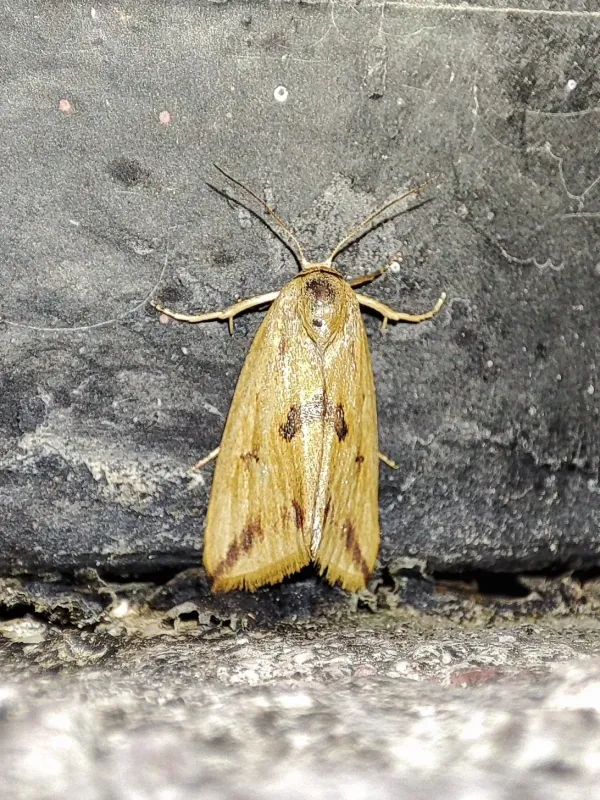
The rice moth (Naranga aenescens) is a member of the order Lepidoptera and the family Noctuidae. It is a small moth, with a wingspan typically ranging between 18 and 22 mm.
The forewings of the adults are yellowish-brown with a distinct dark spot and faint transverse lines. The hindwings are noticeably lighter, often displaying an ochre tint.
The larvae are green with longitudinal white stripes running along the sides of the body. The head capsule is usually pale, which serves as a key diagnostic feature for field identification.
The pupae are concealed within the rice foliage, often encased in loose silken cocoons between folded or spun leaves, providing protection from predators.
This species exhibits high reproductive potential, with females ovipositing directly onto the leaf surfaces. The life cycle is rapid, enabling multiple generations to overlap during the growing season.
What it damages
The primary host crop for Naranga aenescens is rice (Oryza sativa). The pest causes the most significant damage during the vegetative stage of the crop's development.
While rice is the preferred host, the larvae can also feed on various wild grasses that thrive in and around irrigation ditches, serving as alternative hosts.
Early-stage larvae skeletonize the leaves, consuming the soft tissue and leaving the veins intact, which reduces the effective photosynthetic area of the plant.
Mature larvae consume large portions of the leaf blade, which weakens the plant and stunts its growth, ultimately leading to significant yield losses in severe cases.
In addition to direct foliage loss, the damage can facilitate the entry of secondary pathogens, further compromising the health of the rice crop.
When it appears
Adult moths begin their flight in late spring or early summer, following the emergence from overwintering pupae hidden in field debris.
Their activity persists throughout the rice growing season, with population density usually peaking during mid-summer months when conditions are optimal.
The duration of the life cycle from egg to adult is approximately 30 to 40 days, allowing for several generations within a single season depending on climate.
The second and third generations are typically the most destructive as they align with the period of rapid crop growth and grain formation.
As temperatures drop in the autumn, the final generation enters a dormant phase as pupae, overwintering in soil or remnants of dried vegetation.
Signs of infestation
The first signs of infestation are translucent windows or patches on the leaves caused by the skeletonizing activities of young caterpillars.
Leaves tied together with silk are a classic indicator, as larvae frequently spin leaves to create protective shelters for themselves.
Frass (larval excrement) found at the base of the rice plants or within the leaf sheaths is a reliable indicator that an active infestation is present.
As feeding progresses, the leaf margins become ragged, and in heavily infested areas, the plants exhibit a characteristic yellowing and stunted appearance.
Visible reduction in foliage density within the rice stand is a clear signal that the pest population has reached a damaging level requiring intervention.
Control measures
Cultural control practices are essential and include the rigorous removal of wild grasses and weeds surrounding the rice fields to reduce alternate breeding sites.
Effective water management within the paddies can disturb the pupal development and survival, reducing the transition to the next generation.
Biological control using microbial insecticides based on Bacillus thuringiensis has proven effective in targeting the larvae while sparing beneficial insects.
Chemical control should be implemented based on consistent monitoring and when the economic threshold for the pest population is exceeded.
- Apply selective insecticides during the early larval stages for maximum efficacy.
- Use light traps or pheromone traps to monitor adult flight and determine the best timing for treatment.
- Maintain optimal soil fertility to help plants compensate for minor foliage loss caused by early larval feeding.
Taxonomy
- Latin name
- Naranga aenescens
- Order
- Lepidoptera (butterflies)
- Family
- Noctuidae
- EPPO code
- NARAAE
Discussion
No discussions yet — be the first.