
Gothic moth
Naenia typica
Description
How to identify
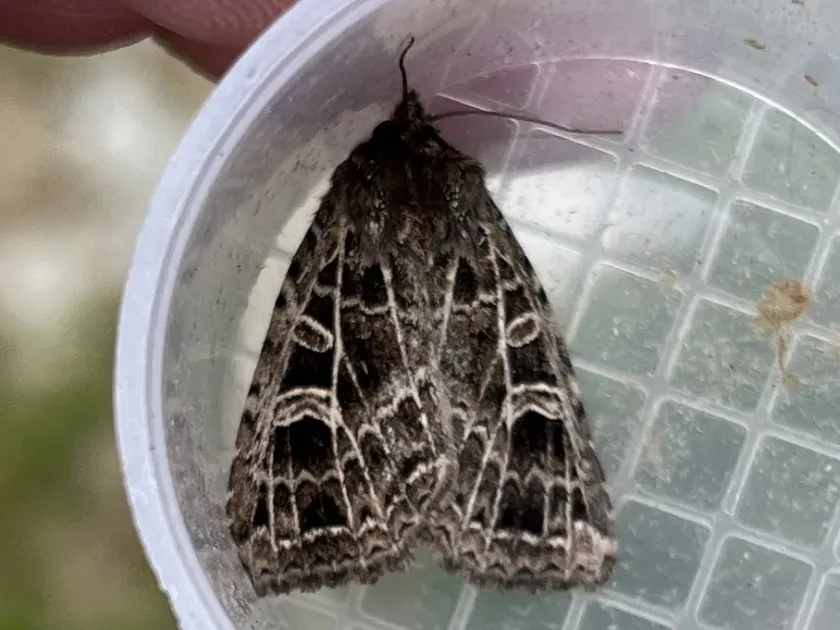
The Gothic moth (Naenia typica) is a member of the Noctuidae family. The adult moth has a wingspan of 35–45 mm and is characterized by its distinctive brown wings, featuring a complex net-like pattern that serves as excellent camouflage.
The larvae are typical cutworms, measuring up to 50 mm when fully grown. They vary in color from earthy grey to dark brown, often featuring pale dorsal stripes that help them blend into the soil environment during the day.
Pupation occurs in the soil, within a firm cocoon composed of silk and soil particles. The pupa itself is shiny and dark brown, typically found at a depth of 10 to 15 cm beneath the surface.
The life cycle involves four stages: egg, larva, pupa, and adult. Eggs are laid in clusters on the underside of host leaves, which protects them from predators and environmental stressors during the early stages of development.
Hibernation takes place as a larva deep within the soil. As temperatures rise in spring, the larvae resume feeding, grow rapidly, and eventually pupate to emerge as the first generation of adults for the season.
What it damages
As a polyphagous species, the Gothic moth attacks a diverse range of crops. It is known to inflict significant damage on both garden vegetables and large-scale industrial crops across Europe and Asia.
Common hosts include brassicas (cabbage), beets, potatoes, tomatoes, and cucumbers. In home gardens, it often causes damage to ornamental plants and various wild weeds that serve as alternative hosts.
Young larvae feed on the leaf parenchyma, creating small holes, while older larvae consume larger areas of the leaves. In some cases, they perform complete skeletonization, leaving only the veins intact.
The most severe damage occurs when larvae feed on stems at the base or penetrate directly into developing fruits and tubers. This activity often leads to total crop failure and the loss of produce quality.
Secondary infections are a major concern. The wounds created by the larvae provide easy entry points for various bacterial and fungal pathogens, which can lead to rapid decay of the vegetable produce.
When it appears
Adult moths typically appear in late spring and early summer. The timing and duration of the flight period are strongly correlated with local climatic conditions, especially temperature and humidity levels.
Larval activity peaks during the mid-summer months when crops are in their most intensive growth phase. This provides the insects with abundant food to complete their development before overwintering.
In warmer regions, the species can produce multiple generations within a single year. This multi-generational growth potential increases the pressure on crops significantly as the season progresses.
Wet and cool summers often lead to higher survival rates for young larvae. Conversely, extreme drought during the egg-laying period may reduce the population density due to the desiccation of eggs.
By autumn, the late-stage larvae prepare for winter by moving deeper into the soil profile. Monitoring efforts should be continuous throughout the growing season to catch the onset of each generation.
Signs of infestation
The first indicator of an infestation is the presence of small, irregular holes in the leaves. Careful inspection of the foliage will often reveal small, dark pellet-like frass deposits.
The presence of wilted or severed stems near the soil surface indicates the activity of older, nocturnal larvae. These cutworms are highly mobile at night but remain hidden during the day.
Damage to roots and tubers is often hidden until harvest. However, in leafy vegetables like cabbage, one can observe holes in the outer leaves and tunnels leading into the heart of the plant.
- Small window-like holes in foliage
- Severed seedlings or wilted plants near the soil
- Visible damage to tubers or fruit exteriors
- Accumulation of larval frass on leaves or soil
- Clusters of eggs on the underside of leaves
Nighttime scouting with a flashlight or the use of pheromone and light traps are the most effective ways to detect the presence of adults before significant larval damage begins.
Control measures
Deep autumn plowing is a critical cultural practice. It disrupts the soil, exposing overwintering pupae to harsh weather conditions and increasing their visibility to birds and predatory insects.
Maintaining a weed-free environment is essential for prevention. By removing weeds in and around the field, farmers eliminate the alternative food sources that larvae rely on during early development.
Biological control agents, such as specific strains of Bacillus thuringiensis, offer an effective way to manage young larvae without harming beneficial insects or the environment.
Chemical control should be implemented based on scouting thresholds. Applying insecticides during the evening when larvae are actively feeding on the foliage increases the contact and effectiveness of the treatment.
Crop rotation remains one of the most effective long-term strategies. By rotating hosts with non-susceptible crops, the life cycle of the moth is disrupted, significantly reducing future pest populations.
Taxonomy
- Latin name
- Naenia typica
- Order
- Lepidoptera (butterflies)
- Family
- Noctuidae
- EPPO code
- NAENTY
Discussion
No discussions yet — be the first.