
Gothic moth
Naenia
Description
How to identify
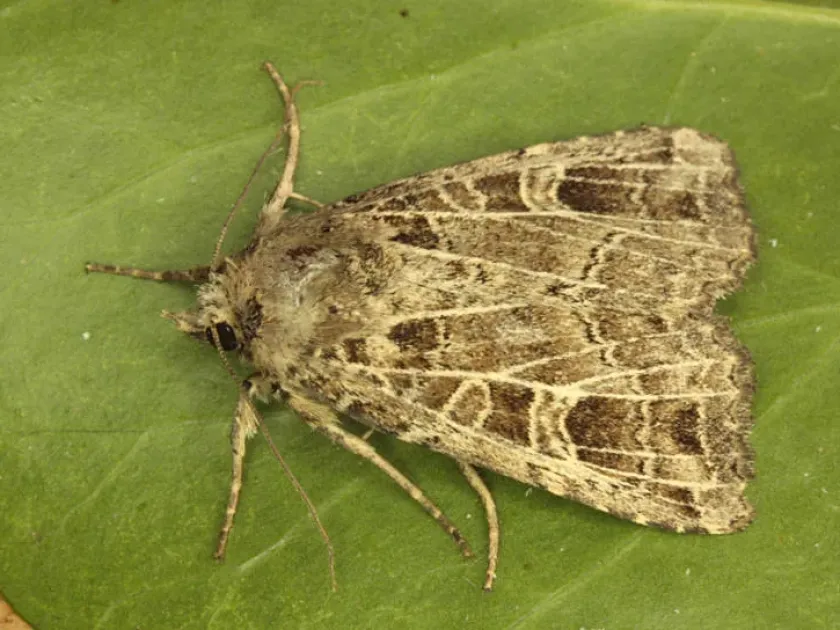
The Gothic moth, scientifically known as Naenia typica, belongs to the Noctuidae family within the order Lepidoptera. It is a medium-sized moth with a wingspan typically ranging between 40 and 45 mm.
The forewings have a distinct brownish appearance, featuring a complex network of pale or whitish veins that create a marble-like or wooden pattern, providing excellent camouflage.
The caterpillars are usually dull in color, ranging from greyish-brown to dark brown, which allows them to blend in with soil or decomposing plant matter during the day.
Pupae are typically reddish-brown, smooth, and are usually found buried within the top few centimeters of the soil, where they survive the colder months.
Due to its cryptic coloration, identifying the adult moth in nature can be challenging unless it is attracted to artificial light sources during its flight period.
What it damages
The Gothic moth is a polyphagous pest, meaning it feeds on a diverse range of host plants, including many garden vegetables and ornamental species.
Commonly attacked crops include various types of cabbage, lettuce, spinach, and even potatoes, where the larvae feed on the foliage.
The primary damage is caused by the larval stage, which consumes leaf tissue, leading to irregular holes and, in severe cases, extensive defoliation of the plant.
Young plants are particularly vulnerable, and heavy infestation by these caterpillars can significantly stunt growth and lead to yield losses.
By consuming the leaf blades, the larvae reduce the photosynthetic capacity of the plant, making it more susceptible to environmental stress and secondary infections.
When it appears
Adult moths typically emerge in late spring or early summer, following the warming of soil temperatures, and are most active during the night.
The larvae are active throughout the summer months, with their feeding intensity peaking as they approach the final stages of their development.
The species overwinters as a pupa, hiding safely in the soil or under leaf litter, which protects it from winter frosts and predators.
Depending on the climate of the specific region, the Gothic moth may undergo one or two generations per year, affecting the timing of potential crop damage.
Early season monitoring is crucial for detecting the emergence of the first generation of adults, which allows for timely preventative actions.
Signs of infestation
Visible signs of infestation include the appearance of irregular holes or notched edges on the leaves of host plants during the growing season.
- Dark frass (droppings) on the leaves or the soil surface underneath.
- Wilting of leaves or stems where caterpillars are feeding.
- Presence of larvae on the underside of leaves or within the heart of leafy vegetables.
Finding caterpillars during nocturnal inspections is a reliable indicator that the population is actively feeding and may require control measures.
If adult moths are seen frequently near outdoor lights at night, it serves as an early warning for potential larval infestations in nearby gardens or fields.
Control measures
Effective control starts with proper cultural practices, such as deep autumn ploughing or digging, which exposes the pupae to birds and harsh weather conditions.
Maintaining a weed-free environment is essential, as many common weeds serve as alternative hosts that support the moth's population growth throughout the season.
For sustainable management, the use of biological control agents, such as formulations containing Bacillus thuringiensis, can be highly effective against the larvae.
In cases of significant outbreaks, targeted applications of insecticides may be necessary, and these should ideally be applied during the evening when caterpillars are active.
Integrated Pest Management (IPM) strategies, including crop rotation and the use of pheromone traps, help keep population numbers below the economic injury level.
Taxonomy
- Latin name
- Naenia
- Order
- Lepidoptera (butterflies)
- Family
- Noctuidae
- EPPO code
- NAENSP
Discussion
No discussions yet — be the first.