
Myxilla incrustans
Myxilla incrustans
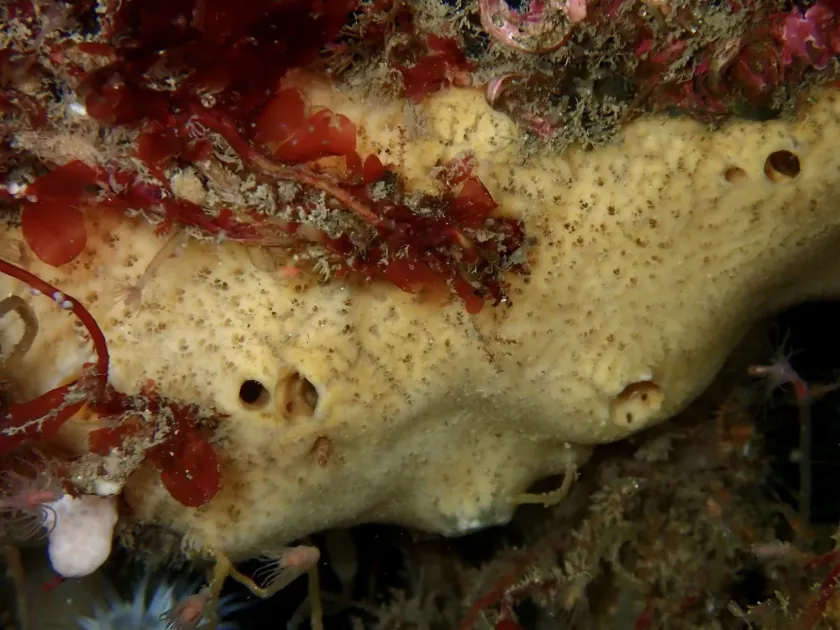
Description
How to identify
Myxilla incrustans is a species of marine sponge belonging to the family Myxillidae. It is widely recognized in marine biology for its ability to form extensive, crust-like encrusting colonies.
The sponge typically presents a vibrant yellow or orange color, with a texture that is porous and sponge-like. It thrives on various hard surfaces, from rocky reefs to man-made structures.
As a filter feeder, it utilizes a sophisticated network of internal canals to process water and trap organic matter, which facilitates its rapid growth under suitable environmental conditions.
Its reproductive strategy involves the release of larvae that can quickly colonize adjacent surfaces, making it a highly successful competitor for space in shallow marine ecosystems.
In human-altered environments, such as shellfish farms, this species can transition from a normal component of the ecosystem to a persistent pest causing significant biofouling.
What it damages
In aquaculture, Myxilla incrustans is problematic primarily because it encrusts the shells of commercially important bivalves such as mussels and oysters.
The weight and coverage of the sponge can impair the feeding efficiency of the mollusks and, in severe cases, force the shells to remain open, which stresses the animals and increases mortality rates.
By competing for the same organic particles in the water column, the sponge significantly reduces the nutrient availability for the shellfish, leading to slower growth and smaller harvest yields.
Biofouling of culture gear, such as ropes and cages, limits water exchange, resulting in localized hypoxia and the accumulation of waste products that further degrade the shellfish habitat.
Furthermore, the physical presence of the sponge makes the final product unappealing to consumers and requires intensive, labor-heavy processing to clean the shells before market.
When it appears
The growth and spread of Myxilla incrustans are highly seasonal, generally peaking during the warmer months when water temperatures are optimal for sponge metabolism.
The recruitment of larvae typically occurs during the late spring and summer, which poses the greatest threat to young shellfish cohorts that are vulnerable to settlement.
During colder periods, metabolic rates decrease, and growth slows down, but established colonies remain resilient and can persist through the winter to re-colonize in spring.
Environmental factors, particularly water temperature and nutrient loading (eutrophication), dictate the annual success rate of new infestations in coastal areas.
Understanding these timing patterns is critical for farmers to schedule cleaning operations before the sponge reaches a mature, reproductive stage.
Control measures
Management of Myxilla incrustans in aquaculture requires a multi-pronged approach focused on preventing settlement and physical removal.
Frequent cleaning and maintenance of grow-out structures are essential to disrupt the attachment of sponge larvae before they can develop into large, damaging crusts.
For shellfish producers, regular sorting and inspection allow for the manual removal of heavily encrusted individuals before they affect the wider population.
Improving the site selection to ensure high water flow can help mitigate the conditions that favor the sponge, as heavy sedimentation often promotes its development.
- Manual scrubbing of cages and ropes.
- Rotation of submerged equipment to prevent continuous exposure.
- Monitoring of larval recruitment periods for targeted interventions.
Taxonomy
- Latin name
- Myxilla incrustans
- Family
- Myxillidae
- EPPO code
- MYXLIN
Discussion
No discussions yet — be the first.