
White-striped noctuid
Mythimna venalba
Description
How to identify
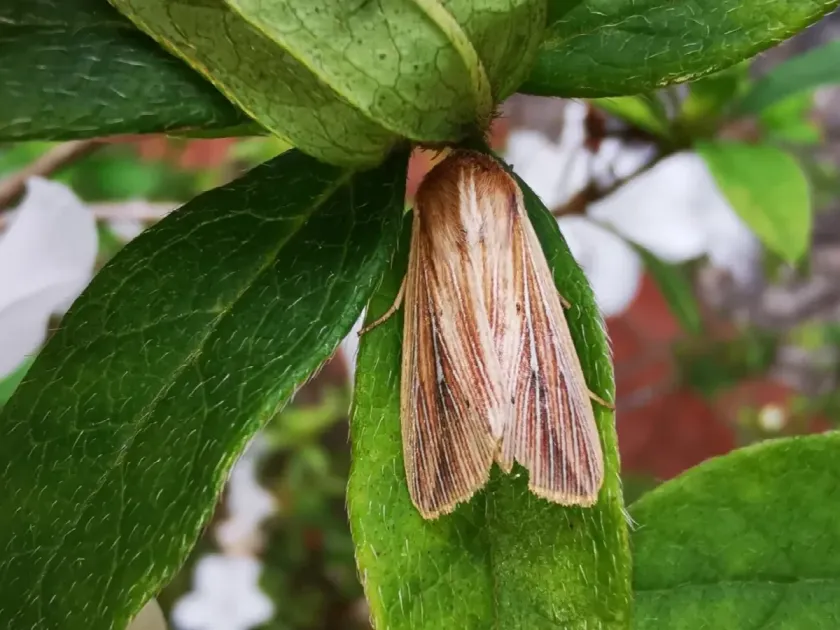
The white-striped noctuid (Mythimna venalba) is a moth species belonging to the Noctuidae family within the order Lepidoptera. The adult moth has a wingspan of approximately 35–40 mm and is characterized by a specific wing pattern that aids in its identification during field scouting.
The forewings are generally ochre-grey in color, marked by a distinct white stripe running along the central vein, which serves as the primary diagnostic feature. The hindwings are typically paler, often greyish, and may feature a darker shading toward the outer margins.
Larvae (caterpillars) of this species can reach 35–45 mm in length. They typically exhibit a longitudinal striped pattern along the body, which provides effective camouflage against the stems and leaves of their host plants, making them difficult to detect during daylight hours.
The life cycle encompasses four stages: egg, larva, pupa, and adult. The insect usually overwinters as larvae in the later instars or as pupae, buried within the top layer of soil or sheltered under crop residues, where they remain dormant until spring temperatures rise.
In spring, adults emerge, mate, and deposit eggs on the foliage of host grasses. Depending on the environmental temperature and rainfall patterns, the species can complete one or more generations per year, with activity peaking in late spring and mid-summer.
What it damages
The white-striped noctuid is primarily a pest of cereal crops, posing a significant threat to wheat, barley, rye, and oats. In some cases, it may also infest wild grass species that grow near agricultural fields, serving as a secondary host.
Young larvae feed on the leaves of young cereal plants, creating irregular holes and consuming leaf tissues. This early-stage defoliation can reduce the plant's photosynthetic efficiency, affecting its vigor during the critical growth phase before heading.
The most severe damage occurs as the larvae mature and move toward the reproductive parts of the crop. They feed on the developing kernels within the ear, leading to significant yield loss and degradation of grain quality, often leaving the rachis bare.
Apart from the direct consumption of grain, larval feeding creates wounds that act as entry points for secondary infections, such as fungi or bacteria. This often results in rotted or shriveled grains that do not meet market standards for weight and germination.
Heavy infestations can lead to substantial reductions in harvest quantity. Because the larvae are often hidden within the plant canopy or inside the ear, the extent of the damage may not be fully apparent until the grains are already compromised.
When it appears
Pest activity begins in early spring, triggered by rising soil and air temperatures. As adults emerge from hibernation, they begin their flight, which is the key indicator that the reproductive phase of the pest has commenced.
The first generation of larvae typically appears in late May and June, coinciding with the tillering and stem elongation stages of cereal development. A subsequent generation may occur later in the season, specifically targeting the grain-filling stages.
Environmental factors, particularly temperature and humidity, play a crucial role in population dynamics. Warm, moist conditions generally accelerate the development of larvae, while periods of extreme drought may temporarily suppress the population density.
Continuous monitoring using pheromone or light traps is recommended throughout the growing season. This helps farmers determine the timing of the peak flight, which is crucial for predicting when the next wave of larvae will hatch.
After the harvest, larvae seek out stubble and field debris to prepare for the overwintering phase. Autumn field management is therefore essential to disturb these sites and reduce the potential pressure for the next season.
Signs of infestation
Early signs of infestation include ragged leaf edges where larvae have been feeding. In many cases, these signs are accompanied by the presence of dark excrement pellets on the soil surface or resting on the lower leaves of the crop.
During the grain-filling stage, damaged ears are the most reliable indicator. If an ear appears hollowed out, with missing or chewed grains, it suggests that larvae have been active in the immediate vicinity of the plant.
Adult moths might be seen flying near the crop canopy at dusk or during the night. The use of light-based or pheromone-baited monitoring traps is the most precise way to detect their presence before larval damage becomes widespread.
Observers should examine the base of the stalks and the underside of leaves in the early morning hours, as this is when the larvae are most active or exposed. If they are disturbed, they often drop to the ground and curl up, making them difficult to spot.
An increased presence of insectivorous birds, such as starlings, foraging within the field can also act as a biological "warning sign" of a larval population increase, prompting the need for a closer inspection of the plants.
Control measures
Effective management begins with sound agronomic practices, such as crop rotation and the thorough destruction of weeds. Deep autumn plowing is a highly effective mechanical control method that kills pupae hiding in the soil.
Biological control, particularly the release of Trichogramma wasps, is highly effective when timed to coincide with the moth's egg-laying period. This method targets the pest before the larvae hatch, preventing crop damage from occurring in the first place.
Chemical intervention is necessary when the larval density exceeds the economic injury threshold. Insecticides (pyrethroids or organophosphates) should be applied when the larvae are in their younger stages, as they are significantly more susceptible at this time.
Timing the application is critical; sprays should ideally be conducted in the evening or night. Since the larvae emerge from their daytime hiding places to feed at night, nocturnal applications ensure better contact with the target pests.
Integrated Pest Management (IPM) strategies, which prioritize prevention and biological agents while using chemical pesticides only as a last resort, offer the most sustainable approach to controlling the white-striped noctuid while protecting beneficial organisms.
Taxonomy
- Latin name
- Mythimna venalba
- Order
- Lepidoptera (butterflies)
- Family
- Noctuidae
- EPPO code
- MYTHVE
Discussion
No discussions yet — be the first.