
Rice ear-cutting caterpillar
Mythimna separata
Description
How to identify
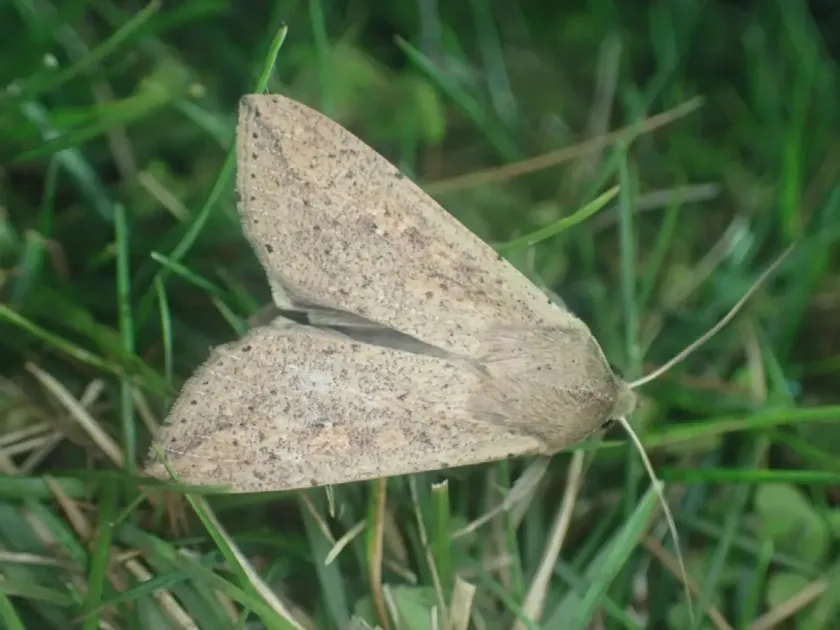
The rice ear-cutting caterpillar (Mythimna separata) is a member of the Noctuidae family within the order Lepidoptera. Adult moths have a wingspan of approximately 40–45 mm, with forewings that are typically mottled grey-brown and hindwings that are a lighter, smoky grey.
Larvae are the primary stage of damage and can reach lengths of 40–50 mm. They exhibit a varied color palette, ranging from greenish-grey to dark brown or nearly black, with distinctive pale longitudinal stripes along the dorsal and lateral sides of the body.
The pupal stage is reddish-brown and typically occurs in the soil or within plant debris. This stage is crucial for overwintering, allowing the species to persist in various temperate and tropical environments.
Eggs are laid in clusters, usually protected by scales or fine hairs, on the undersides of leaves. A single female can produce hundreds of eggs, contributing to the species' potential for rapid population expansion.
The development cycle follows a complete metamorphosis: egg, larva (comprising six instars), pupa, and adult. The speed of this cycle is highly dependent on environmental factors, particularly moisture and temperature.
What it damages
As a highly polyphagous pest, this insect infests a wide range of crops including rice, corn, wheat, sorghum, and millet. It is notorious for its ability to cause catastrophic damage to cereal crops in a very short amount of time.
Young larvae initially skeletonize leaf tissue, feeding between the veins. As they grow into larger instars, their feeding intensity increases dramatically, often resulting in the complete consumption of entire leaves.
The most severe damage is caused during the reproductive phase of the crop. Larvae feed on the flowering heads (panicles) of rice and cereals, often severing the stems or eating the developing grains directly, leading to significant yield loss.
Known as an "armyworm," the species displays mass migration behavior. When food supplies in one area are exhausted, large populations move together across the landscape to neighboring fields, devastating everything in their path.
Secondary damage is common due to the entry points created by feeding, which allows bacterial and fungal pathogens to infect the stalks and ears, further reducing both the quality and quantity of the harvest.
When it appears
The flight of adult moths usually begins in the spring, triggered by rising temperatures. The timing is highly variable depending on the local climate and latitude, but typically follows the onset of the growing season.
Multiple generations can occur throughout the year, with peak infestation periods often correlating with the vegetative and reproductive stages of the host cereals. Moist conditions and heavy rainfall are known to favor outbreaks.
Summer months often see the most intense larval activity. During this time, constant scouting of field edges and low-lying areas is vital to prevent small outbreaks from spreading across the entire field.
As autumn approaches and temperatures drop, the final generation of larvae will complete their development and enter the soil to pupate. This overwintering generation is essential for the species' persistence.
Predicting outbreaks often involves tracking weather patterns. High humidity and favorable temperature ranges allow populations to build up rapidly, making regular field monitoring a critical agronomic practice.
Signs of infestation
Early signs of infestation include the appearance of skeletonized leaves and translucent patches on foliage. Closer inspection of these areas often reveals the presence of small larvae or egg clusters on the leaf undersides.
Accumulation of larval frass (excrement) in the plant whorl or on the soil surface is a clear indicator of infestation. Because larvae are primarily nocturnal, they may be difficult to spot during the heat of the day.
Field-wide signs include "patchy" damage where segments of the crop appear stripped or missing. In rice fields, the presence of detached panicles or severed stems is a hallmark sign of the caterpillar's activity.
The presence of predators, such as birds or parasitic wasps, in unusually high numbers can be an indirect indication that a population of caterpillars has established itself in the field.
Monitoring with light traps during the night can provide early warning, as adult moths are highly attracted to light sources, allowing agronomists to prepare for potential larval emergence.
Control measures
Cultural control measures, such as deep plowing after harvest, are highly effective in destroying pupae residing in the soil. Maintaining clean fields by controlling weeds reduces alternative food sources and nesting sites for larvae.
Chemical control should be implemented based on economic injury thresholds. It is most effective to target younger larval instars with appropriate insecticides, as they are more susceptible than mature, larger caterpillars.
Biological control options, including the use of Trichogramma wasps to parasitize eggs, can provide a sustainable way to manage populations without relying solely on synthetic chemicals.
Integrated Pest Management (IPM) strategies, which combine pheromone monitoring, crop rotation, and judicious chemical application, remain the gold standard for controlling this pest in commercial agriculture.
- Utilizing pheromone traps to monitor adult flight activity.
- Implementing crop rotation to disrupt the pest's life cycle.
- Removing crop residues to eliminate overwintering sites.
- Ensuring balanced fertilization to avoid excessively lush growth that attracts moths.
Taxonomy
- Latin name
- Mythimna separata
- Order
- Lepidoptera (butterflies)
- Family
- Noctuidae
- EPPO code
- PSEDSE
Discussion
No discussions yet — be the first.