
Australian wheat moth
Mythimna convecta
Description
How to identify
The Australian wheat moth (Mythimna convecta) belongs to the family Noctuidae within the order Lepidoptera. This nocturnal pest is recognized by its distinct morphology and wing patterns.
Adult moths typically have a wingspan ranging from 35 to 40 mm. The forewings are characterized by shades of yellow-brown or greyish-brown, often featuring darker markings and indistinct lines.
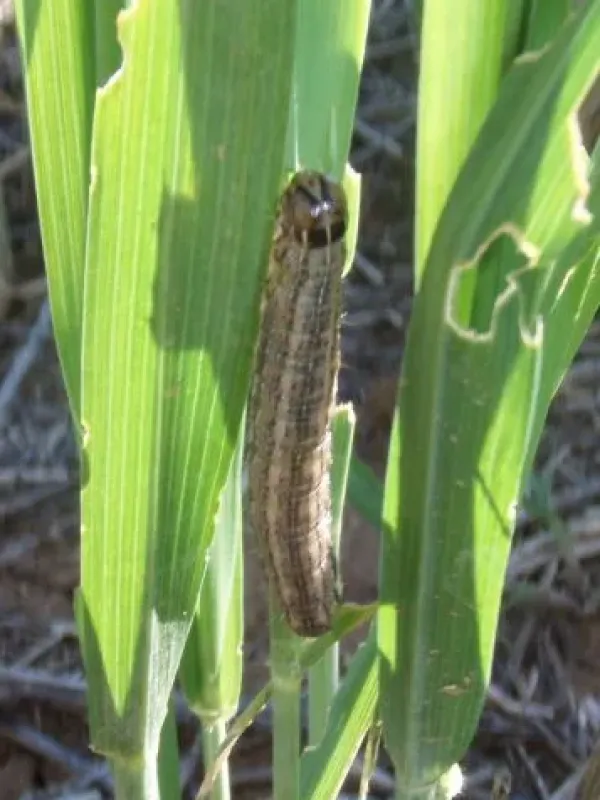
Larvae, commonly known as armyworms or cutworms, display varying colors from greenish-grey to brown. They possess distinct longitudinal stripes along their bodies, which are key for field identification.
Pupae are generally reddish-brown with a smooth exterior. They develop within the soil or deep inside crop residues, which protects them from environmental stressors and predators.
Adult moths are primarily nocturnal, making them difficult to spot during daylight hours unless they are disturbed from their hiding spots in dense vegetation.
What it damages
The larvae primarily feed on various cereal crops, with a strong preference for wheat, barley, oats, and rye. In some regions, they can also cause significant damage to maize and forage grasses.
Young larvae consume the soft tissue of leaves, creating small holes, while older larvae chew the edges of leaf blades, potentially causing complete defoliation if populations are high.
Significant economic damage occurs when larvae feed on the generative organs of the plants. They often chew on spikelets and consume developing grains, leading to reduced yields and quality.
Besides attacking the leaves and spikes, larvae can sometimes damage the stems at the base, leading to lodging and further weakening the plant structure during critical growth stages.
Persistent feeding by large populations can lead to "whiteheads" in cereal fields, where the grain head remains empty or partially damaged, signaling extensive infestation levels.
When it appears
The life cycle of Mythimna convecta is heavily influenced by regional climate patterns. The emergence of adults in spring is typically triggered by rising soil temperatures and moisture availability.
Multiple generations can occur throughout the growing season. The timing of these generations often overlaps with the vulnerable developmental stages of cereal crops, such as flowering and grain fill.
Humid conditions and sufficient rainfall promote the survival and reproduction of the moths. Conversely, extreme heat and drought can slow development, though they often recover quickly with moisture.
Overwintering usually takes place in the pupal stage, tucked into the soil or under organic debris, highlighting the importance of post-harvest field management to disrupt their lifecycle.
Pest activity is most intense during periods of high humidity. Monitoring should be focused on the transition between vegetative growth and grain maturity to capture the most damaging generations.
Signs of infestation
Ragged edges on cereal leaves are the first warning sign. Early detection is crucial, as the consumption rate increases significantly as the larvae progress through their developmental stages.
Frass (larval excrement) found on leaves or on the soil surface is a definitive indicator of a high-density infestation requiring immediate attention from the farm manager.
The presence of partially eaten or empty grains on the spike is a sign that the pest has moved on to its most destructive feeding phase, which directly impacts harvest volume.
Adult moths are highly attracted to light sources at night. Using light traps can help identify their presence and determine the exact timing for implementing control measures.
Larvae are most active at night. During the day, they often hide in the canopy near the soil level, curled into small loops when disturbed, which is a classic behavior of this species.
Control measures
Cultural control strategies include deep plowing after harvest, which buries pupae and exposes them to predators, significantly reducing the population for the next season.
Effective weed control in and around fields is essential, as these areas act as nurseries for moths before they migrate into the main crop during their early development.
Biological control agents, such as Trichogramma wasps, can be deployed to parasitize eggs, providing an environmentally friendly way to suppress moth numbers naturally.
Chemical control should be employed based on economic threshold levels. Farmers must choose appropriate insecticides and rotate chemical classes to avoid resistance buildup in the population.
Integrated Pest Management (IPM) is the recommended approach, combining regular field scouting, pheromone trap data, and targeted insecticide applications to minimize overall crop loss.
Taxonomy
- Latin name
- Mythimna convecta
- Order
- Lepidoptera (butterflies)
- Family
- Noctuidae
- EPPO code
- PSEDCO
Discussion
No discussions yet — be the first.