
False cereal cutworm
Mythimna adultera
Description
How to identify
The false cereal cutworm (Mythimna adultera) is a member of the order Lepidoptera and the family Noctuidae. It is a moth species that plays a significant role as a pest in cereal crop agriculture across its range.
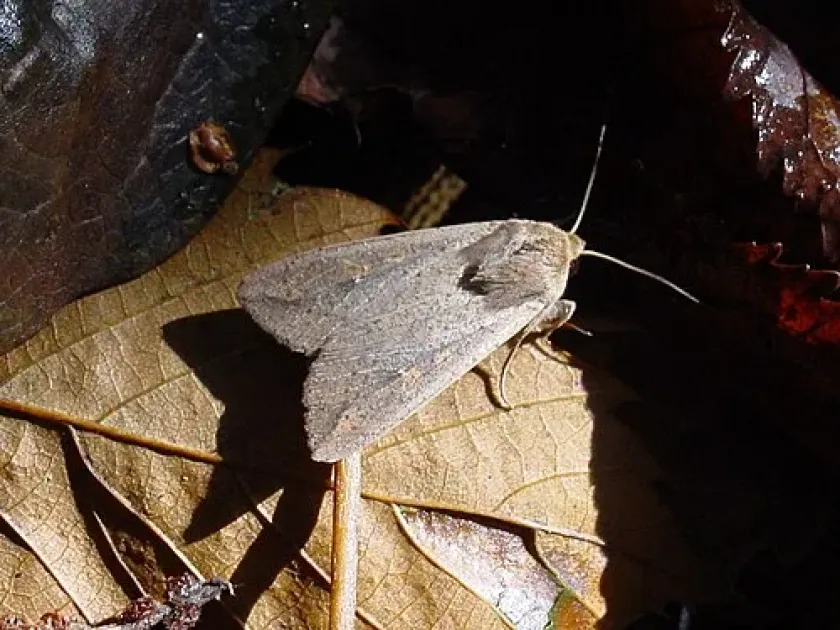
The adult moth is medium-sized with forewings ranging in color from yellowish-brown to grayish-brown, often featuring darker markings. The hindwings are generally lighter in color, sometimes showing a faint grayish sheen.
The larvae, or caterpillars, can grow up to 40 mm in length. They typically possess a smooth body marked with longitudinal stripes, and their coloration varies from greenish-grey to brown, which provides effective camouflage.
The life cycle involves complete metamorphosis, consisting of the egg, larva, pupa, and adult stages. The species usually overwinters as young larvae within the soil or beneath crop residues to survive the cold season.
The population dynamics of the pest are heavily influenced by local temperature and moisture conditions, which dictate the timing of adult emergence and the subsequent success of larval development during the growing season.
What it damages
This pest primarily affects various cereal crops, including wheat, barley, oats, and rye. Damage occurs throughout the plant's growth cycle, as larvae feed on both vegetative foliage and the developing reproductive structures.
Larvae feed at night, consuming leaf blades and often leaving ragged edges. In cases of high population density, the pest can defoliate the plant, significantly reducing the surface area available for photosynthesis.
During the grain-filling stage, larvae may move to the ears of the plants. They feed on the developing kernels, especially during the milk stage, leading to empty glumes, reduced grain weight, and lower overall yields.
Secondary food sources include various wild grasses found on field margins and uncultivated areas. These areas act as reservoirs for the pest, allowing it to maintain its population even when primary crops are not present.
The economic impact of the false cereal cutworm is most severe during the stem elongation and heading phases, as any damage during these critical growth periods can directly result in decreased crop quality and quantity.
Signs of infestation
The most recognizable sign of an infestation is the presence of irregular, chewed leaf margins. Leaves may appear serrated or partially eaten, which is a classic indicator of larval feeding activity in the field.
Because the larvae are nocturnal, they are rarely seen during the day. However, checking the soil surface at the base of the plants or looking within the leaf whorls during dawn or dusk often reveals their hiding spots.
Frass (larval excrement) is another reliable indicator. A high concentration of dark, pellet-like frass on the leaves or the ground surrounding the plant is a clear sign that a population is actively feeding in the area.
Damage to the ears is characterized by missing grains, which can cause the heads to look light or deformed. In severe cases, the entire ear might appear stunted, and the crop may show uneven development across the field.
Yellowing and premature drying of the lower leaves, when not associated with disease, can also point to high cutworm activity, as the plants struggle to sustain themselves following significant tissue loss.
Control measures
Cultural control methods such as deep autumn plowing are essential for destroying the larvae's overwintering sites. This practice helps to significantly reduce the survival rate of the pest population for the following year.
Effective weed management on field boundaries is critical. Eliminating wild grasses reduces the alternative food sources for the larvae, which helps to limit their ability to migrate into the primary cereal crop fields.
Chemical control involving insecticides is necessary when the larval population crosses the established economic threshold. Treatments should be applied during the early instars for maximum efficiency and minimum crop damage.
Biological control, including the use of parasitic wasps like Trichogramma, is an effective strategy. These natural enemies attack the pest's eggs, providing an environmentally friendly way to reduce the overall larval burden.
Integrated monitoring using pheromone traps allows farmers to track the flight patterns of adult moths. This data is crucial for timing insecticide applications accurately, ensuring the best results and promoting sustainable farming practices.
Taxonomy
- Latin name
- Mythimna adultera
- Order
- Lepidoptera (butterflies)
- Family
- Noctuidae
- EPPO code
- MYTHAD
Discussion
No discussions yet — be the first.