
Mythimna
Mythimna
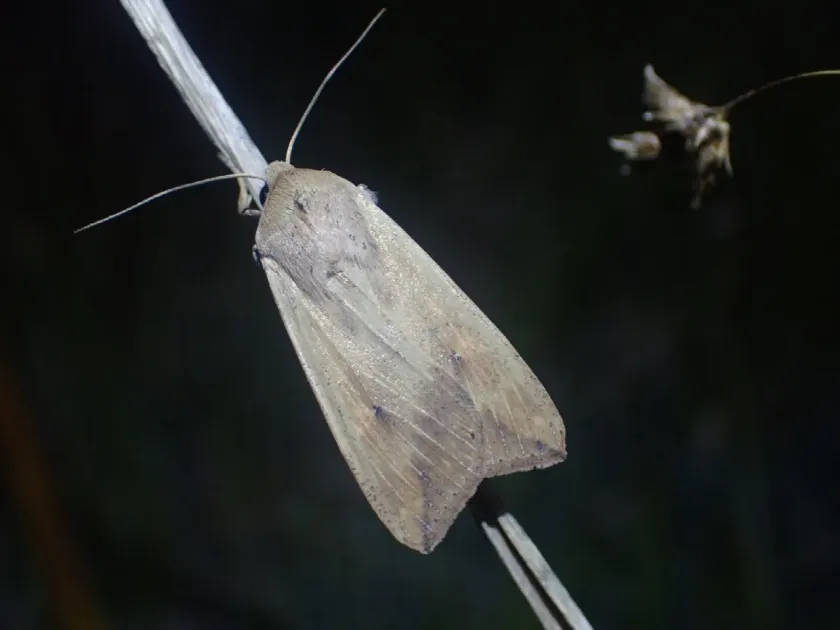
Description
How to identify
Mythimna is a genus of moths in the family Noctuidae, commonly known as armyworms or cereal leaf-cutters. The adult moth features a wingspan of approximately 40–45 mm with a grey-brown color, often displaying a distinct white or light-colored spot in the center of the forewing.
The larvae, or caterpillars, progress through several instars, varying in color from light green to dark brown with characteristic longitudinal stripes running along their bodies. A fully grown larva can measure up to 50 mm in length, having a stout and relatively smooth body.
The pupal stage typically occurs in the soil or within the protection of plant debris. These pupae are dark brown, smooth, and serve as the overwintering form for the pest, ensuring the survival of the population through unfavorable winter months.
The life cycle encompasses a complete metamorphosis: egg, larva, pupa, and adult. Depending on climate and food availability, the species can produce multiple generations annually, with larvae causing the most significant damage during their late-instar growth phases.
Adult moths are nocturnal and possess strong flight capabilities. Females lay eggs in clusters on the leaves of host grasses, carefully tucking them under the leaf sheaths, which protects the eggs from desiccation and many predators.
What it damages
Mythimna larvae primarily infest cereal crops, including wheat, barley, rye, oats, and maize. They are known for their voracious appetite, capable of defoliating entire fields within a short period if the population density is high enough.
Beyond leaf consumption, the larvae attack the reproductive structures of the plants. During the grain-filling stage, they can consume the developing kernels, leading to significant yield loss and economic damage to the farming enterprise.
When it appears
The emergence of adult moths typically begins in late spring. The most dangerous period for cereal crops occurs during the tillering stage through to the milk-ripe stage of the grain, when larvae are most active and feeding intensively on the foliage.
Favorable weather conditions, such as warm temperatures and consistent moisture, accelerate the development of subsequent generations. Agricultural monitoring is crucial throughout the summer to detect the presence of larvae before massive outbreaks occur.
Signs of infestation
Initial signs of infestation involve irregular, ragged-edged holes in leaves, progressing to complete defoliation where only the midrib remains. This severe damage significantly hinders the plant's ability to perform photosynthesis.
In the grain-filling stages, one can observe hollowed-out grains or damaged wheat heads. Accumulations of larval frass (droppings) on the leaves or at the base of the plant are reliable indicators of current pest activity and signal a need for intervention.
Control measures
Integrated Pest Management (IPM) for Mythimna involves deep plowing after harvest to bury and destroy pupae in the soil. Maintaining field hygiene by controlling grassy weeds helps reduce the alternative food sources available to the larvae.
Chemical control is warranted when the population exceeds the economic threshold. Insecticides should be applied during the evening hours to target the larvae when they are actively feeding on the upper parts of the plants, ensuring higher efficacy and crop safety.
Taxonomy
- Latin name
- Mythimna
- Order
- Lepidoptera (butterflies)
- Family
- Noctuidae
- EPPO code
- MYTHSP
Discussion
No discussions yet — be the first.