
Muscidifurax raptor
Muscidifurax raptor
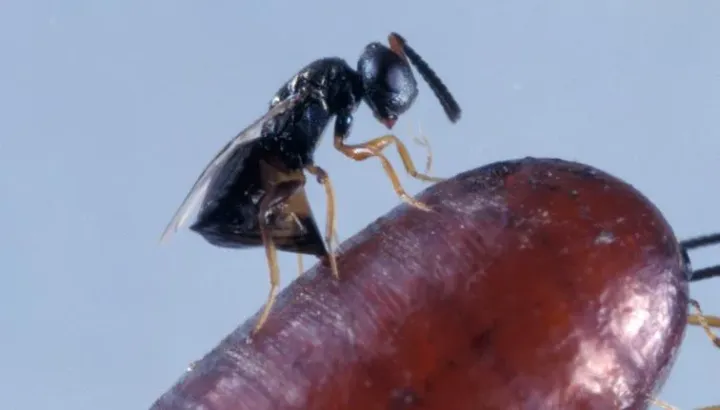
Description
How to identify
Muscidifurax raptor is a small parasitic wasp belonging to the order Hymenoptera and the family Pteromalidae. It is widely recognized in agricultural science not as a pest, but as a beneficial insect.
Adult wasps are typically 2–3 mm in length, featuring a dark, metallic body and transparent wings. They are highly specialized parasitoids that hunt for the pupae of various synanthropic flies.
It is crucial to clarify that Muscidifurax raptor is **not a plant pest**. It has no phytophagous habits and does not cause any damage to crops, fruits, or vegetables.
The species plays a critical role in agricultural biocontrol, specifically in suppressing fly populations in livestock facilities and manure management areas.
Its identification in the field usually requires expert knowledge or specific trapping techniques due to its small size and secretive nature of activity.
What it damages
Muscidifurax raptor causes zero damage to agricultural plants. It lacks the anatomy and behavior necessary to feed on plant tissues, stems, or leaves.
As a specialized parasitoid, its entire developmental cycle occurs inside the pupae of fly hosts. It does not interact with the plant physiology at any life stage.
The economic impact of this wasp is strictly positive. By parasitizing fly pupae, it helps keep pest fly populations under control, which reduces the spread of diseases among livestock.
Agronomists and pest control specialists encourage the presence of this wasp as a sustainable alternative to chemical insecticidal sprays.
There is no record in agricultural science of this species harming crops; therefore, it is classified solely as a beneficial entomophage, not a pest.
When it appears
The seasonal activity of Muscidifurax raptor is highly dependent on ambient temperature and the availability of suitable host pupae.
They are most active during the warmer months when fly populations reach their peak, ensuring a steady supply of hosts for egg deposition.
During optimal summer conditions, the wasp can complete a full generation in approximately 2–3 weeks, leading to a rapid buildup of the population.
As temperatures drop in autumn, the wasps enter a dormant state within the host pupae, effectively overwintering in protected sites near manure or organic debris.
In spring, as temperatures rise, the adults emerge to begin their search for new fly hosts, restarting the biocontrol cycle for the season.
Signs of infestation
The primary sign of Muscidifurax raptor presence is the emergence hole found on the shell of a fly pupa after the wasp has completed its development.
Dissecting suspected fly pupae can reveal the presence of a wasp larva or pupa inside, indicating successful parasitism of the pest.
A decrease in the adult fly population within agricultural structures is a secondary, indirect sign of effective wasp activity.
There are no signs of "damage" on plants, such as leaf wilting, spots, or tissue loss, confirming that the wasp is harmless to vegetation.
Monitoring is typically done by evaluating the percentage of parasitized fly pupae collected from fly breeding sites like manure pits or litter.
Control measures
No control measures are needed for Muscidifurax raptor, as it is a beneficial agent and not a threat to agricultural production.
To support their population, growers should avoid using broad-spectrum insecticides that could inadvertently kill these beneficial wasps.
In professional farming, M. raptor is often intentionally introduced and released in livestock barns as part of an Integrated Pest Management (IPM) program.
Maintaining proper sanitation is the best way to leverage the activity of this wasp, as it ensures a controlled environment where the parasitoid can thrive.
The use of selective pest management strategies helps maintain the ecological balance, allowing M. raptor to contribute to overall farm health.
Taxonomy
- Latin name
- Muscidifurax raptor
- Order
- Hymenoptera
- Family
- Pteromalidae
- EPPO code
- MUSDRA
Discussion
No discussions yet — be the first.