
Morsea
Morsea
Description
How to identify
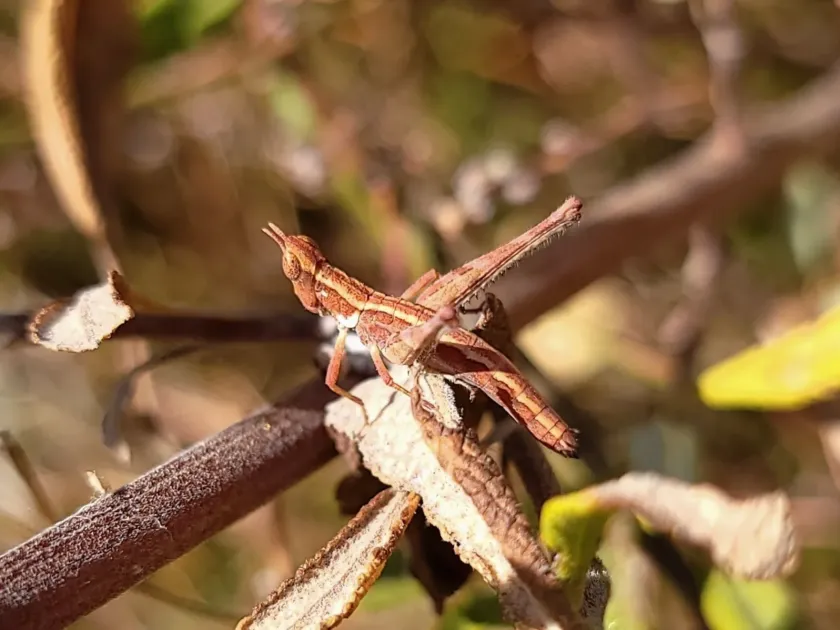
Morsea is a genus of insects belonging to the order Orthoptera and the family Eumastacidae. These small, typically flightless or short-winged insects are often referred to as monkey grasshoppers due to their unique appearance and mobility.
Adult insects usually possess cryptic coloration, ranging from shades of brown to gray or green, providing excellent camouflage against tree bark or foliage. Their elongated hind legs are specifically adapted for jumping to evade predators.
The head features antennae that are noticeably shorter than the body length. This morphological characteristic is a primary identifier when distinguishing these insects from other grasshopper species found in similar habitats.
The biological cycle of Morsea is highly adapted to specific arid or semi-arid environments. They function as specialized phytophages, exhibiting high resilience to fluctuating environmental conditions.
The life cycle involves an egg stage, several nymphal instars, and a reproductive adult stage. Their embryonic development is closely linked to soil moisture levels, which dictates the timing of spring emergence.
What it damages
Species within the Morsea genus are primary consumers of foliage. They typically feed on a variety of deciduous shrubs and trees, causing characteristic damage to the plant's vegetative parts.
In agricultural settings, these insects feed on young leaves, removing significant portions of the blade. This defoliation reduces the photosynthetic capacity of the plant, leading to weakened overall vigor.
Beyond foliage, they may cause mechanical damage to tender shoots and apical buds. This feeding activity can result in distorted growth patterns and, in some cases, stunted development of young twigs.
The damaged tissue serves as a potential entry point for secondary pathogens, such as fungi and bacteria. This increases the risk of systemic plant disease, further complicating the plant's recovery.
Economic damage is typically localized but can be severe in nurseries or orchards where the lack of natural predators allows the population to reach damaging thresholds quickly.
When it appears
Activity typically begins in late spring, following the hatching of nymphs from overwintering eggs. The timing of this emergence is dictated by warming temperatures and soil conditions.
Summer marks the peak activity period for adults. During these months, the insects are most actively engaged in feeding and reproductive behaviors, making them most visible to scouts.
Egg-laying occurs in late summer or early autumn, with females depositing their eggs in the soil or beneath protective layers of leaf litter to ensure survival during the winter season.
Environmental factors, particularly precipitation patterns and temperature, significantly influence population dynamics, either suppressing the outbreak or promoting faster development.
The life cycle is closely synchronized with the host plant's phenology. This ensures that the nymphs and adults are present during the period when the foliage is most nutritional.
Signs of infestation
The most common sign of infestation is the presence of irregular notches along the leaf margins. These cuts often have a distinct shape, indicating the feeding pattern of the grasshopper's mandibles.
Small, dark, pellet-like excrement found under the canopy is a strong indicator of an active population, even if the insects themselves remain hidden during the heat of the day.
Deformed apical buds and signs of stunted twig growth can point to chronic feeding pressure, especially when other causes of growth deformation have been ruled out by the agronomist.
Distinctive stridulation sounds produced by males during the mating season can help locate the infestation site, as these insects often remain stationary and camouflaged for long periods.
Superficial lesions on the bark of young shoots occur when the insect consumes the outer tissue layers, which can be observed during detailed orchard or nursery inspections.
Control measures
Integrated Pest Management (IPM) strategies are essential for controlling Morsea populations while maintaining ecological balance and protecting beneficial species.
- Regular monitoring of host plants to detect early-stage nymphs and assess population size.
- Mechanical removal of heavily infested shoots to reduce immediate population pressure.
- Application of biological control agents, such as entomopathogenic fungi, during favorable weather.
- Tillage of soil in late autumn to disrupt egg survival in the soil profile.
- Encouraging natural predators, including insectivorous birds and parasitic wasps, within the garden ecosystem.
Chemical control should be used as a last resort, utilizing selective insecticides that have minimal impact on pollinators and beneficial predatory insects. Always follow label guidelines for application rates.
Rotating insecticides with different modes of action is crucial to prevent the development of resistance within the insect population, ensuring the long-term effectiveness of the management strategy.
Taxonomy
- Latin name
- Morsea
- Order
- Orthoptera (locusts)
- Family
- Eumastacidae
- EPPO code
- MORSSP
Discussion
No discussions yet — be the first.