
Moranila californica
Moranila californica
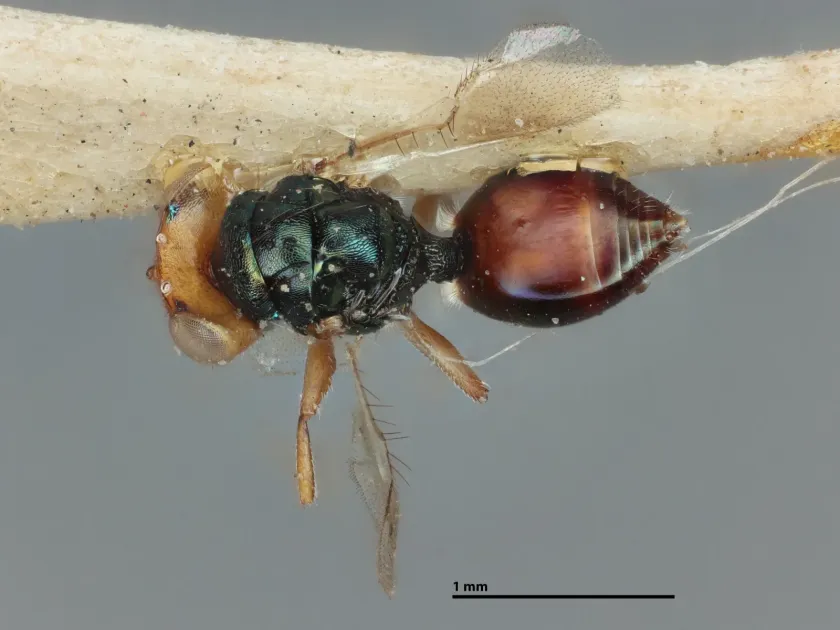
Description
How to identify
Moranila californica is a small hymenopteran insect belonging to the family Pteromalidae. Adult wasps are typically small with a metallic appearance, adapted for searching and parasitizing specific scale insects.
The biology of this species is strictly linked to its hosts. It follows a complete metamorphosis cycle, where the larvae develop inside the body of the host insect, effectively consuming it from the inside.
As a member of the Chalcidoidea superfamily, Moranila californica is highly specialized. It uses chemical signals and visual cues to locate hosts, which are often found on the bark or foliage of host plants.
Identifying this species in the field is difficult due to its tiny size. Morphological examination of wing venation and antennae is usually required to confirm the species under laboratory conditions.
These wasps are most active during warm seasons when their host populations—various types of scale insects—are most abundant and available for parasitism.
What it damages
Moranila californica primarily affects orchards, particularly citrus trees and other evergreen shrubs. The presence of these wasps is an indicator of a heavy infestation of primary pests, such as scale insects.
The adult wasp itself causes no direct mechanical damage to plant tissues. The concern for growers is the underlying infestation of scale insects, which weaken the plant by feeding on sap.
Indirect damage arises when the biological balance in the orchard is disturbed. While the wasp acts as a regulator, high levels of both parasitoid and host populations indicate poor tree health.
Secondary effects of heavy scale infestations include yellowing leaves, stunted growth of new shoots, and the development of sooty mold due to the honeydew secreted by scale insects.
Severe infestations can lead to a decrease in fruit quality and yield, as the tree redirects energy from fruit production to repairing tissue damage caused by the feeding insects.
Signs of infestation
The most distinctive sign of activity is the presence of small, irregular exit holes in the shells of scale insects found on bark or leaves. These holes indicate that a wasp has emerged.
Visual observation in sunny weather may reveal the wasps hovering around the affected branches. They are highly active and alert, often retreating if they sense movement near the tree.
Clusters of empty, dried-out scale shells on the branches are a clear indicator that a parasitoid population has been active in the area for a significant amount of time.
The accumulation of honeydew on the leaves is a common associated symptom. This sticky substance serves as a food source for many insects and often attracts ants, which may protect the scale insects.
Overall tree decline, characterized by sparse foliage or withered branches, acts as a general warning sign to check for a complex of pests, including scale insects and their associated parasitoids.
Control measures
Effective control starts with regular monitoring of the host populations. Early detection of scale insects allows for intervention before they can cause significant damage to the orchard.
Cultural practices, including proper pruning and canopy management, improve air circulation and sunlight exposure. This makes the environment less favorable for scale insects to thrive.
Biological control methods are highly recommended. Preserving natural enemies and avoiding broad-spectrum pesticides ensures that the ecological balance is maintained within the orchard.
If chemical intervention is necessary, select targeted, low-toxicity insecticides. Applying systemic pesticides indiscriminately can kill beneficial insects, leading to even larger outbreaks of scale pests.
An integrated pest management (IPM) approach is the gold standard. By combining monitoring, habitat modification, and selective control, growers can manage Moranila californica and its hosts effectively.
Taxonomy
- Latin name
- Moranila californica
- Order
- Hymenoptera
- Family
- Pteromalidae
- EPPO code
- MORNCA
Discussion
No discussions yet — be the first.