
Mononchus
Mononchus
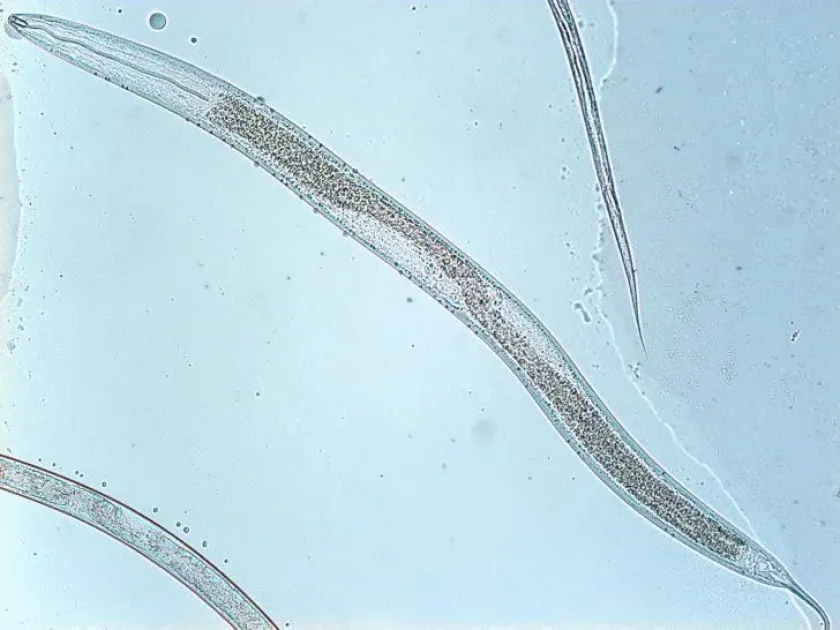
Description
How to identify
Mononchus belongs to the order Mononchida, family Mononchidae. These are free-living soil nematodes that are not plant pests; instead, they serve as active predators within the soil ecosystem.
They are characterized by a powerful buccal capsule containing a large tooth-like organ called an onchus. This apparatus allows them to effectively capture and ingest other small soil invertebrates.
Their bodies are typically transparent, elongated, and similar to other soil-dwelling nematodes, reaching a few millimeters in length. Unlike phytophagous species, they lack a stylet for piercing plant tissues.
The development of Mononchus involves several larval stages, with their entire life cycle taking place exclusively within the soil or moisture-saturated substrates.
They are obligate predators, and their population density is directly dependent on the availability of a food source, specifically other small organisms inhabiting soil pores.
What it damages
It is important to clarify that Mononchus does not damage agricultural crops. The belief that they are pests is a misconception, as they act as key components of biological soil fertility control.
They feed on other nematodes, including phytopathogenic species that cause significant damage to the root systems of potatoes, vegetables, and berry crops.
By consuming eggs, larvae, and adults of harmful nematodes, Mononchus acts as a natural regulator of parasite populations within the soil.
Because they cause no harm to plants, they are considered valuable allies for any agronomist, as their presence indicates a healthy biological balance in the soil.
Therefore, no protective measures are needed against Mononchus, as they pose no threat to agricultural yield.
Control measures
Since Mononchus is a beneficial predator, agricultural practices should focus on preserving their populations within the agroecosystem rather than eradication.
The excessive use of harsh pesticides and fumigants is lethal to predatory nematodes, which can disrupt natural ecological balance and lead to outbreaks of actual pests.
Maintaining adequate soil moisture and applying organic fertilizers promote the development of soil microfauna, creating a favorable environment for the predatory behavior of Mononchus.
Implementing conservation tillage practices helps preserve their natural habitat, ensuring long-term protection of plants against soil-borne pathogens.
- Minimizing the use of highly toxic chemical pesticides.
- Applying compost and organic matter to support soil biota.
- Maintaining optimal soil moisture levels during the growing season.
Taxonomy
- Latin name
- Mononchus
- Order
- Nematodes
- Family
- Mononchidae
- EPPO code
- MONHSP
Discussion
No discussions yet — be the first.