
European mole cricket
Mola
Description
How to identify
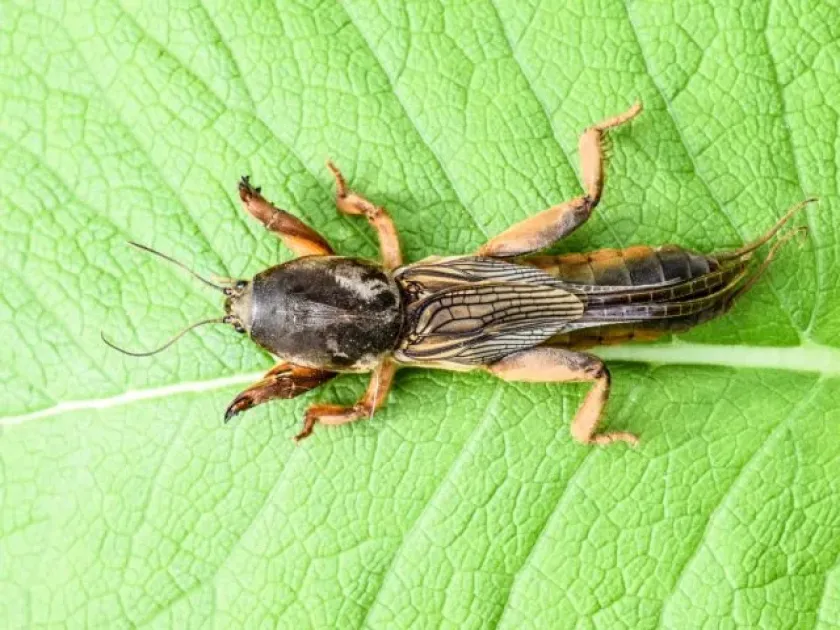
The European mole cricket (Gryllotalpa gryllotalpa) is a large insect belonging to the order Orthoptera and the family Gryllotalpidae. An adult specimen typically reaches a length of 50 to 70 mm and is covered with dense, brownish-velvety hairs.
The insect is uniquely adapted for a subterranean life. Its forelegs are heavily modified, resembling the paws of a mole, which allow it to dig through compacted soil with remarkable speed and efficiency.
Though they spend most of their time underground, they possess functional wings and are capable of flight. They often fly at night to migrate between different sites or to seek out mates, especially during the breeding season.
Their lifecycle is complex, typically spanning one to two years depending on soil temperature and climate. Females excavate deep nesting chambers where they carefully guard their eggs to ensure survival against humidity fluctuations and soil predators.
Nymphs, upon hatching, resemble miniature versions of the adults but lack developed wings and reproductive organs. They undergo several molts before reaching sexual maturity, expanding the population size with each generation.
What it damages
The European mole cricket is highly polyphagous, meaning it feeds on a vast range of plant species. It is a notorious pest in both professional agriculture and home gardening, causing severe disruption to plant health.
Vegetable crops such as tomatoes, peppers, cabbages, and cucumbers are particularly vulnerable. The insect severs the roots and stems just below the soil surface, causing the plants to collapse and die rapidly.
Root crops including potatoes, carrots, and beets are severely damaged by the cricket's tunneling activity. The pests consume large portions of the tubers, leaving behind deep, ragged cavities that render the harvest unsalable.
Cereal and legume fields often suffer from thinning stands. Mole crickets feed on the germinating seeds and the primary roots of seedlings, which prevents successful establishment and significantly reduces overall yield.
The primary damage is compounded by the structural destruction of the soil. As they tunnel through the earth, they create air pockets that cause roots to dehydrate and prevent proper nutrient uptake for the affected plants.
When it appears
Mole cricket activity begins in early spring as soon as the soil temperatures consistently exceed 10–12°C. They move from their overwintering depths toward the surface to find food and establish nesting sites.
The late spring and early summer months represent the peak of their biological cycle, involving intense feeding and reproduction. During this period, damage to seedlings and young transplants is at its absolute maximum.
The summer season is characterized by migration and dispersal. Warm, humid nights provide the ideal conditions for adult insects to fly in search of new, nutrient-rich habitats, leading to rapid infestations across adjacent garden plots.
As temperatures drop in autumn, the mole crickets begin their retreat into the deeper soil layers. They build wintering chambers at depths ranging from 50 cm to one meter to survive the freezing temperatures of winter.
In protected cultivation environments like greenhouses, the biological clock of the mole cricket can be significantly altered, allowing for year-round activity if the soil temperature remains consistently warm enough for their movement.
Signs of infestation
The most distinctive indicator of mole cricket presence is the appearance of winding, raised ridges on the soil surface. These tunnels are especially visible following a light rain or irrigation, as the soil collapses into the voids.
Sudden wilting or death of plants that appeared healthy the previous day is a strong sign of root severance. If a plant can be pulled out of the ground with little resistance, the root system has likely been decimated.
Finding small, hard-packed earth chambers about the size of a chicken egg during cultivation is a clear warning that an active nest exists. These contain eggs or young nymphs that indicate a growing population.
Feeding damage on root crops is unmistakable, characterized by jagged holes and tunnels. This physical injury often invites secondary pathogens and fungi, leading to further decay of the harvest in storage.
- Sudden collapse of seedlings and transplants.
- Noticeable soil disturbances and tunnel systems on the surface.
- Missing seeds or evidence of consumption in seed rows.
Control measures
Agrotechnical methods form the core of effective management. Regular deep cultivation and soil turning during the autumn and spring disrupt the tunnels and expose eggs and nymphs to predators and harsh weather conditions.
Biological control utilizing entomopathogenic fungi, such as Beauveria bassiana, offers an environmentally friendly solution. These fungi naturally infect and kill the crickets without leaving toxic residues in the soil.
Chemical control usually involves the application of granulated baits. These are placed strategically near tunnel entrances according to specific label instructions to minimize environmental impact and ensure target specificity.
Trapping techniques are effective, particularly in the fall. Burying containers level with the soil surface filled with water or creating compost/manure heaps can attract the crickets, allowing for their easy manual collection and removal.
Proper soil management is critical. Avoid using excessive amounts of fresh manure in planting beds, as it acts as a strong attractant for mole crickets and provides optimal conditions for their nesting and hibernation.
Taxonomy
- Latin name
- Mola
- Family
- Molidae
- EPPO code
- MOLASP
Discussion
No discussions yet — be the first.