
Miltogramma
Miltogramma
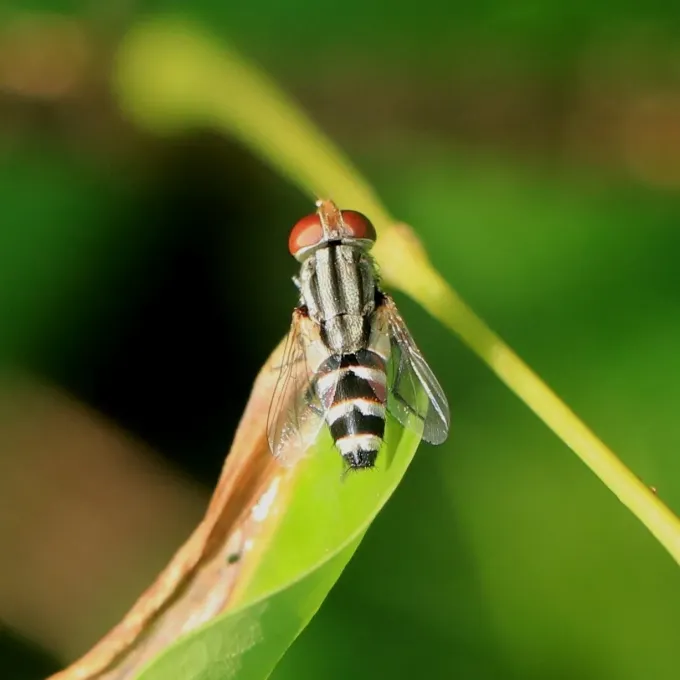
Description
How to identify
Miltogramma is a genus of flies belonging to the family Sarcophagidae, commonly known as flesh flies. These insects are characterized by a gray body with a distinct checkered pattern on the abdomen.
Adult flies are typically of medium size, featuring prominent compound eyes and a strong, bristly exoskeleton. They are well-adapted to life in sunny, open areas where they are often seen resting on warm soil or vegetation.
The genus is biologically significant due to its parasitic and cleptoparasitic habits. Miltogramma flies are specifically adapted to locate the nesting sites of various ground-nesting hymenopterans, including solitary bees and wasps.
The larvae are cylindrical and possess specialized mouthparts that allow them to consume the food provisions or the larvae of the host species inside their subterranean nest cells.
Accurate species-level identification requires expert examination of male genitalia, as many species within the genus appear morphologically similar to the naked eye.
What it damages
Miltogramma is not a direct pest of agricultural plants, but it causes significant economic damage by parasitizing wild pollinators. These bees are essential for the pollination of crops such as alfalfa, clover, and sunflower.
By attacking the nests of solitary bees, Miltogramma reduces the overall pollinator density in agricultural landscapes, leading to decreased fruit set and lower yields.
The economic impact is indirect but cumulative. Farmers may observe reduced crop productivity despite optimal conditions, which is often linked to the decline of local wild bee populations.
The larvae feed on the nectar and pollen stored by bees, as well as the developing bee larvae, thereby effectively eradicating the next generation of pollinators.
Unlike leaf-eating pests, this fly does not damage plant tissues directly, making its presence less obvious to farmers who do not monitor pollinator health.
When it appears
The adult activity period for Miltogramma generally occurs during the warmer months, spanning from late spring through the summer season, peaking in mid-summer.
They are most active during dry, sunny weather when the soil is warm, providing ideal conditions for their larval development and host-seeking behaviors.
The life cycle is closely synchronized with the nesting period of their host species. Eggs, larvae, and pupae develop through the season, with the pupal stage serving as the primary overwintering phase in the soil.
Depending on the climatic zone and species, the genus may produce one or more generations per year, ensuring a continuous presence during the peak blooming period of target crops.
Emergence from the soil is triggered by favorable temperature conditions, allowing the flies to align their life cycle with the peak activity of ground-nesting bees.
Signs of infestation
A primary sign of Miltogramma presence is the observation of gray flies hovering or basking near the entrances of soil-based nests belonging to bees or wasps.
Persistent presence of flies at nest entrances, even when the host is absent, is a strong indicator of an attempt to deposit larvae (larviposition) near the nest entrance.
Upon inspecting suspect nesting sites, one might find abandoned or empty cells containing larval frass or the remains of parasitized bee larvae.
A decline in the number of foraging bees observed on nearby blooming flowers, despite favorable weather, can be an indirect sign of nest infestation.
The absence of typical plant foliage damage makes visual monitoring of the ground nests themselves the only reliable method for identifying an infestation in the field.
Control measures
Managing Miltogramma requires an integrated approach that prioritizes the health of pollinator populations rather than the eradication of the flies, which would prove counterproductive.
Biological control and habitat management are the most sustainable ways to mitigate the damage caused by these flies to local bee populations.
- Protect existing nesting sites from soil compaction and tillage during the bees' active season.
- Avoid broad-spectrum insecticide applications that could harm beneficial pollinators while attempting to control the flies.
- Establish floral buffers and meadows to promote healthy bee populations, making them more resilient to parasitism.
Providing artificial nesting blocks in protected areas can help maintain stable bee populations and reduce the relative success rate of Miltogramma infestations.
Effective monitoring involves documenting the nesting activity of wild bees to ensure that parasitism levels remain below the threshold that would negatively impact crop pollination services.
Taxonomy
- Latin name
- Miltogramma
- Order
- Diptera (flies)
- Family
- Sarcophagidae
- EPPO code
- MILGSP
Discussion
No discussions yet — be the first.