
Mesopolobus diffinis
Mesopolobus diffinis
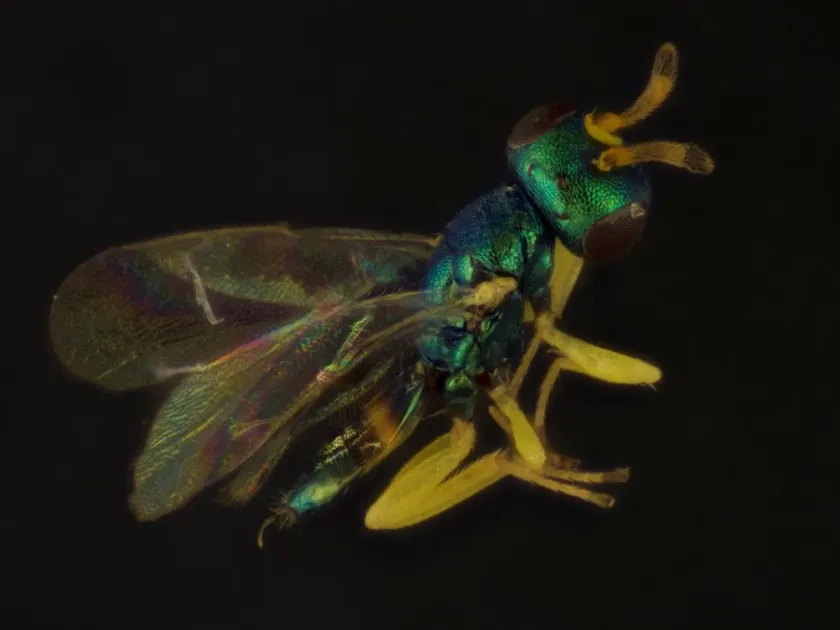
Description
How to identify
Mesopolobus diffinis is a species of parasitic wasp belonging to the family Pteromalidae in the order Hymenoptera. Unlike many members of its family that act as strictly beneficial biological control agents, this specific species is known to cause damage to seed production in various crops.
Adults are small, typically displaying metallic luster on their bodies. Precise identification often requires expert analysis of anatomical features such as antennal structure and wing venation under a microscope, as the genus includes many closely related species.
The larvae are endophagous, meaning they develop inside plant structures such as seeds or stems. This cryptic lifestyle makes them difficult to observe until significant damage has already been caused to the host plant.
The life cycle is closely synchronized with the phenology of the host plant. The emergence of adults often coincides with the flowering or ripening phase of the cereal crops, which is the most vulnerable period for the plant.
Environmental conditions, particularly humidity and temperature, play a crucial role in the development rate of the species. A favorable climate can lead to rapid population growth and increased infestation rates in the field.
What it damages
The pest primarily targets cereal grains. The larvae feed on the embryo and endosperm of the developing seed, which directly compromises the germination potential and the overall vigor of the future crop.
Economic damage is most severe in seed-producing regions. Infested seeds become lightweight and are prone to premature dropping or failure to develop fully, significantly reducing the marketable yield and seed quality.
The presence of Mesopolobus diffinis often goes unnoticed during the early stages of infestation. Symptoms become visible only when adults emerge from the seeds, leaving characteristic exit holes or when the grain collapses during processing.
Beyond direct feeding damage, the tunnels created by the larvae provide entry points for secondary pathogens, such as fungi and bacteria. This can lead to rapid deterioration of the harvested grain during storage.
Crop losses vary significantly based on the timing of infestation. Early colonization of the spikelets usually results in the total loss of individual grains, which can aggregate into significant yield reductions at a field scale.
Control measures
Management of Mesopolobus diffinis requires an integrated pest management (IPM) strategy. Crop rotation is highly recommended to disrupt the life cycle of the pest by removing its specific host plants from the area.
Sanitation practices are essential for controlling the population density. This includes deep plowing of harvested fields to bury crop residues that may contain pupae or larvae, thereby preventing the emergence of the next generation.
Chemical control is effective when timed correctly with the peak emergence of adults. Using systemic insecticides can provide a protective barrier for the developing grain, although this must be balanced with considerations for beneficial insect populations.
Monitoring using sticky traps or pheromone-based lures is critical for precise timing of interventions. By tracking population spikes, growers can avoid unnecessary insecticide applications, reducing the chemical footprint on the environment.
Integrated weed management also plays a part in control, as some wild grasses can serve as alternative hosts for the pest. Keeping field margins clean helps to limit the movement of the pest into primary crop areas.
Taxonomy
- Latin name
- Mesopolobus diffinis
- Order
- Hymenoptera
- Family
- Pteromalidae
- EPPO code
- MESPDI
Discussion
No discussions yet — be the first.