
Mesogona acetosellae
Mesogona acetosellae
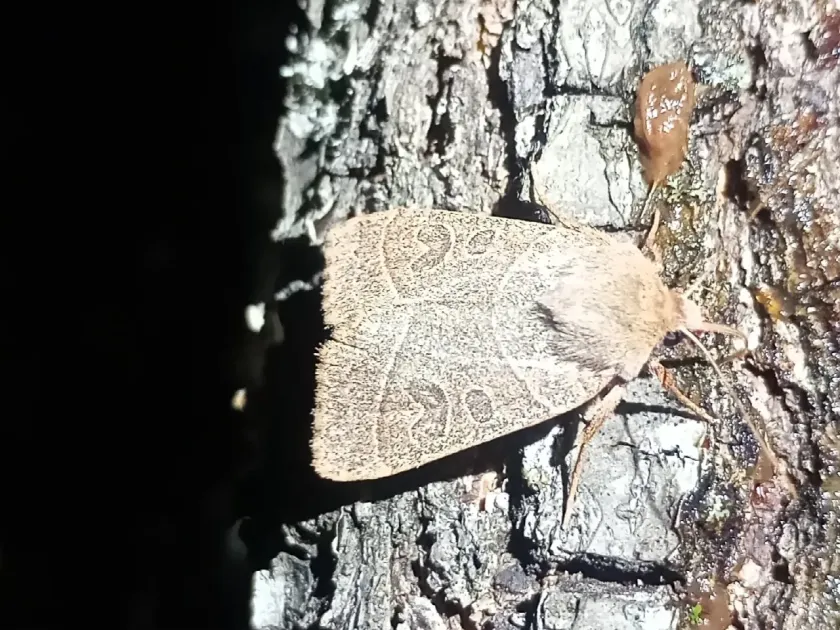
Description
How to identify
Mesogona acetosellae is a moth species belonging to the family Noctuidae, characterized by its cryptic nocturnal behavior.
The adult moths have a wingspan ranging from 30 to 35 mm, with forewings featuring a distinct dark central band on a brownish background.
The larvae, or caterpillars, are typically brownish-grey, often displaying longitudinal stripes that help them blend with bark and foliage.
They possess a well-developed head capsule with strong mandibles, which are specialized for consuming leaf tissue efficiently.
The pupal stage occurs in the soil or within the leaf litter, where the pupae remain protected by a dark, smooth, and hardened shell.
What it damages
Primarily, Mesogona acetosellae is known to feed on various deciduous trees, with a strong preference for oak species (Quercus).
In cases of high infestation, the larvae can migrate to adjacent orchards, causing significant damage to the foliage and buds of fruit trees.
The larvae consume the leaf tissue, often leaving only the veins intact, which is known as skeletonization of the leaves.
Frequent defoliation reduces the photosynthetic capacity of the trees, leading to general weakening and reduced resilience to other stresses.
Severe infestations can lead to stunted growth and, in younger trees, can significantly affect the overall structural development.
When it appears
The species has a univoltine life cycle, meaning it produces only one generation per year, with adults appearing during the autumn months.
The overwintering stage of this moth is the egg, which remains dormant until the arrival of warmer temperatures in the spring.
Larval emergence typically occurs in spring, with the feeding period peaking throughout the months of May and June.
Pupation begins in late June or July, as the larvae descend from the host plants to bury themselves in the top layer of soil.
The pupae remain in diapause through the heat of the summer before the adult moths emerge in early autumn to restart the cycle.
Signs of infestation
The initial signs of infestation are small, irregular holes in the developing leaves, which quickly enlarge as the larvae grow.
Dark granular frass deposited on the leaves or the ground beneath the canopy indicates the presence and active feeding of caterpillars.
Significant loss of foliage, specifically at the canopy tips, is a clear indicator that the population has reached an economic injury level.
Night-time inspections using torches often reveal the larvae actively feeding on the undersides of the leaves.
Delayed bud break or stunted, chewed leaf margins in the early spring can alert growers to the presence of overwintered larvae.
Control measures
Mechanical cultivation of the soil under the canopy can disrupt the pupae, leading to significant mortality in the late summer.
Biological control using Bacillus thuringiensis sprays is highly effective against young larvae while minimizing harm to beneficial insects.
When necessary, systemic or contact insecticides should be applied during the early larval stages to prevent widespread damage.
Installing light traps or pheromone traps in the autumn helps monitor adult activity and reduces the overall population before egg-laying.
Promoting a healthy ecosystem by attracting birds and predatory insects provides a long-term sustainable management strategy.
Taxonomy
- Latin name
- Mesogona acetosellae
- Order
- Lepidoptera (butterflies)
- Family
- Noctuidae
- EPPO code
- MESOAC
Discussion
No discussions yet — be the first.