
Mesocomys
Mesocomys
Description
How to identify
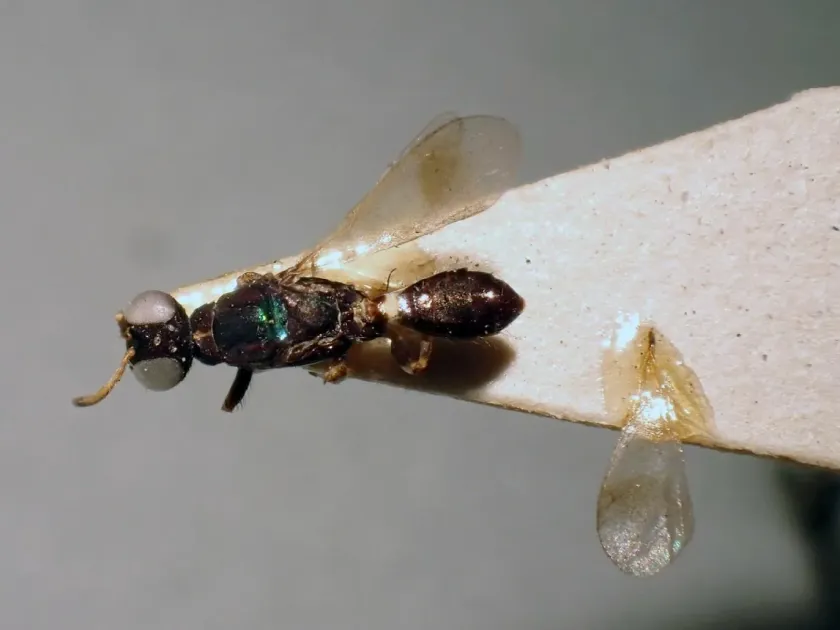
Mesocomys is a genus of insects belonging to the family Eupelmidae, order Hymenoptera. These are minute parasitoid wasps often found in diverse agricultural habitats.
The morphology of these insects includes a metallic sheen on the body, which is a common diagnostic feature for the Eupelmidae family.
Identification at the species level generally requires specialized entomological study using high-magnification microscopy of wing venation and abdominal structure.
Adult females are equipped with an ovipositor designed for precise placement of eggs into hosts, which are typically eggs or larvae of other insects.
As parasitoids, they occupy a specific niche in the food web, interacting with various hosts within their ecological range.
What it damages
The primary impact of Mesocomys on agriculture is often indirect, as they can act as secondary parasitoids, attacking beneficial predatory insects.
While they may target pest species, their role as hyperparasitoids can disrupt biological control programs, reducing the efficacy of natural enemies.
They damage their hosts by consuming internal tissues during the larval stage, leading to the death of the host organism.
The total harm to crops is measured by the extent to which they suppress populations of beneficial arthropods that would otherwise manage major pests.
In certain horticultural systems, they can become prevalent enough to complicate the management of insect populations on sensitive crops.
When it appears
The life cycle of Mesocomys is strictly synchronized with the availability and development of their specific host insects.
Adults are typically most active during the spring and summer months when their hosts are abundant in the crop canopy.
Overwintering occurs at the larval stage, often inside the shells of their hosts or within plant debris that provides protection from cold.
Activity resumes as temperatures rise and the spring emergence of target hosts begins in the field or orchard.
Multiple generations can occur throughout the growing season, depending on regional climatic factors and the presence of suitable host generations.
Signs of infestation
The most reliable sign of their presence is the emergence hole found on the host insect egg or larval casing.
Affected host individuals appear hollowed out, with their internal contents fully consumed by the developing wasp larva.
A noticeable decline in the performance of beneficial insects in a garden suggests the presence of parasitoids like Mesocomys.
Monitoring traps, such as sticky cards or yellow traps, often capture these small Hymenoptera during periods of peak activity.
Close inspection of suspected plant parts under a microscope reveals the presence of larvae or pupae nestled within the remains of the host.
Control measures
Effective management requires an integrated approach that prioritizes the health of the broader ecosystem and beneficial insect populations.
Avoid broad-spectrum insecticide applications, which often harm beneficial parasitoids more than the pests they are intended to control.
Sanitation practices, such as clearing crop residues in autumn, reduce the number of sites available for overwintering.
Encouraging biodiversity around fields can provide resources for natural enemies, helping to stabilize insect populations naturally.
Regular field scouting and population monitoring help determine if intervention is necessary and ensure that any control methods are targeted.
Taxonomy
- Latin name
- Mesocomys
- Order
- Hymenoptera
- Family
- Eupelmidae
- EPPO code
- MESYSP
Discussion
No discussions yet — be the first.