
Mermis acridiorum
Mermis acridiorum
Description
How to identify
Mermis acridiorum belongs to the phylum Nematoda, class Enoplea, and order Mermithida. These organisms are specialized endoparasites that develop within insects during their larval stages.
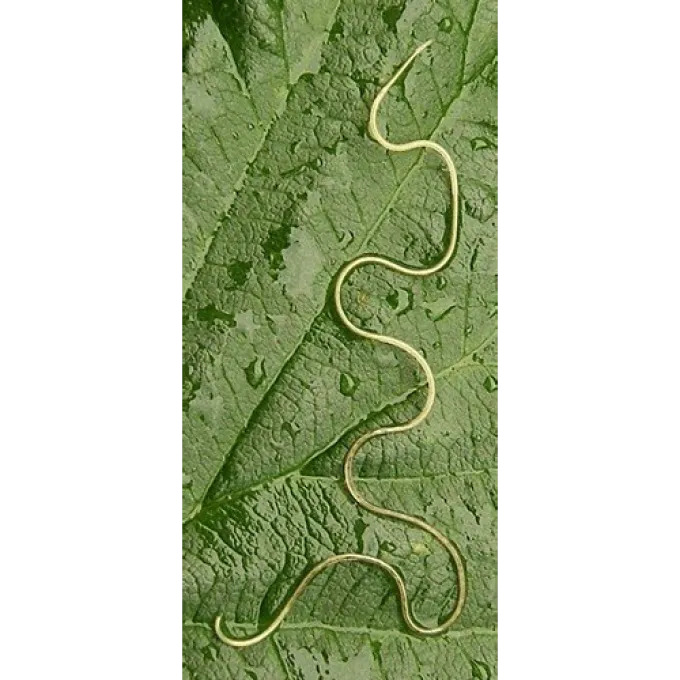
Adult worms are thread-like organisms measuring between 10 and 20 centimeters in length, sometimes reaching larger dimensions depending on the host species.
Their bodies are smooth and typically pale, milk-white, or yellowish in color, becoming visible once they emerge from the host.
The larvae are extremely small and nearly invisible to the naked eye while searching for a host in the soil environment.
Unlike many other nematodes, adult Mermis lack a developed digestive system, absorbing all necessary nutrients directly through their cuticle from the host's body fluids.
What it damages
The primary hosts of this parasite include various species of grasshoppers and locusts, such as the migratory locust and other members of the order Orthoptera.
The parasite enters the host as a larva, gradually consuming the internal organs, which inevitably leads to the host's weakness, sterility, and eventual death.
While Mermis acridiorum is a parasite of grasshoppers, it is considered an ecologically beneficial organism for agriculture because it naturally reduces pest population density.
In areas with high infection rates, these nematodes can eliminate a significant percentage of the grasshopper population, effectively preventing crop devastation.
Consequently, this species acts as a natural biological control agent that helps maintain ecological balance in regions prone to locust outbreaks.
When it appears
The life cycle is closely linked to soil moisture, as the emergence of larvae from eggs and their movement toward hosts require sufficient humidity.
Peak parasite activity occurs during humid periods of the season when soil conditions are optimal for the survival of first-stage larvae.
Grasshoppers are most susceptible to attack in their main breeding and egg-laying grounds, where the concentration of nematode eggs in the soil is highest.
After completing its development inside the insect, the parasite exits the host, a process that usually coincides with high air humidity or rainfall.
Adult worms that emerge into the soil mate and lay eggs, which may enter a state of diapause until the next favorable season arrives.
Signs of infestation
A clear sign of infection in grasshoppers is noticeable lethargy, loss of flight capability, and a generally diminished state of the insect.
Internal organs of the infected grasshopper undergo severe degenerative changes, rendering the insect incapable of reproduction.
One of the primary indicators is the death of grasshoppers near water sources or in low-lying areas where soil moisture is higher.
Dissecting a dead host often reveals one or more large, coiled, thread-like worms inside the abdominal cavity.
In the field, mass mortality of grasshoppers combined with the observation of worms emerging from their bodies confirms a high level of Mermis infection in the area.
Control measures
No specific plant protection measures against Mermis acridiorum are required, as it does not cause direct damage to cultivated crops.
In agronomic practice, the goal is to conserve and promote Mermis populations as a natural enemy of locusts to suppress their numbers.
Excessive use of broad-spectrum insecticides should be avoided in areas where the parasite is present to prevent disruption of natural population regulation.
The effectiveness of Mermis relies on moisture levels; therefore, land management and soil health maintenance contribute to its prevalence.
Biological control strategies against grasshoppers should incorporate the monitoring of both the pest and its natural parasites within an integrated management system.
Taxonomy
- Latin name
- Mermis acridiorum
- Order
- Nematodes
- Family
- Mermithidae
- EPPO code
- MERMAC
Discussion
No discussions yet — be the first.