
Mermis
Mermis
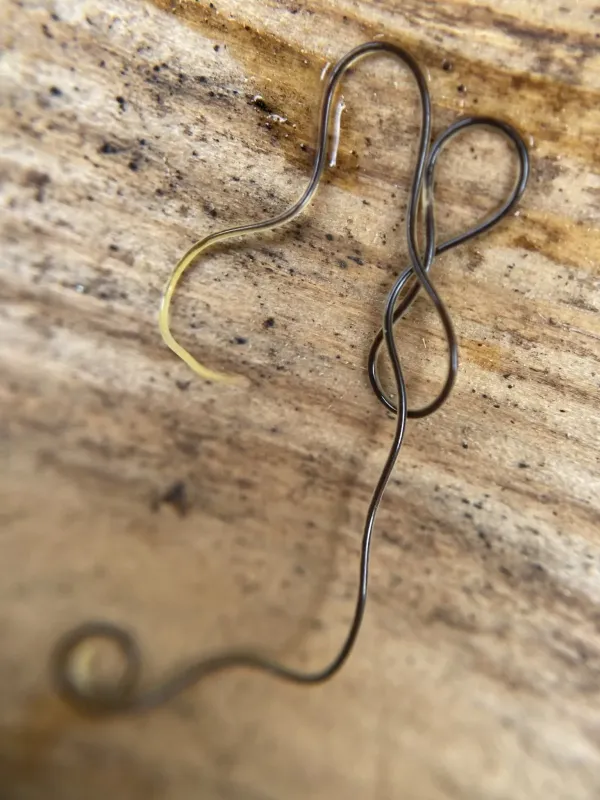
Description
How to identify
Mermis is a genus of parasitic nematodes belonging to the family Mermithidae, order Mermithida. These worms are characterized by a long, thread-like body that can reach significant lengths, often appearing white or yellowish.
Adult specimens lack a functional digestive tract, as they absorb nutrients directly through the cuticle from the host's hemolymph and fat bodies. This makes them highly specialized internal parasites.
The lifecycle involves eggs laid in soil, followed by the hatching of invasive larvae that actively seek out insect hosts to penetrate their body cavity.
Taxonomically, Mermis is complex. Research into their structure requires microscopic analysis of the head region and cuticle layers to distinguish them from other soil-dwelling nematodes.
These organisms are widely recognized in soil biology for their complex relationship with insect hosts and their role in maintaining ecosystem balance.
What it damages
Mermis does not cause damage to plants. Instead, it acts as a parasitoid, affecting various insect species, including many that are significant pests of agricultural crops.
Hosts include various orthopterans, beetles, and caterpillars. The parasite typically sterilizes or kills the host insect once the worm reaches its full size and emerges.
In agricultural systems, the presence of Mermis is considered highly beneficial. They act as natural biological regulators, reducing populations of harmful insects without chemical intervention.
The parasitization process involves the consumption of the host’s vital internal tissues, which is highly efficient at curbing the spread of crop-damaging insect populations.
Because they do not consume plant tissue, they are classified as beneficial agents in integrated pest management (IPM) rather than as agricultural threats.
When it appears
The activity of Mermis is strongly correlated with soil moisture levels. They are most active and likely to emerge or infect hosts during rainy seasons or periods of high humidity.
Their developmental cycle is temperature-dependent, typically occurring during the warmer months of the year when insect hosts are also at their peak activity.
Emergence from the host often coincides with wet weather conditions, which provide the necessary moisture for the parasite to survive the transition back into the soil environment.
Overwintering occurs in the soil, where they remain in a state of diapause or as eggs, ensuring the persistence of the population from one season to the next.
The synchronization of the parasite's lifecycle with the host's activity allows it to effectively maintain its population within the agroecosystem year after year.
Signs of infestation
The primary sign of Mermis presence is the discovery of lethargic or deceased insects on the soil surface, particularly following significant rainfall events.
Dissecting a parasitized insect often reveals the presence of a long, coiled worm occupying the majority of the host's body cavity, which is a definitive diagnostic sign.
A noticeable decline in the density of specific insect pest populations in a field can often be attributed to the successful activity of natural enemies like Mermis.
Infected insects may exhibit aberrant behavioral changes, such as moving toward moisture, which is a mechanism often triggered to facilitate the parasite's escape into the soil.
There are no direct visual symptoms on the plant foliage, as the activity of the nematode is strictly limited to the interior of the insect host.
Control measures
There is no need for control measures against Mermis, as they are considered beneficial allies in sustainable agriculture and crop protection programs.
Agronomists should focus on preserving the soil environment to encourage the natural prevalence of these parasitic nematodes, avoiding excessive use of broad-spectrum soil pesticides.
Maintaining soil organic matter and moisture balance creates a favorable habitat for Mermis, enhancing their ability to suppress pest populations naturally.
Integration of biological control into crop management relies on minimizing soil disruption, which helps maintain the natural population dynamics of these nematodes.
As biocontrol agents, their presence reduces the overall economic threshold of pests, allowing for a reduction in the reliance on synthetic chemical insecticides.
Taxonomy
- Latin name
- Mermis
- Order
- Nematodes
- Family
- Mermithidae
- EPPO code
- MERMSP
Discussion
No discussions yet — be the first.